1. Introduction
Hungarian Esterházy Cake, traditionally known as Eszterházy Torta, is one of the most famous and elegant desserts in Central European cuisine.
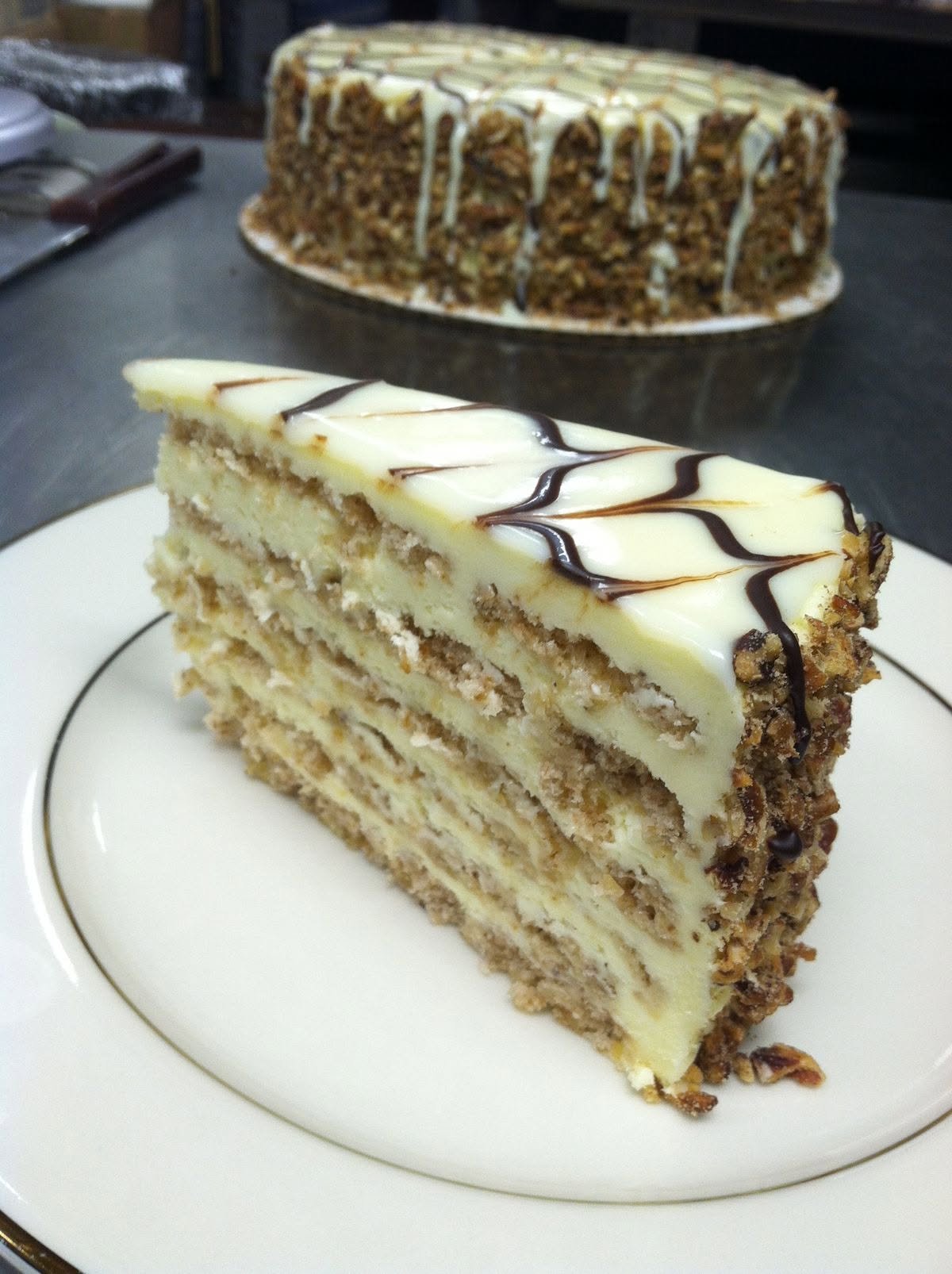
This traditional Hungarian cake is made with multiple thin layers of almond or walnut meringue, rich vanilla buttercream, and a beautiful white icing decorated with a distinctive chocolate spiderweb pattern.
It is especially popular in Hungary and Austria, where it is served in traditional cafés, bakeries, and restaurants.
2. History and Origin
Esterházy Cake originated in the Austro-Hungarian culinary tradition during the 19th century.
The dessert takes its name from the influential Hungarian Esterházy aristocratic family. It is commonly associated with Prince Paul III Anton Esterházy, although the exact creator and original recipe remain uncertain.
Over time, the cake became a celebrated specialty in Hungarian pastry shops and gained popularity throughout Central Europe.
3. Main Ingredients
The cake consists of three main components.
Nut Meringue Layers
-
Ground walnuts or almonds.
-
Egg whites.
-
Granulated sugar.
-
A small amount of flour in some recipes.
Vanilla Buttercream
-
Butter.
-
Egg yolks.
-
Milk.
-
Sugar.
-
Vanilla extract.
-
Ground nuts.
Traditional Decoration
-
White fondant or sugar icing.
-
Dark chocolate.
-
Sliced almonds.
4. Preparation Method
Step 1: Prepare the Cake Layers
Whip egg whites with sugar until stiff peaks form. Gently fold in ground walnuts or almonds. Spread the mixture into thin circular layers and bake until lightly golden.
Step 2: Prepare the Buttercream
Cook egg yolks, milk, sugar, and vanilla into a smooth custard. Allow it to cool completely. Beat softened butter until creamy and gradually incorporate the custard and ground nuts.
Step 3: Assemble the Cake
Place the first nut layer on a serving plate. Spread an even layer of buttercream over it. Continue alternating the cake layers and filling until all layers are assembled.
Step 4: Decorate the Top
Spread white icing over the top of the cake. Pipe thin concentric circles of melted dark chocolate onto the icing.
Step 5: Create the Spiderweb Pattern
Drag a toothpick from the centre toward the outer edge at regular intervals. This creates the traditional feathered spiderweb design.
Step 6: Finish the Sides
Cover the sides with sliced or chopped almonds and refrigerate until firm.
5. Taste and Texture
Esterházy Cake is famous for its combination of rich flavours and delicate textures.
-
Nutty: Ground walnuts or almonds provide a distinctive flavour.
-
Creamy: Vanilla buttercream creates a smooth and luxurious filling.
-
Sweet: White icing adds sweetness to the cake.
-
Delicate: Thin meringue layers provide a slightly chewy texture.
-
Crunchy: Almonds around the sides add a pleasant contrast.
6. What Makes Esterházy Cake Unique?
Several characteristics distinguish this cake from ordinary layered desserts.
-
It uses nut-based meringue instead of conventional sponge cake.
-
It contains multiple thin layers.
-
Its filling is traditionally rich buttercream.
-
Its chocolate spiderweb decoration is instantly recognizable.
-
Its flavour combines nuts, vanilla, butter, and chocolate.
7. Different Variations
Although traditional recipes commonly use walnuts, several variations exist.
Walnut Esterházy Cake: Uses ground walnuts for a deep, earthy flavour.
Almond Esterházy Cake: Uses almonds for a delicate, slightly sweeter nutty taste.
Chocolate Esterházy Cake: Includes chocolate in the buttercream or additional chocolate decoration.
Modern Esterházy Cake: Some contemporary bakeries introduce lighter creams, alternative nut combinations, or reduced-sugar fillings.
8. Nutritional Information
Esterházy Cake is an indulgent dessert containing butter, sugar, nuts, and eggs.
Its nutritional content varies according to the recipe and serving size.
-
Nuts provide protein, fibre, and healthy fats.
-
Eggs provide protein and essential nutrients.
-
Butter contributes saturated fat.
-
Sugar and icing contribute carbohydrates.
Because it is rich and energy-dense, a small slice is generally sufficient.
9. How to Serve Esterházy Cake
The cake is traditionally served in thin slices.
It pairs particularly well with:
-
Espresso coffee.
-
Cappuccino.
-
Black tea.
-
Unsweetened herbal tea.
It is suitable for birthdays, weddings, family gatherings, afternoon tea, and special celebrations.
10. Interesting Facts
-
Esterházy Cake is named after a Hungarian aristocratic family.
-
It became popular during the 19th century.
-
Its traditional decoration resembles a delicate spiderweb.
-
Walnuts and almonds are the most common nuts used.
-
It is widely recognized as an important part of Hungarian pastry culture.
-
It is also enjoyed in Austria and other Central European countries.
Final Thoughts
Hungarian Esterházy Cake is a beautiful example of traditional European pastry craftsmanship. Its delicate nut layers, rich vanilla buttercream, and elegant chocolate spiderweb decoration make it a memorable dessert.
Its special appeal comes from the perfect combination of nutty flavour, creamy filling, and sophisticated presentation.
