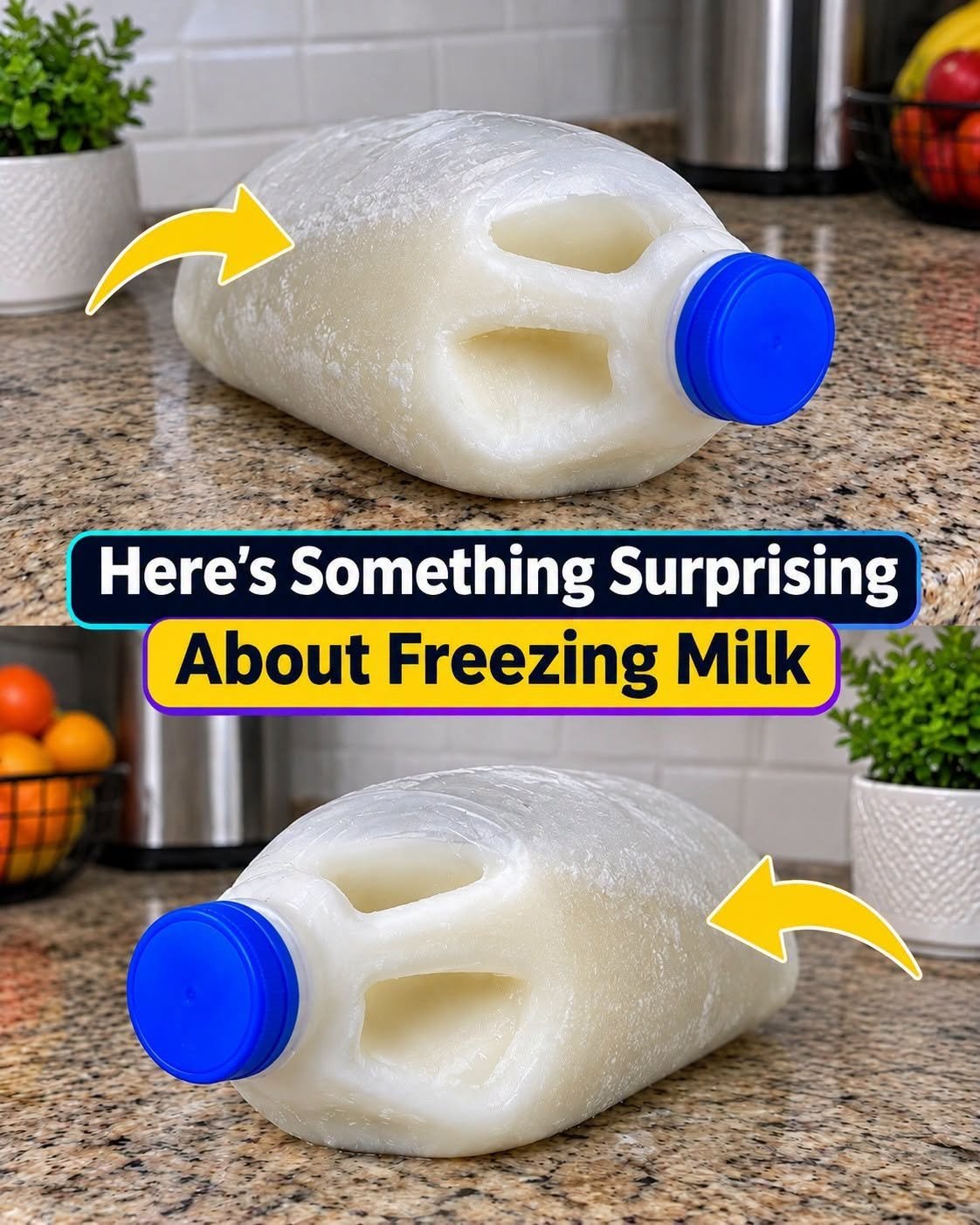
When sensationalized food-storage and kitchen clickbait flashes headlines like “I Never Knew Freezing Milk Could…,” they rely on breathless, unfinished cliffhangers to manufacture drama out of ordinary culinary physics. They want you to believe that storing a gallon of milk in your freezer is secretly triggering a dangerous biochemical transformation or an impending kitchen disaster.
From a food science, dairy chemistry, and practical home-management perspective, freezing milk is entirely safe and effective. While freezing alters the physical structure of dairy, it is a brilliant way to prevent food waste when used correctly. Let’s cut through the clickbait mystery and examine what actually happens when milk meets the freezer.
The Reality Behind Freezing Milk
Why does milk behave differently after being frozen and thawed?
-
Emulsion Breakdown and Separation: Milk is a natural emulsion—a stable suspension of water, milk fats, proteins (casein and whey), and dissolved minerals. When milk freezes, the water expands into ice crystals, which forces the fat globules and proteins out of emulsion. Once thawed, the milk may look slightly grainy or separated.
-
Nutritional Stability: Freezing does not degrade the calcium, protein, or core vitamin content of milk. Chemically, it remains nutritious; the changes are purely physical and textural.
-
Packaging Expansion: Liquid expands as it freezes. Tossing a completely full, rigid glass bottle or a tightly capped plastic jug straight into the freezer without leaving headspace is a surefire recipe for a cracked container or a messy explosion.
What Freezing Milk Actually Does (and How to Do It Right)
When you freeze milk at home, here is how reality compares to the internet drama:
-
1. Texture Separation (The Grainy Look):
-
What happens: After thawing, the milk may appear watery with small clumps of fat.
-
The fix: This is completely normal! Just give the container a vigorous shake or whisk, or use the thawed milk in smoothies, baking, or cooking where the emulsion re-blends smoothly.
-
-
2. Container Expansion:
-
What happens: Water expands by about 9% when turning to ice.
-
The fix: Pour out a small amount of milk from the container (or use a freezer-safe bag/container) before freezing to leave expansion room and prevent bursts.
-
-
3. Flavor Preservation Window:
-
What happens: Milk absorbs surrounding food odors and can develop slight freezer burn if left too long.
-
The fix: Consume frozen milk within 1 to 3 months for the best taste and quality.
-
Evidence-Based Kitchen & Food Storage Habits
To minimize food waste and manage your grocery storage safely, rely on practical kitchen science:
-
Thaw Safely in the Refrigerator: Always transfer frozen milk to the refrigerator 24 hours before use. Slow, refrigerated thawing inhibits bacterial growth and helps the proteins reabsorb moisture more evenly.
-
Portion for Convenience: Freeze milk in smaller containers or ice cube trays if you only need small amounts for coffee or recipes, reducing waste.
-
Inspect Before Consuming: Once thawed, use the milk within 3 to 5 days, and always check for normal smell and texture before pouring.
