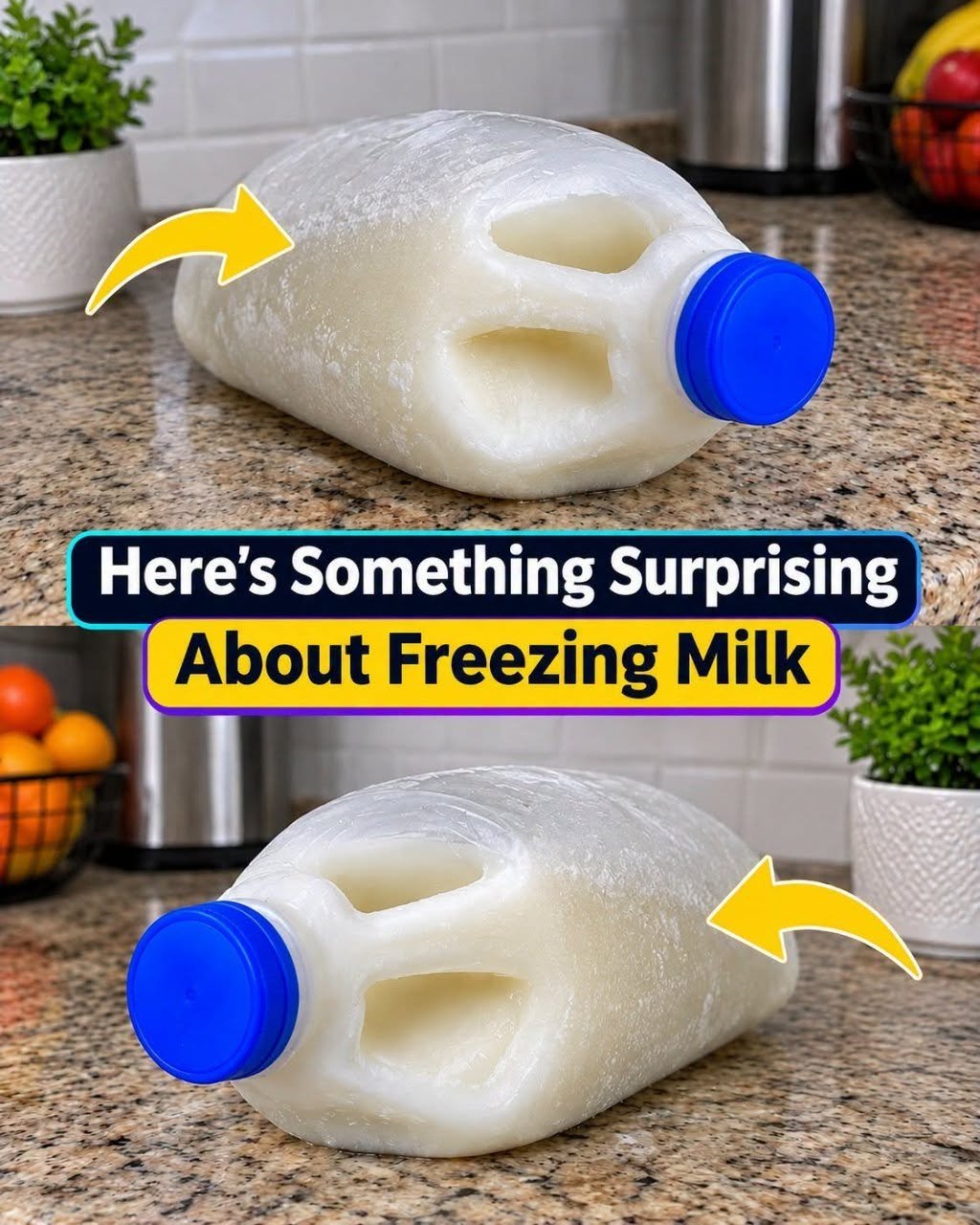
—cause your container to crack or shatter if you fill it to the brim, or leave you staring at a watery, separated liquid when you thaw it out because the delicate dairy emulsion has collapsed.
Freezing milk is a wonderfully practical kitchen strategy to prevent food waste, stretch your grocery budget, or stock up during sales, but mastering it requires understanding a bit of fundamental food science. When milk undergoes the freezing process, two major physical transformations take place:
1. The Water Expansion Phenomenon
Water is one of the few substances on Earth that expands when it freezes—specifically, it increases in volume by about 9%.
-
The Danger: If you toss a completely full glass jar, a tightly capped plastic jug, or a bulging carton of milk straight into the freezer, the expanding liquid has nowhere to go. As the ice crystals form and push outward, glass will shatter and plastic containers will burst at the seams, leaving you with a sticky, frozen dairy mess to clean up.
-
The Fix: Always pour out about an inch of milk from the container (or transfer it to a dedicated freezer-safe container or heavy-duty silicone bag) to leave plenty of headspace for that 9% expansion.
2. The Emulsion Breakdown (Why It Looks Grainy)
Milk is not a simple homogeneous liquid; it is a complex natural emulsion—a delicate suspension of water, dissolved proteins (casein and whey), carbohydrates (lactose), and microscopic fat globules held together by natural emulsifying agents.
-
The Change: When milk freezes slowly in a home freezer, water molecules freeze into large ice crystals, which physically push the suspended fat globules and proteins out of alignment.
-
The Result: When you thaw the milk, the emulsion breaks down. The milk will often appear watery, and the fat will coalesce into tiny yellowish flakes or clumps, making it look curdled or grainy.
-
Is it safe? Yes! It is entirely safe to consume and drink, but texturally unappealing if you try to pour it straight into a clear glass or a delicate cup of tea.
-
The Fix: Thaw your milk slowly by moving it from the freezer to the refrigerator 24 hours before use. Once fully thawed, give the container a vigorous, aggressive shake, or run it through an immersion blender or standard blender for a few seconds to re-emulsify the fats and restore a smooth texture.
Best Practices for Freezing Dairy
-
Choose Your Milk Wisely: Whole milk and 2% milk freeze reasonably well because their higher fat content helps cushion the emulsion, though they still separate slightly. Skim milk separates less dramatically, but the lack of fat can make it taste watery upon thawing. Cream and heavy whipping cream (with a fat content above 36%) freeze exceptionally well and can even be whipped after thawing if they contain no stabilizers.
-
Mind the Flavor: Milk is porous and acts like a natural sponge for odors. If your freezer contains onions, frozen fish, or open containers, your milk will absorb those volatile aromatic compounds. Always ensure your containers are airtight.
-
Timeframe: For the best quality and taste, use frozen milk within 1 to 3 months. Over extended periods, the proteins can degrade further, making the texture more stubborn to fix upon thawing.
