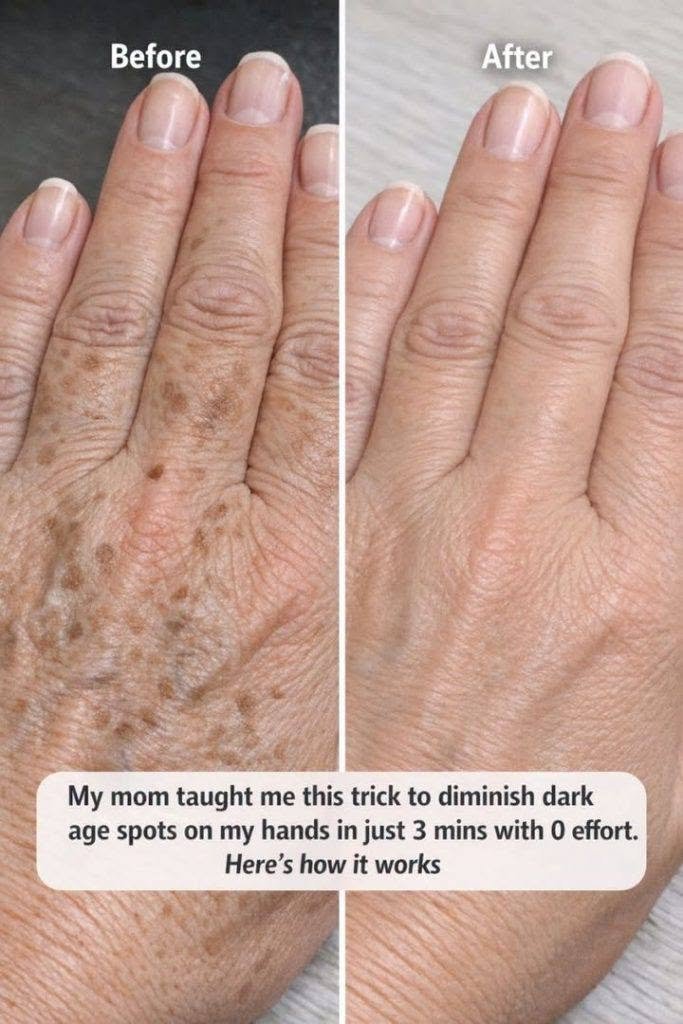
Headlines promising that a miraculous 3-minute kitchen trick will effortlessly erase dark age spots rely on viral exaggeration rather than skin biology.
While certain home remedies can temporarily brighten the very surface of the skin or provide mild exfoliation, true dark spots—medically known as solar lentigines or hyperpigmentation—are caused by localized accumulations of melanin deep within the epidermis. A quick, effortless rub cannot undo years of UV-induced pigment production.
What Dark Age Spots Actually Are
Age spots are not caused by “toxins” or trapped dirt; they are the skin’s long-term memory of sun exposure. Over decades, ultraviolet (UV) radiation stimulates melanocytes (the pigment-producing cells in your skin) to overproduce melanin in specific areas that receive the most sun, such as the backs of the hands and the face. Because this pigment sits in the deeper layers of the skin, topical surface tricks rarely reach the root of the problem.
Why 3-Minute Kitchen “Tricks” Fall Short
Viral hacks often rely on ingredients like lemon juice, apple cider vinegar, or baking soda. While they have mild chemical or physical properties, they come with significant limitations and risks:
-
Temporary Exfoliation: Acidic kitchen ingredients can slough off the outermost layer of dead skin cells, giving a temporary impression of brightness, but they do not stop or reverse melanin overproduction.
-
Skin Irritation and Chemical Burns: Applying undiluted citrus juice (like lemon) to your skin and then exposing your hands to sunlight can cause a severe inflammatory reaction called phytophotodermatitis, resulting in blistering, redness, and darker post-inflammatory hyperpigmentation.
What Actually Works to Manage Age Spots
If you want to fade age spots safely and effectively, evidence-based dermatology relies on consistency and ingredients that interrupt melanin production:
-
Daily Broad-Spectrum Sunscreen (The Most Critical Step): If you treat age spots without protecting your hands from UV rays, the sun will simply reactivate the melanin cells, undoing any progress. Apply a broad-spectrum SPF 30 or higher to the backs of your hands daily, especially before driving or going outside.
-
Topical Brightening Agents: Over-the-counter or prescription creams containing vitamin C, niacinamide, alpha arbutin, or kojic acid gently inhibit tyrosinase—the enzyme responsible for melanin production—gradually fading spots over weeks or months.
-
Chemical Exfoliants: Ingredients like glycolic acid or lactic acid encourage gentle cellular turnover, helping pigmented surface cells shed faster.
-
Clinical Treatments: For stubborn spots, dermatologists use professional treatments like cryotherapy (freezing), Q-switched lasers, or chemical peels to break up pigment clusters effectively.
