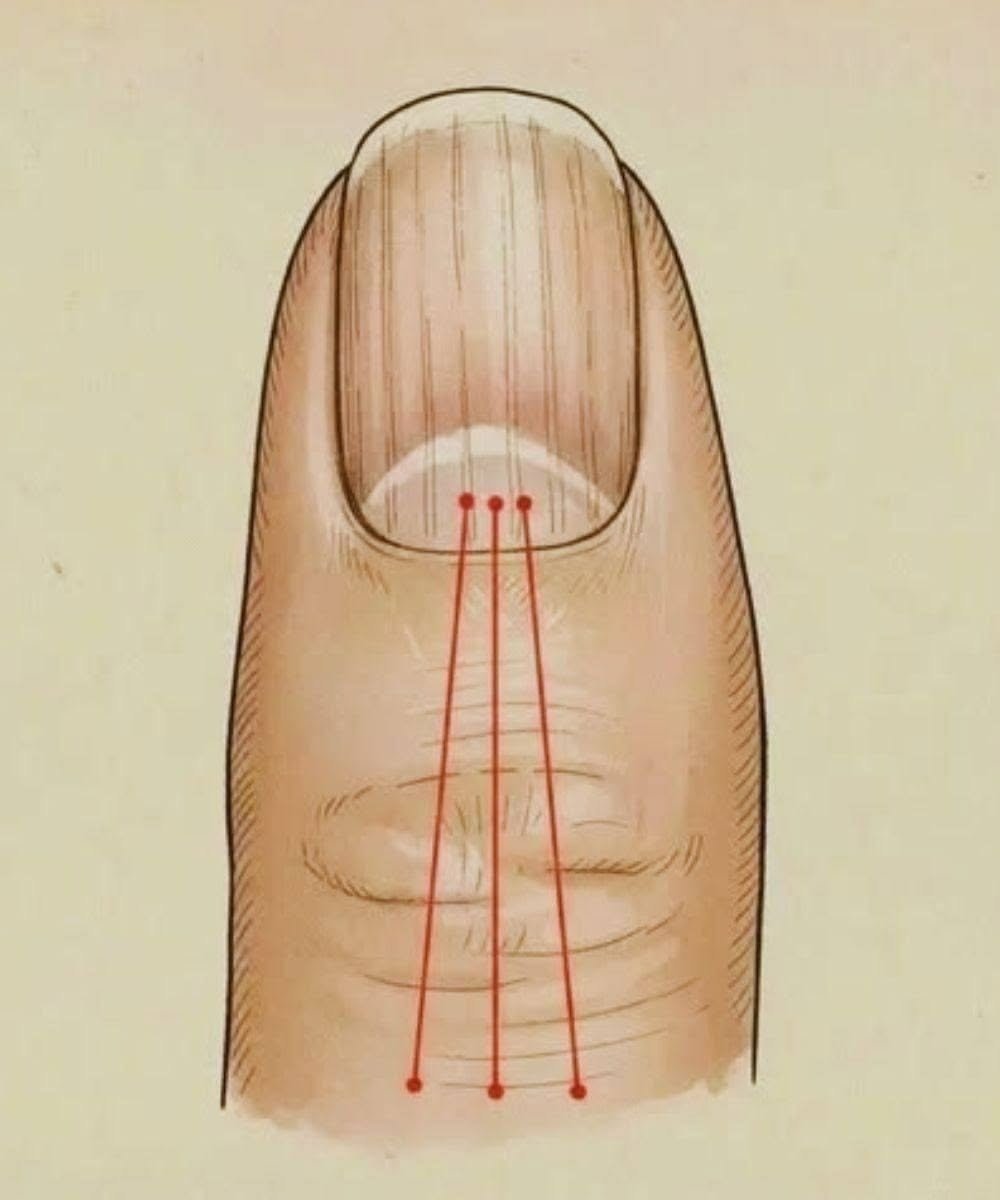
When sensationalized health articles cut off a warning like “If you have lines on your nails, it means you have ca…”—typically trying to terrify readers into fearing cancer or severe systemic disease—dermatologists offer an immediate and reassuring reality check: the vast majority of nail lines are completely harmless and have nothing to do with cancer.
Vertical vs. Horizontal Lines: What They Actually Mean
The clinical significance of nail lines depends entirely on the direction in which they run:
1. Vertical Ridges (Extremely Common and Harmless)
-
What They Look Like: Fine, parallel lines running vertically from your cuticle up to the tip of the nail.
-
What They Mean: Just like facial wrinkles or graying hair, vertical nail ridges are a natural, age-related change in how the nail matrix produces keratin. As we get older, cell turnover slows down, and nails naturally lose a bit of their smooth moisture barrier. They are entirely benign and require no treatment.
2. Horizontal Grooves / Beau’s Lines (Requires Attention)
-
What They Look Like: Deep depressions or ridges running horizontally (side-to-side) across the nail plate.
-
What They Mean: Unlike vertical lines, horizontal grooves indicate that nail growth was temporarily interrupted. This happens when the body undergoes a significant physiological stressor weeks or months prior—such as a severe systemic illness, high fever, major surgery, sudden nutritional deficiency, or severe physical trauma to the nail bed. Once the stressor resolves, the nail simply grows out.
When to Consult a Dermatologist
While normal vertical ridges or a single past bout of Beau’s lines are nothing to worry about, you should schedule an evaluation with a dermatologist if you notice:
-
A Dark Streak: A permanent dark brown, black, or pigmented band running vertically down the nail plate (which should be checked to rule out subungual melanoma).
-
Pitting or Splitting: Severe nail crumbling, yellowing, or separation of the nail from the nail bed (onycholysis).
Are you noticing specific changes in your nails, or reviewing routine health markers as part of your overall wellness care?
