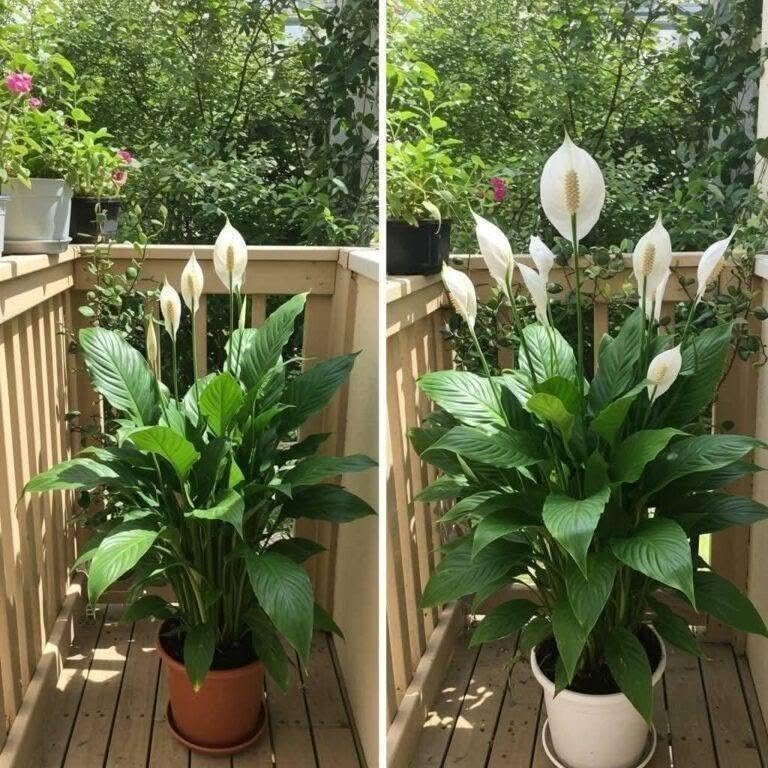
Headlines claiming that a single cup of a kitchen concoction (like leftover coffee, eggshell water, or Epsom salts) will make a peace lily “bloom like crazy” rely on sensationalized gardening myth rather than plant biology.
While peace lilies (Spathiphyllum) are beloved for their glossy foliage, forcing them into prolific white blooms requires getting their basic environmental conditions right—no “miracle tonic” can override a lack of proper light or watering.
Why Your Peace Lily Might Not Be Blooming
Peace lilies are tropical understory plants. When they refuse to flower and produce only leaves, it almost always comes down to environmental stress or unmet needs:
-
Insufficient Light (The #1 Culprit): Peace lilies tolerate low-light offices, which is why people buy them. However, they rarely flower in low light. To bloom, they need bright, indirect sunlight—such as near an east- or north-facing window.
-
Improper Watering Cycles: Letting the plant dry out completely until it dramatically droops every single time stresses the plant, while keeping the soil perpetually soggy causes root rot. Both inhibit flower production.
-
Nutrient Depletion: If a peace lily has lived in the same potting soil for years, the medium is depleted of the phosphorus and potassium needed to push out blooms.
What Actually Helps a Peace Lily Bloom
If you want to encourage healthy, natural flowering, skip the viral kitchen hacks and focus on fundamental plant care:
-
Move It Closer to Light: Shift the plant a few feet closer to a window where it receives bright, indirect light.
-
Feed During the Growing Season: During spring and summer, apply a balanced, water-soluble houseplant fertilizer diluted to half-strength once a month. Look for a formula slightly higher in phosphorus, which supports flowering.
-
Use Filtered or Rested Water: Peace lilies are sensitive to heavy minerals like fluoride and chlorine found in tap water, which often causes brown leaf tips. Letting tap water sit out overnight before watering (or using filtered water) keeps the root system healthier and less stressed.
