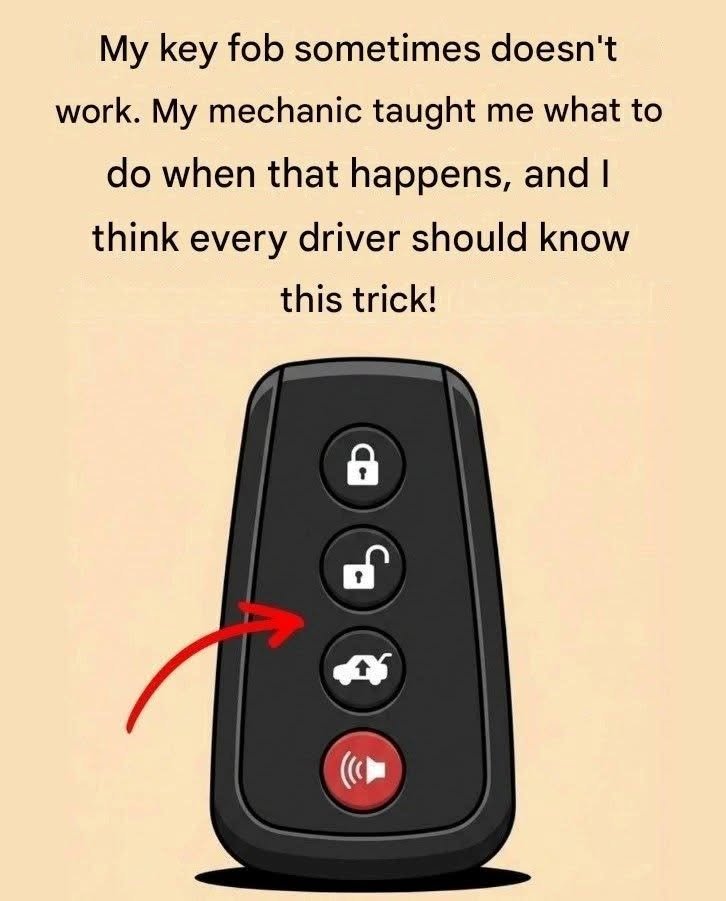
1. The RFID Transponder Backup (Starting the Car with a Dead Battery)
When a push-to-start vehicle’s key fob battery dies completely, drivers often panic, thinking they are stranded. However, manufacturers build a passive backup system into virtually all modern smart-key vehicles.
-
How it works: Inside every smart key fob is a passive RFID (Radio Frequency Identification) chip or transponder coil that does not rely on the fob’s internal coin-cell battery.
-
The Action: If your car won’t recognize the fob, hold the key fob directly against the start/stop button and press it while holding the brake pedal down. In some vehicle models (like certain Toyota, Ford, or Hyundai models), you may need to insert the fob into a dedicated emergency slot, place it in the center console storage bin, or hold it near the steering column cylinder where the receiver coil is located.
-
The Physics: The vehicle’s ignition switch emits a low-frequency electromagnetic field. This field inductively powers the passive chip inside your dead fob for a split second, allowing it to transmit its security code to the car’s immobilizer computer and start the engine.
2. Accessing the Cabin via the Hidden Mechanical Key
If the vehicle battery or the fob’s remote transmitter fails entirely, electronic keyless entry will not unlock the doors.
-
The Action: Look closely at your key fob for a small release slider, button, or latch. Sliding or pressing this releases a hidden physical metal key blade tucked inside the housing.
-
The Hidden Key Cylinder: Many modern cars appear to have solid door handles with no keyholes. Look underneath or on the side of the driver’s door handle for a small notch or slot. Using the tip of your mechanical key or a small screwdriver, you can pop off the small plastic cap covering the manual key cylinder to unlock the door physically.
3. Radio Frequency Interference (RFI)
Sometimes your key fob works fine right next to the car, but fails in certain parking lots or near specific buildings.
-
The Causes: Key fobs operate on radio frequencies (typically around 315 MHz or 433 MHz). Strong local interference can drown out the signal. Common culprits include:
-
Cell phone towers, radio broadcasting masts, and military installations.
-
Aftermarket USB phone chargers or dashcams plugged into the car’s 12V socket that emit electrical noise on similar frequencies.
-
Encrypted security gates or automated parking barriers.
-
-
The Solution: Move the key fob physically closer to the door receiver (often near the base of the windshield or the driver’s side door pillar) or remove aftermarket electronics plugged into power ports.
4. Replacing the Fob Battery
Most smart fobs use a standard lithium coin-cell battery (most commonly a CR2032 or CR2025).
-
Pro-Tip: Keep a spare battery in your glove compartment or center console. Replacing it usually requires splitting the fob casing apart with a small flathead screwdriver or a coin inserted into the casing slot. Avoid touching the flat surfaces of the new battery with bare fingers, as oils from your skin can cause corrosion or decrease battery life.
