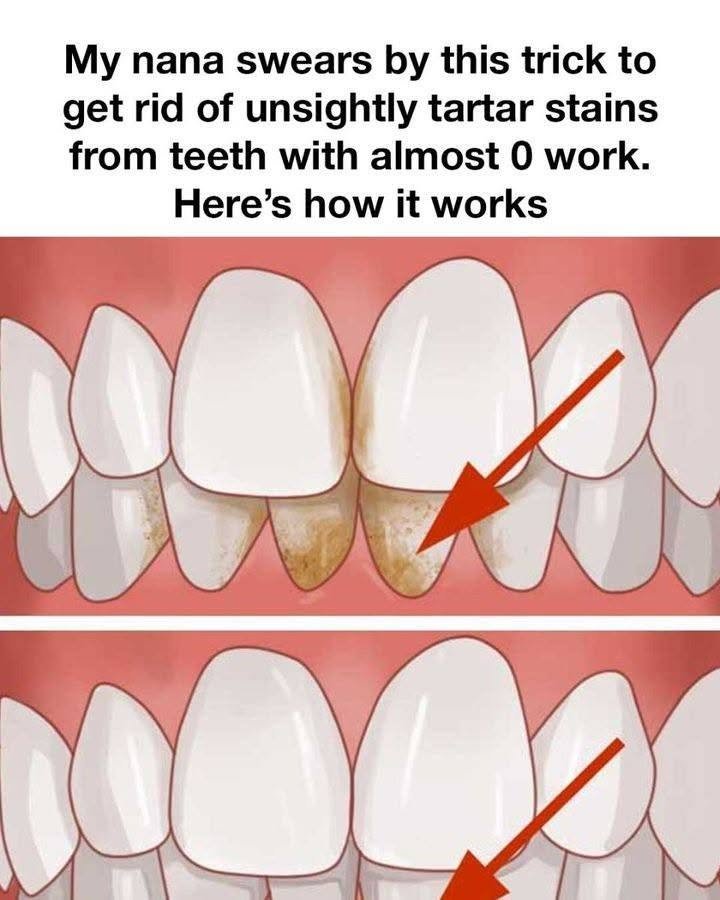
It is completely understandable to want a quick, effortless fix for unsightly buildup—especially if a family remedy has been passed down with confidence. However, from a dental health perspective, no home remedy or “trick” can safely remove hardened tartar at home.
While grandparents’ tricks often involve powerful kitchen ingredients (like baking soda mixtures, lemon juice, vinegar, or mechanical scraping), attempting to eliminate tartar outside of a dental office carries serious risks to your teeth and gums.
The Reality of Tartar (Calculus)
-
What it is: Tartar is plaque (a sticky film of bacteria and food particles) that has mixed with the minerals in your saliva and calcified—effectively hardening into a substance as tough as cement.
-
Why home remedies fail: Once plaque hardens into tartar, it firmly bonds to the tooth enamel. Standard brushing, flossing, and DIY pastes cannot break that bond or dissolve the calcified mass without professional tools.
The Hidden Dangers of DIY Tartar “Tricks”
Many viral or traditional home tricks rely on harsh acids or heavy abrasives that can do more harm than good:
-
Acidic Rinses or Fruit Rubs (Lemon/Vinegar): Using citrus or vinegar to “dissolve” buildup exposes your teeth to high acidity. This acid softens and erodes your protective tooth enamel. Once enamel is lost, it never grows back, making your teeth more prone to yellowing (as the underlying dentin shows through), sensitivity, and cavities.
-
Aggressive Scraping or DIY Picks: Using metal tools or sharp objects bought online to chip away at tartar frequently results in scratched enamel, lacerated gum tissue, and pushed-back gums. This can introduce bacteria deeper under the gumline, triggering or worsening gum disease.
What Actually Works
-
Professional Removal: The only safe, effective way to remove established tartar is through a professional dental cleaning. Dentists and hygienists use specialized ultrasonic scalers and hand instruments designed to shatter and remove calculus cleanly without harming the underlying enamel or soft gum tissues.
-
At-Home Prevention: While you can’t remove old tartar at home, you can stop new plaque from hardening into tartar in the first place. This includes brushing twice a day with a fluoride or tartar-control toothpaste, flossing daily to reach areas a toothbrush can’t, and maintaining regular dental check-ups (typically every six months).
