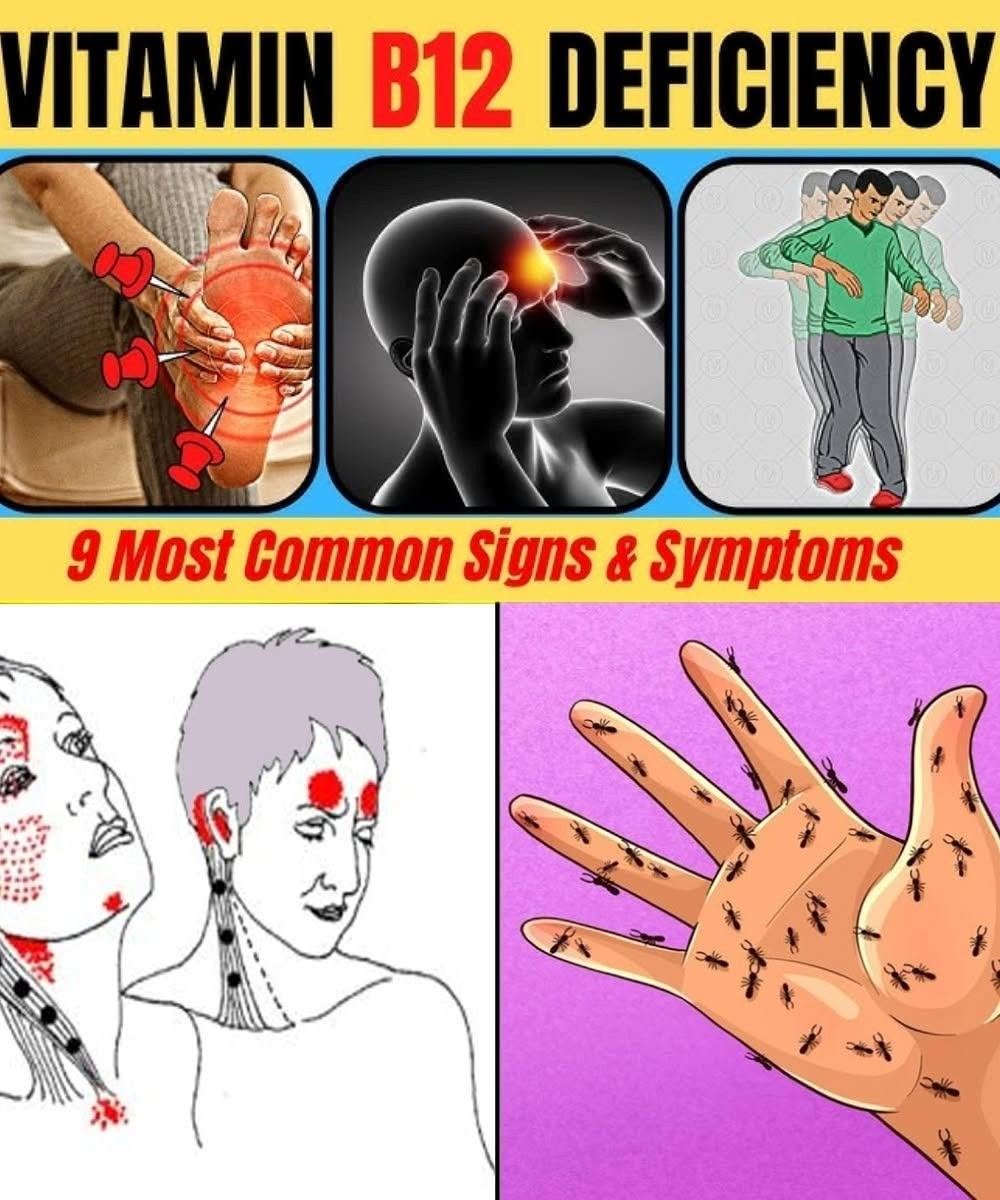
When clickbait health articles warn about “Vitamin B12 deficiency symptoms that should never be ignored,” they usually rely on dramatic warnings to make you self-diagnose every minor bout of fatigue or brain fog.
The underlying medical reality is both more precise and more serious: Vitamin B12 is an essential water-soluble vitamin that your body cannot synthesize on its own. Because B12 is required for two massive biological engines—creating healthy red blood cells (hematopoiesis) and maintaining the fatty myelin sheath that insulates your central and peripheral nervous systems—a prolonged deficiency doesn’t just make you tired; it can cause progressive, permanent neurological damage if ignored too long.
An evidence-based look at the red-flag symptoms of B12 deficiency helps you distinguish everyday exhaustion from a true medical crisis.
Why B12 Deficiency Becomes Dangerous
Your body typically stores several years’ worth of B12 in the liver, meaning a deficiency develops slowly over months or years. However, when those reserves finally run dry, the impact is systemic.
Unlike iron deficiency (which primarily starves tissues of oxygen), a severe B12 shortage attacks the nervous system directly. If allowed to progress past a certain threshold, the demyelination of nerve fibers can transition from reversible functional impairment to permanent neurological scarring.
Red-Flag B12 Symptoms You Should Never Ignore
While mild fatigue comes with modern life, medical science recognizes several severe warning signs that demand immediate clinical evaluation and blood work:
1. Progressive Ataxia (Unsteady Balance and Frequent Stumbling)
-
The Symptom: You find yourself tripping, losing your balance in the dark, or feeling like your feet are uncoordinated and clumsy.
-
The Mechanism: Advanced B12 deficiency damages the posterior columns of the spinal cord (subacute combined degeneration). This destroys your proprioception—your brain’s ability to sense where your limbs are in space without looking at them. Ignoring balance issues can lead to dangerous falls.
2. Severe Peripheral Neuropathy (Numbness and Loss of Vibration Sense)
-
The Symptom: A persistent “pins and needles” sensation, complete numbness in the hands or feet, or an inability to feel vibrations or temperature changes in your toes.
-
The Mechanism: The myelin sheath insulating your peripheral nerves breaks down. If left untreated for too long, nerve fibers can atrophy, leaving chronic numbness or burning pain even after B12 levels are restored.
3. Profound Cognitive Decline and “B12 Dementia”
-
The Symptom: Rapidly worsening short-term memory lapses, severe word-finding difficulties, disorientation, or personality changes that are frequently misdiagnosed as early-onset Alzheimer’s disease or dementia.
-
The Mechanism: The central nervous system relies heavily on B12 for neurotransmitter synthesis and cerebral oxygenation. Fortunately, when caught early, cognitive decline caused by B12 deficiency is often fully reversible with high-dose supplementation or injections.
4. Megaloblastic Anemia (Shortness of Breath and Tachycardia)
-
The Symptom: Breathlessness after minimal exertion, a pounding or racing heartbeat (tachycardia), pale skin, and overwhelming physical weakness.
-
The Mechanism: Without B12, your bone marrow produces abnormally large, immature, and dysfunctional red blood cells (megaloblasts) that carry oxygen poorly and break down prematurely, forcing your heart and lungs to work overtime to oxygenate your tissues.
5. Glossitis (A Painful, Raw, “Beefy Red” Tongue)
-
The Symptom: A tongue that loses its normal bumpy texture, becoming completely smooth, swollen, intensely red, and painful, sometimes accompanied by cracked corners of the mouth (angular cheilitis).
-
The Mechanism: Because the mucosal lining of the mouth and digestive tract consists of rapidly dividing cells, it is acutely vulnerable to nutritional shortages, making the tongue a visible external indicator of internal depletion.
How to Address It Safely
If you experience neurological red flags like numbness, balance issues, or severe cognitive fog, do not guess and do not start random over-the-counter megadoses before testing, as high-dose folic acid can mask a B12 deficiency and worsen nerve damage.
-
Get Tested: Ask your doctor for a serum B12 test, alongside methylmalonic acid (MMA) and homocysteine blood tests for a complete clinical picture.
-
Treat the Root Cause: If low levels stem from dietary choices (such as strict veganism without supplementation), oral or sublingual B12 resolves it easily. If the cause is pernicious anemia (an autoimmune condition destroying intrinsic factor in the stomach), lifelong monthly B12 injections or high-dose sublingual therapy will be necessary to bypass gut malabsorption entirely.
