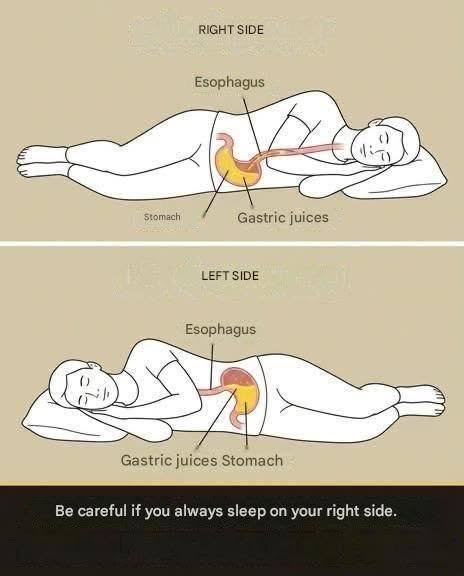
Headlines finishing that sentence with alarming claims like “you are destroying your heart,” “you will ruin your liver,” or “you are permanently damaging your digestive tract” rely on sensationalized sleep anxiety rather than sleep medicine or human anatomy.
While sleeping position can influence certain symptoms—particularly for people with specific chronic conditions like acid reflux or late-stage pregnancy—sleeping on your right side is a completely normal, natural posture that does not cause internal damage.
Where the Sleep Position Myths Come From
Viral health posts often exaggerate minor physiological quirks into catastrophic medical warnings:
-
The Heart Strain Myth: A common claim is that right-side sleeping forces gravity to weigh heavily on your heart. In reality, your heart is securely anchored in the mediastinum (the central compartment of the chest cavity) by strong ligaments and surrounding tissues. Turning to the right side does not cause your heart to “flop” or strain. (Doctors do occasionally recommend left-side sleeping for pregnant individuals or those with severe heart failure to optimize blood flow to the fetus or reduce venous return pressure, but right-side sleeping is not inherently dangerous for healthy hearts).
-
The Acid Reflux (GERD) Nuance: Studies show that sleeping on your left side keeps the junction between your stomach and esophagus above the level of gastric acid, making it less likely for acid to leak upward. Conversely, sleeping on your right side can relax that sphincter and make nighttime heartburn more frequent for people who already suffer from chronic GERD. However, if you don’t suffer from acid reflux, right-side sleeping poses zero digestive threat.
-
Liver Position Misunderstandings: Because the liver sits in the upper right side of the abdomen, some internet myths claim sleeping on that side compresses or overworks it. Mechanically, the liver is protected by your rib cage, and normal body weight shifting during sleep does not impair its function.
The Bottom Line
Your body naturally shifts positions multiple times throughout the night. While adjusting your sleep posture can be a helpful tool if you are managing specific issues like acid reflux or pregnancy discomfort, there is no single “correct” side for everyone. The best sleeping position is whichever one allows you to fall asleep comfortably and wake up well-rested.
