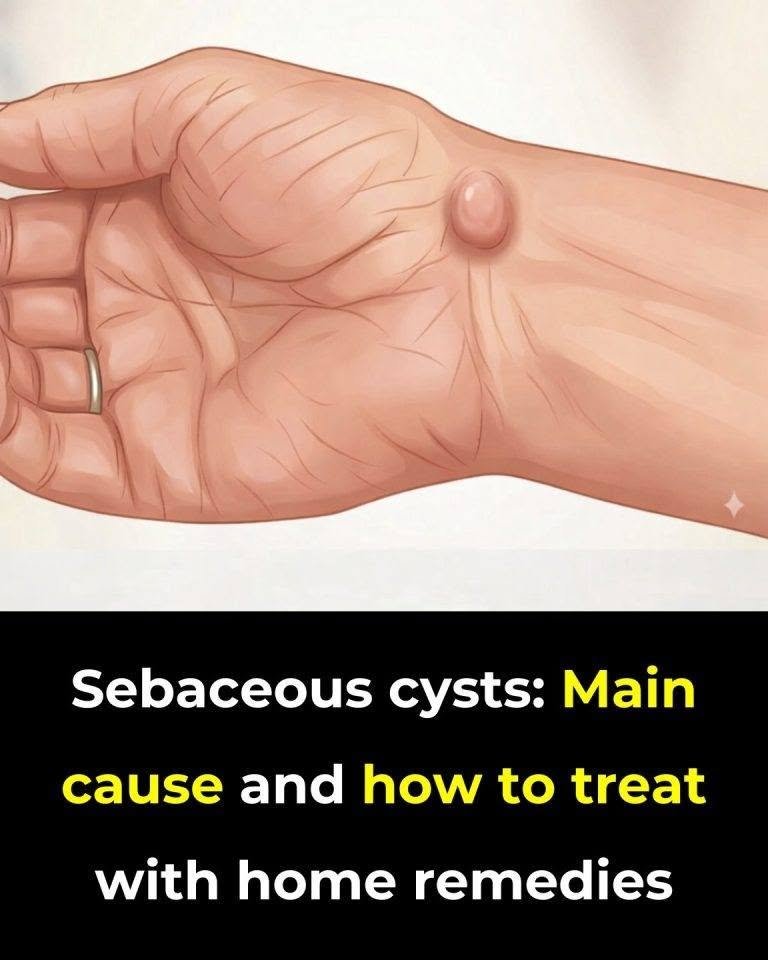
A “sebaceous cyst”—most commonly referred to in medicine as an epidermoid or epithelial cyst—is a slow-growing, noncancerous (benign) lump beneath the skin. While true sebaceous cysts develop from oil-producing (sebaceous) glands, most bumps called this are actually formed when surface skin cells (keratin) multiply and become trapped in a pouch beneath the skin.
They commonly appear on the face, neck, chest, or back, presenting as smooth, movable domes. Often, they feature a tiny dark plug or opening on the surface called a punctum.
Main Causes of Skin Cysts
Understanding how these cysts form helps clarify why certain home strategies work while others fail:
-
Trauma or Damage to Hair Follicles: If a hair follicle, pore, or gland is scraped, scratched, or structurally damaged, skin cells can be pushed deeper into the dermis rather than shedding normally.
-
Blocked Ducts: When the natural pathway for skin oils or cellular turnover is obstructed, debris accumulates, and the body walls it off into a protective sac.
-
Hormonal and Genetic Factors: Increased testosterone or changes during post-pubescent years can influence gland activity. Additionally, rare genetic disorders (like Gardner’s syndrome) can predispose individuals to multiple cysts.
-
Prior Acne or Surgery: Skin inflammation from severe acne or previous surgical incisions can alter normal skin architecture, trapping cellular debris over time.
Home Remedy Solutions: Safe Comfort vs. Dangerous Myths
When a cyst is small, painless, and stable, doctors often advise leaving it alone. However, if a cyst becomes mildly inflamed, tender, or swollen, safe at-home measures can help manage discomfort:
-
The Warm Compress Rule (Safe & Effective): Soak a clean cloth in comfortably warm (not scalding) water and hold it against the cyst for 10 to 15 minutes, two to three times a day. This can encourage natural drainage if there is a tiny opening, soothe localized inflammation, and ease tenderness.
-
Keep the Area Clean: Gently wash the skin around the cyst with mild, fragrance-free soap and water. Pat dry and avoid harsh scrubbing, chemical exfoliants, or tight clothing that causes friction.
🛑 What NOT to Do at Home
-
Never Pop, Squeeze, or Pierce It: This is the most critical rule. Squeezing a cyst or trying to burst it with a needle often ruptures the cyst wall internally. This pushes keratin and trapped bacteria deep into the surrounding tissue, triggering a severe immune reaction, intense pain, spreading infection, and deep scarring.
-
Avoid “Miracle” Creams: Over-the-counter acne spot treatments or creams marketed to “dissolve lumps” will not shrink the inner capsule of a cyst.
When Medical Treatment is Necessary
Home remedies only provide temporary relief for inflammation; they do not eliminate the cyst wall (sac). If the sac remains, the cyst will almost always refill and return.
Consult a healthcare provider or dermatologist if you notice:
-
Signs of Infection: Rapid expansion, severe pain, heat to the touch, increasing redness, or foul-smelling pus draining from the bump.
-
Functional Impairment: The cyst is located where it catches on clothing, glasses, or makes movement uncomfortable.
-
Atypical Features: Rapid growth, a diameter larger than 5 centimeters, or recurring infections, which warrant professional evaluation to rule out rare complications.
A physician can treat an active flare-up with an anti-inflammatory steroid injection or oral antibiotics if infected, or perform a minor surgical excision to completely remove the cyst wall and prevent it from coming back.
