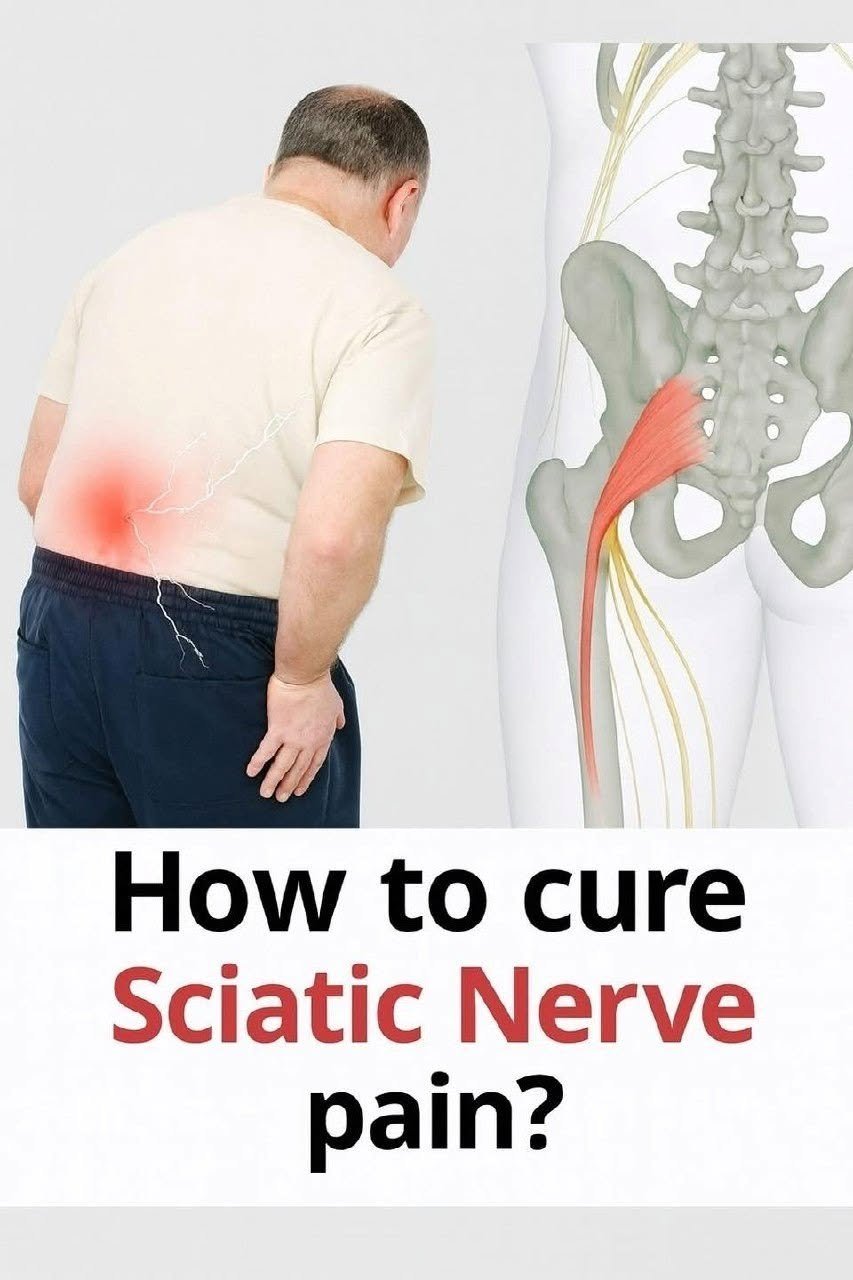
When lower back pain and sciatica flare up, finding immediate, gentle relief is essential. While stretching and movement are helpful, a foundational technique for resetting tight lower back muscles and decompressing the sciatic nerve is the active pelvic tilt combined with diaphragmatic breathing.
This simple, low-impact movement can be done right on the floor or even your mattress when pain strikes.
The Simple Technique: The Supine Pelvic Tilt
The pelvic tilt gently flattens the lumbar curve against the floor, stretching tight lower back muscles, opening up the spinal facet joints, and relieving pressure where the sciatic nerve root exits.
How to Do It:
-
Lie on Your Back: Lie on a firm, comfortable surface with your knees bent and your feet flat on the floor, hip-width apart. Let your arms rest relaxed at your sides.
-
Find Your Natural Curve: Notice the small, natural arch beneath your lower back—this is where tension often accumulates.
-
Tilt and Flatten: As you exhale slowly, gently tighten your lower abdominal muscles and press your lower back flat against the floor. You don’t need to lift your hips; just roll your pelvis slightly upward so your spine makes full contact with the ground.
-
Hold and Breathe: Hold this flattened position for 5 to 10 seconds while breathing smoothly.
-
Release: Inhale as you gently relax your pelvis back to the starting position, allowing the natural arch to return.
-
Repetitions: Repeat this smooth, controlled rocking motion 10 to 12 times.
Why It Works for Sciatica
When the lower back is locked in excessive extension (arching), the vertebrae pinch down on surrounding nerves and muscles like the piriformis cramp up in defense. The pelvic tilt creates gentle space between the vertebrae, eases muscle spasms in the lumbar region, and encourages blood flow to the area without jarring the sciatic nerve.
Daily Habits to Complement the Technique
-
Avoid Prolonged Sitting: Sitting for long hours puts direct pressure on the glutes and lower back, aggravating the sciatic nerve. Stand up and take a short, gentle walk every 30 to 45 minutes.
-
Support Your Sleep: If you sleep on your back, place a pillow under your knees to keep your spine in a neutral position. If you sleep on your side, put a pillow between your knees to keep your top hip from pulling down across your lower back.
If your lower back pain or sciatica is accompanied by numbness in both legs, sudden weakness, or loss of bowel or bladder control, seek emergency medical evaluation immediately.
