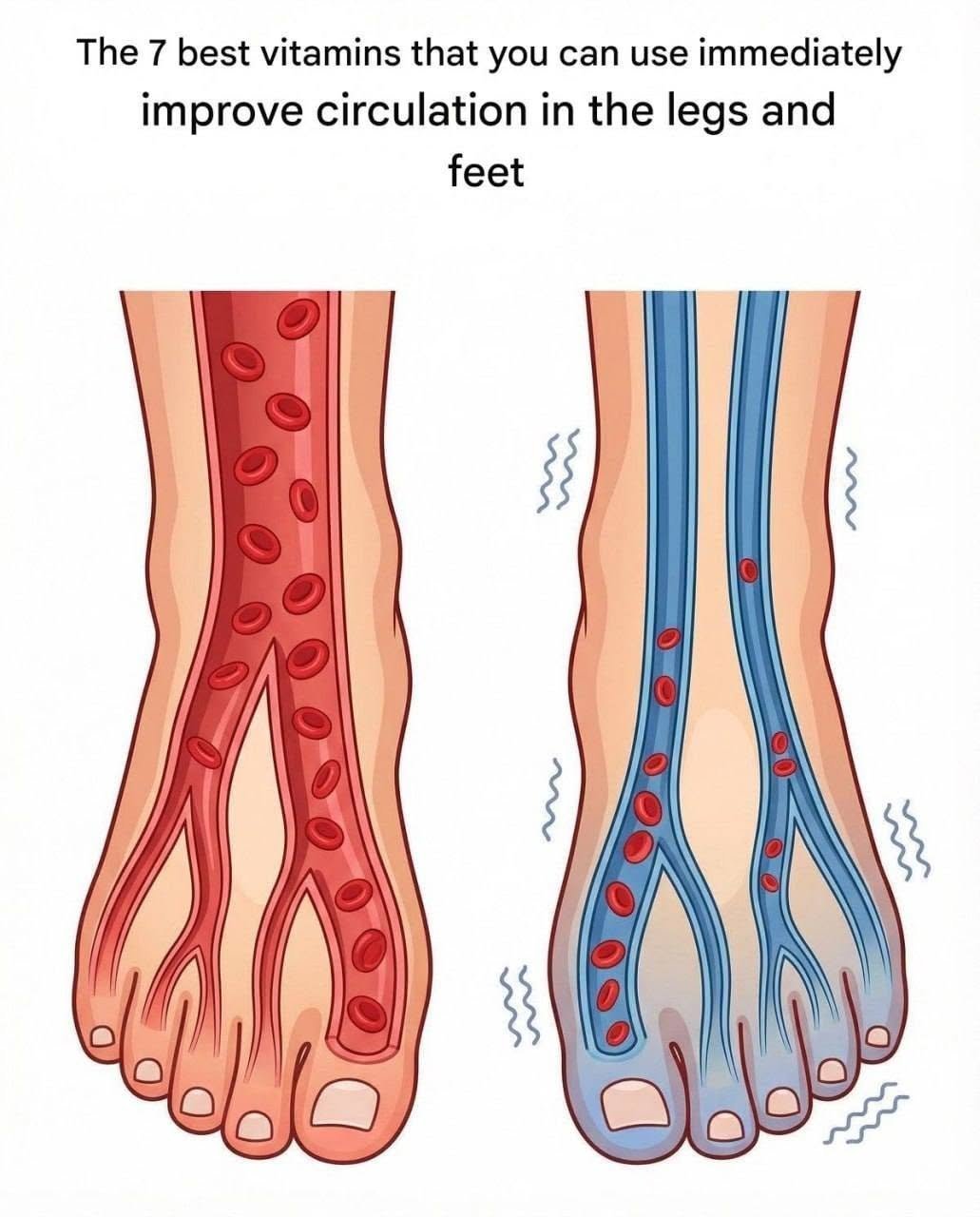
Improving poor circulation in your lower extremities does not require an intense workout. Specific, low-impact movements stimulate muscle contractions that act as a natural secondary pump, pushing stagnant blood upward from your feet and calves back toward your heart.
The 20-Minute Circulation-Boosting Routine
-
Minutes 0–5: Seated Ankle Pumps & Circles
-
How to do it: Sit upright in a chair with both feet flat on the floor. Lift your heels while keeping your toes planted, then lower your heels and lift your toes high. Follow this by rotating both ankles in slow circles (10 clockwise, 10 counter-clockwise).
-
Why it helps: Activates the calf muscle pump, which compresses deep veins and forces pooled blood upward against gravity.
-
-
Minutes 5–10: Seated Knee Extensions
-
How to do it: While seated, slowly straighten one leg out in front of you until parallel to the floor, hold for 3 seconds, and lower. Alternate legs for 5 minutes.
-
Why it helps: Engages the quadriceps and opens up blood flow through the femoral artery into the lower leg.
-
-
Minutes 10–15: Supported Standing Heel-Toe Raises
-
How to do it: Stand up, holding lightly onto a counter or sturdy chair back for balance. Slowly rise up onto your tiptoes, hold for 2 seconds, and rock back onto your heels. Repeat for 5 minutes.
-
Why it helps: Combines body weight with active calf contraction to maximize venous return from the feet.
-
-
Minutes 15–20: Reclined Elevation & Diaphragmatic Breathing
-
How to do it: Lie flat on your back on a mat or bed with your legs propped up on pillows so your feet are elevated slightly above the level of your heart. Close your eyes and take slow, deep breaths into your abdomen for 5 full minutes.
-
Why it helps: Uses gravity to drain stagnant fluid from the lower extremities while deep breathing reduces vascular tension.
-
Key Daily Habits for Sustained Vascular Health
-
Hydrate to Thin Blood: Dehydration makes blood thicker and harder to pump through narrow capillaries. Drink water consistently throughout the day.
-
Avoid Crossing Your Legs: Crossing your legs at the knees or ankles pinches superficial blood vessels and restricts blood flow to the lower legs.
-
Incorporate Magnesium-Rich Foods: Adequate magnesium relaxes smooth muscle tissue inside blood vessel walls, supporting healthy vasodilation and reducing lower-leg heaviness.
