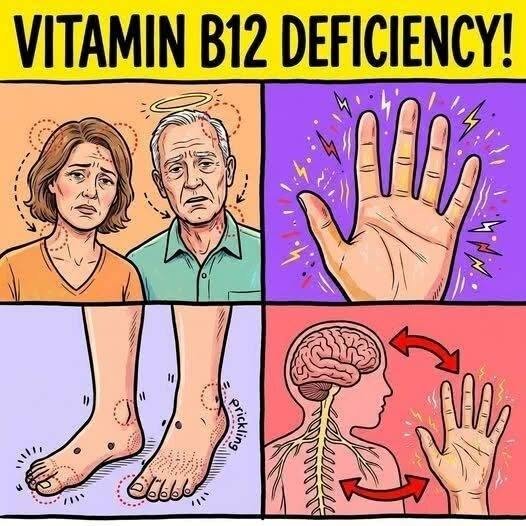
Vitamin B12 Deficiency Symptoms That Should Never Be Ignored
Vitamin B12 (cobalamin) is an essential water-soluble vitamin that your body cannot produce on its own. It plays a critical role in producing red blood cells, synthesizing DNA, maintaining proper nerve function, and supporting neurological health. Because B12 is stored in the liver, a deficiency can take months or even years to manifest; however, once stores are depleted, the resulting symptoms can become severe and, if left untreated, cause permanent nerve damage.
Here are 8 key vitamin B12 deficiency symptoms that you should never ignore:
1. Extreme Fatigue and Lethargy
-
What it feels like: A deep, persistent exhaustion that sleep does not fix, making routine daily activities feel like insurmountable hurdles.
-
Why it happens: Without adequate B12, your body struggles to produce healthy red blood cells (a condition called megaloblastic anemia). Because red blood cells carry oxygen throughout your body, your tissues and organs become starved of oxygen, triggering profound fatigue.
2. Tingling, Numbness, and “Pins and Needles” (Paresthesia)
-
What it feels like: A prickling sensation, numbness, or a chronic “pins and needles” feeling, most commonly in your hands, fingers, feet, or toes.
-
Why it happens: B12 is essential for maintaining the myelin sheath—the protective fatty coating that insulates your nerve fibers. When B12 is lacking, myelin degrades, impairing nerve signal transmission to and from your extremities.
3. Brain Fog, Memory Loss, and Cognitive Decline
-
What it feels like: Struggling to find words, experiencing frequent forgetfulness, difficulty concentrating, or a general feeling of mental cloudiness.
-
Why it happens: The central nervous system relies heavily on B12 for optimal cognitive function. Chronic deficiency can accelerate brain shrinkage and impair neurotransmitter communication, sometimes mimicking early-stage dementia in older adults.
4. Unsteady Gait, Balance Issues, and Muscle Weakness
-
What it feels like: Feeling clumsy, tripping easily, stumbling when walking in the dark, or experiencing unexplained muscle weakness in the legs.
-
Why it happens: Nerve damage caused by low B12 can affect proprioception—your body’s ability to sense its position in space. This loss of neurological feedback makes coordination and balance difficult.
5. Pale or Jaundiced (Yellowish) Skin Tone
-
What it feels like: Your skin taking on a noticeable pale pallor or a subtle yellowish tint to the skin and the whites of the eyes.
-
Why it happens: The impaired production and fragile nature of red blood cells in B12 deficiency cause them to break down easily, releasing excess bilirubin into the system, which creates a jaundice-like tinge, combined with an overall lack of color from anemia.
6. A Smooth, Red, Sore Tongue (Glossitis) and Mouth Ulcers
-
What it feels like: A tongue that feels unusually swollen, inflamed, smooth (as the tiny bumps or papillae wear down), or burning, often accompanied by painful mouth ulcers or cracks at the corners of the mouth.
-
Why it happens: Rapidly dividing cells in the mouth and digestive tract require B12 for proper regeneration. When B12 is low, the tissue lining the mouth deteriorates, leading to painful inflammation.
7. Mood Changes, Irritability, and Depression
-
What it feels like: Unexplained mood swings, heightened irritability, anxiety, or a persistent low mood that doesn’t align with your usual baseline.
-
Why it happens: B12 is intimately involved in the synthesis and metabolism of brain chemicals like serotonin and dopamine, which regulate mood and emotional stability.
8. Shortness of Breath and Dizziness
-
What it feels like: Getting winded easily after minimal exertion (such as walking across a room) or feeling dizzy and lightheaded when standing up.
-
Why it happens: Directly tied to anemia, your cardiovascular system must work overtime to pump oxygen-depleted blood through your body, leading to respiratory strain and transient drops in blood pressure to the brain.
Medical Disclaimer: Vitamin B12 deficiency is easily diagnosed via a routine blood test and treated with dietary adjustments, oral supplements, or injections. Always consult a healthcare provider before starting high-dose supplementation, especially if you experience neurological symptoms.
