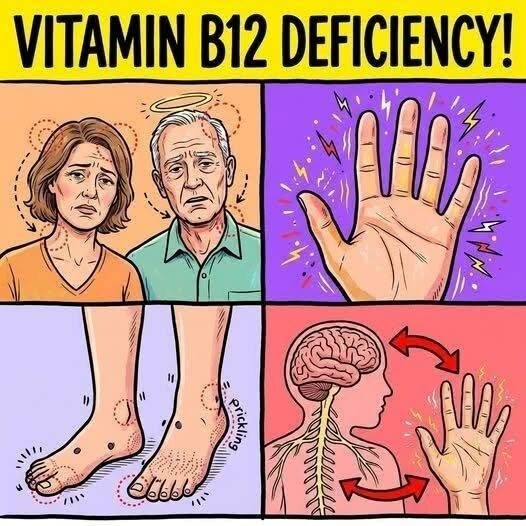
Vitamin B12 (cobalamin) is an essential nutrient that plays a critical role in red blood cell production, nerve tissue function, cellular metabolism, and DNA synthesis. Because the human body cannot produce B12 on its own, it relies on diet (primarily animal products) or supplementation.
A deficiency in B12 develops gradually, making its early signs easy to overlook or misattribute to stress, aging, or fatigue. However, leaving a B12 deficiency unmanaged can lead to irreversible nerve damage and severe anemia.
Here are key symptoms of Vitamin B12 deficiency broken down by body system that should never be ignored:
1. Neurological & Nerve Warning Signs
Vitamin B12 is essential for maintaining myelin, the protective sheath that insulates your nerves. When B12 drops, myelin deteriorates:
-
Paresthesia (Pins and Needles): A frequent burning, tingling, or “numbness” sensation in the hands, feet, or toes.
-
Balance Problems & Unsteady Gait: Nerve damage in the spinal cord can impair spatial awareness (proprioception), making you feel off-balance or prone to tripping when walking.
-
Muscle Weakness: Difficulty lifting everyday items or feeling uncoordinated in fine motor tasks.
2. Cognitive & Mental Shifts
Because B12 is crucial for neurotransmitter synthesis and brain metabolism, low levels directly impact mood and cognitive function:
-
“Brain Fog” & Memory Disruption: Unexplained confusion, difficulty concentrating, or trouble finding words. In older adults, low B12 can mimic early dementia.
-
Mood Changes & Depression: B12 helps regulate homocysteine levels. Elevated homocysteine from low B12 is strongly linked to anxiety, apathy, and clinical depression.
3. Hematologic (Blood & Energy) Symptoms
B12 is required to synthesize mature red blood cells. Without it, the body produces abnormally large, immature red blood cells that cannot carry oxygen efficiently (Megaloblastic Anemia):
-
Chronic, Debilitating Fatigue: Feeling thoroughly exhausted even after getting adequate sleep, as tissues and organs are deprived of sufficient oxygen.
-
Pale or Jaundiced (Yellowish) Skin: Deprived red blood cells break down easily in the body, releasing the pigment bilirubin, which gives the skin and whites of the eyes a faint yellowish tint.
-
Shortness of Breath & Dizziness: Feeling lightheaded, dizzy, or out of breath after minor physical exertion (like walking up a short flight of stairs).
4. Oral & Digestive Signs
-
Glossitis (Smooth, Red, Sore Tongue): The tongue becomes swollen, inflamed, bright red, and unusually smooth because the tiny bumps (papillae) containing taste buds fade away.
-
Mouth Ulcers & Burning Sensation: Painful aphthous ulcers (canker sores) or a persistent burning feeling inside the cheeks, gums, or tongue.
Who Is at the Highest Risk?
-
Strict Vegans and Vegetarians: B12 is almost exclusively found in animal-based foods (meat, dairy, eggs, fish).
-
Older Adults: Aging reduces stomach acid production (atrophic gastritis), which is needed to separate B12 from food proteins for absorption.
-
People with Autoimmune Conditions: Such as Pernicious Anemia (where the body attacks intrinsic factor, the stomach protein needed to absorb B12).
-
Those Taking Specific Long-Term Medications:
-
Metformin (common diabetes medication)
-
Proton Pump Inhibitors (PPIs) or H2 blockers for acid reflux (e.g., omeprazole, famotidine), which suppress stomach acid.
-
-
Individuals with Digestive Disorders: Crohn’s disease, celiac disease, or those who have undergone gastric bypass/bariatric surgery.
Diagnosis & Action
If you recognize several of these symptoms, consult a doctor for simple blood work:
-
Serum B12 Test: Checks total circulating B12 in your blood.
-
Methylmalonic Acid (MMA) & Homocysteine Tests: Highly accurate secondary markers that elevate when cellular levels of B12 are depleted.
Treating B12 deficiency early—via oral high-dose supplements, sublingual drops, or intramuscular B12 injections—typically reverses symptoms completely before permanent nerve damage sets in.
