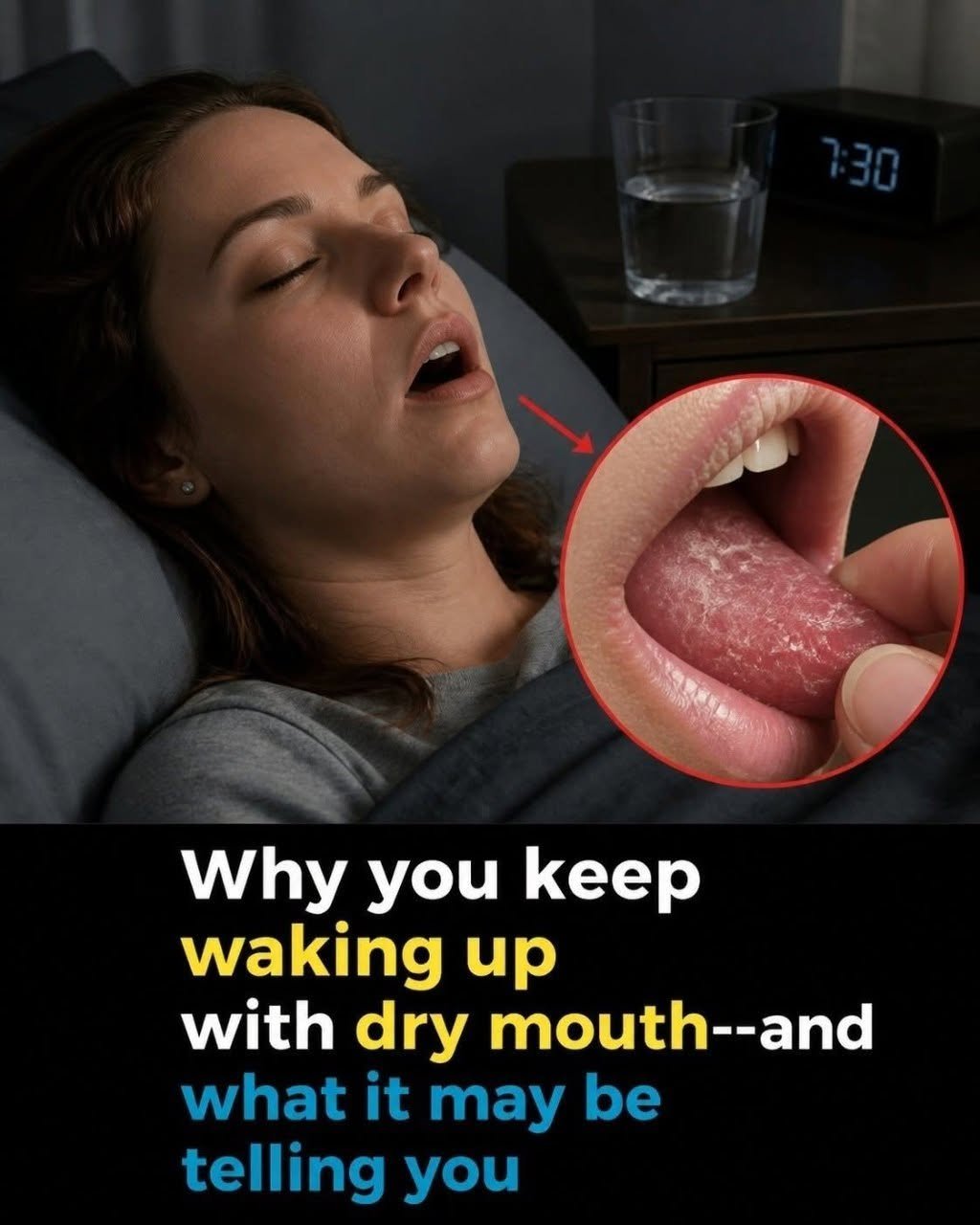
Waking up with a parched, sticky mouth—clinically known as xerostomia—is more than just an uncomfortable annoyance. Because your salivary glands naturally slow down production while you sleep, waking up feeling exceptionally dry is often your body’s way of signaling that something in your nighttime routine, environment, or overall health is out of balance.
Here is what waking up with a dry mouth might be telling you:
1. You Are Breathing Through Your Mouth at Night
This is by far the most common culprit. If you sleep with your mouth open, the continuous airflow rapidly evaporates the thin layer of saliva coating your oral tissues. Mouth breathing is frequently triggered by:
-
Nasal congestion from allergies, a deviated septum, or a sinus infection.
-
Chronic snoring or obstructive sleep apnea (OSA), a condition where your airway repeatedly collapses during sleep, forcing you to gasp for air through your mouth.
2. You May Be Dehydrated
If your overall daily fluid intake is low, or if you drank alcohol or caffeinated beverages close to bedtime, your body lacks the systemic hydration required to produce adequate saliva. When fluid levels drop, your salivary glands are among the first to throttle back production to conserve water for vital organs.
3. A Medication Side Effect is Catching Up to You
Hundreds of common prescription and over-the-counter medications—including antihistamines, decongestants, high blood pressure drugs (like diuretics), antidepressants, and anxiety medications—list dry mouth as a primary side effect. If you take any of these right before bed, the drying effect peaks overnight.
4. Your Bedroom Air Is Too Dry
If you sleep in a room with a running heater, air conditioner, or in a naturally low-humidity climate without a humidifier, the ambient air strips moisture away from your skin and respiratory tract as you breathe.
5. An Underlying Health Condition or Lifestyle Factor
-
Smoking or Vaping: Nicotine and chemical vapors severely restrict salivary gland function and irritate oral tissues.
-
Systemic Conditions: Chronic dry mouth can occasionally be an early sign of underlying conditions like Sjögren’s syndrome (an autoimmune disorder that attacks moisture-producing glands) or poorly managed diabetes, where frequent urination leads to systemic dehydration.
Why You Shouldn’t Ignore It
Saliva is your mouth’s natural defense system. It washes away food particles, neutralizes plaque acids, and contains minerals that protect your tooth enamel. Chronic nighttime dry mouth significantly increases your long-term risk of severe tooth decay, gum disease, and fungal infections like oral thrush.
