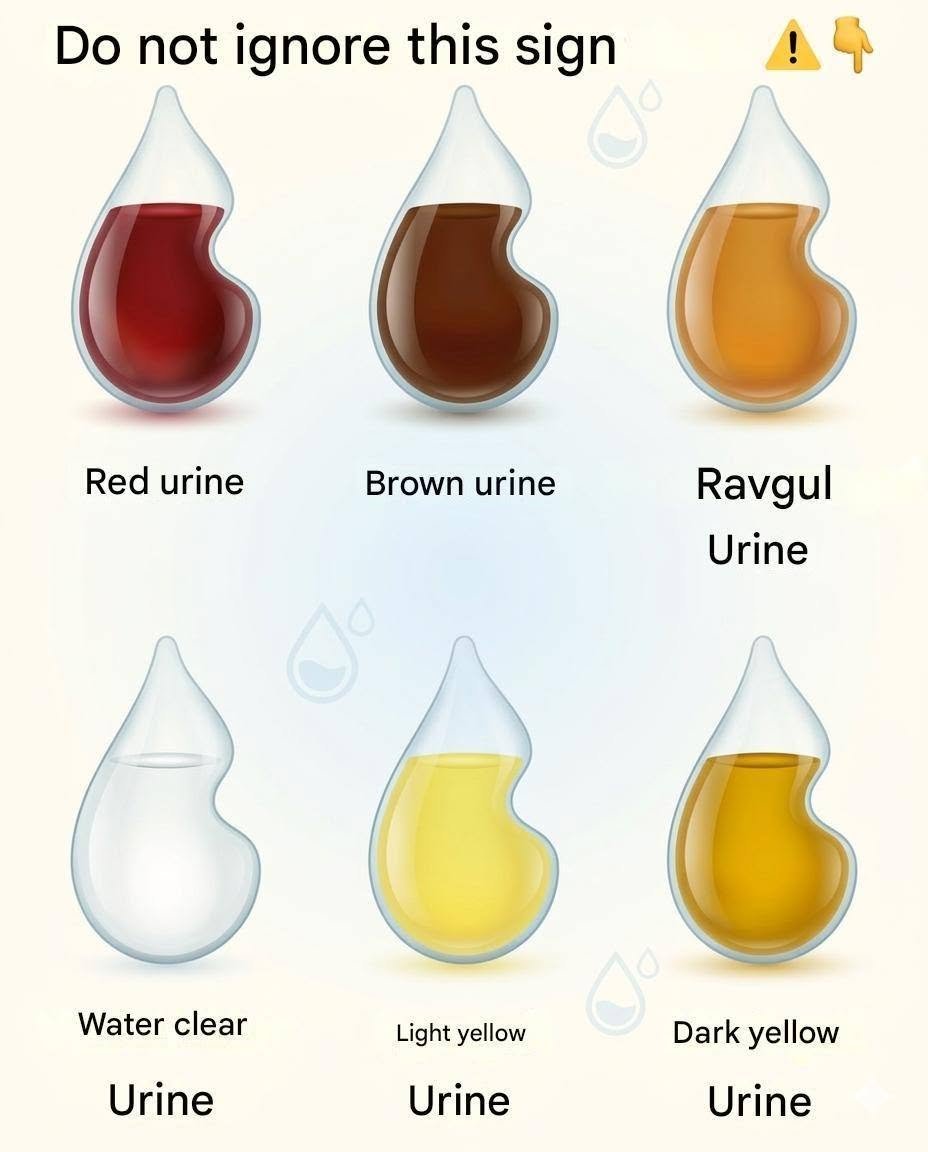
When health headlines and viral wellness graphics ask, “What does the color of your urine say about your health?” they often present a terrifying rainbow chart suggesting that every subtle shade shift means a different organ is failing.
While urine color is a genuinely useful, real-time indicator of your hydration status and metabolic processing, it is rarely the instant medical emergency that clickbait charts imply.
The Real Science of Urine Color
Normal urine gets its characteristic yellow color from urobilin (also called urochrome), a pigment produced when your body breaks down old hemoglobin from red blood cells. The concentration of this pigment—and therefore the shade of your urine—is primarily determined by how diluted it is with water.
-
Pale Straw to Transparent Yellow (Optimal Hydration): This indicates a healthy balance of fluids. Your kidneys are efficiently filtering waste, and you are well-hydrated.
-
Dark Amber or Honey (Dehydration): When fluid intake drops or fluid loss increases through sweat or heat, your kidneys conserve water, concentrating urobilin into a much darker shade.
-
Clear / Completely Colorless (Overhydration): While clear urine sounds ideal, drinking massive volumes of water in a short span can dilute your electrolytes (specifically sodium), leading to a condition called hyponatremia.
What Unusual Colors Actually Indicate
When urine shifts outside the normal yellow spectrum, the cause is usually straightforward—ranging from harmless dietary pigments to common medications, with only occasional clinical red flags:
-
Bright Neon Yellow: Almost always caused by excess B-complex vitamins (specifically riboflavin/Vitamin B2) that your body is simply excreting because it doesn’t need them. It is completely harmless.
-
Pink, Red, or Brown: While this can sometimes indicate blood in the urine (hematuria) requiring a doctor’s evaluation, it is far more frequently caused by harmless food pigments. Eating beets, blackberries, or rhubarb can temporarily tint urine reddish-pink. Certain medications (like the laxative senna or the antibiotic rifampin) can also turn urine brownish-red.
-
Dark Brown or Cola-Colored: Can be a sign of severe dehydration, bile duct obstruction, or liver issues (due to excess bilirubin entering the urine), but can also be triggered by specific muscle breakdown after intense exertion or certain medications.
-
Blue or Green: Rare, but usually driven by specific medical dyes, certain medications (like propofol or amitriptyline), or harmless food colorings.
What Clickbait Charts Exaggerate
Sensationalized wellness posts love to weaponize urine color charts to drive anxiety:
-
The “Secret Disease” Panic: Articles often claim that a slightly darker morning urine sample means your kidneys or liver are shutting down. In reality, your first morning urine is naturally concentrated because your body slows fluid processing overnight.
-
Treating Dietary Shifts as Pathologies: Clickbait rarely mentions that what you ate for dinner (like asparagus or beets) or the multivitamin you swallowed an hour ago is the immediate, harmless culprit behind a color change.
The Bottom Line
Urine color is a helpful, casual gauge of your hydration, but it is not a standalone diagnostic tool. If your urine is consistently dark amber, a quick extra glass of water will usually resolve it. However, if your urine is persistently red, brown, or cloudy—and not explained by recent meals or vitamins—skip the internet panic charts and consult a physician for a simple urinalysis.
