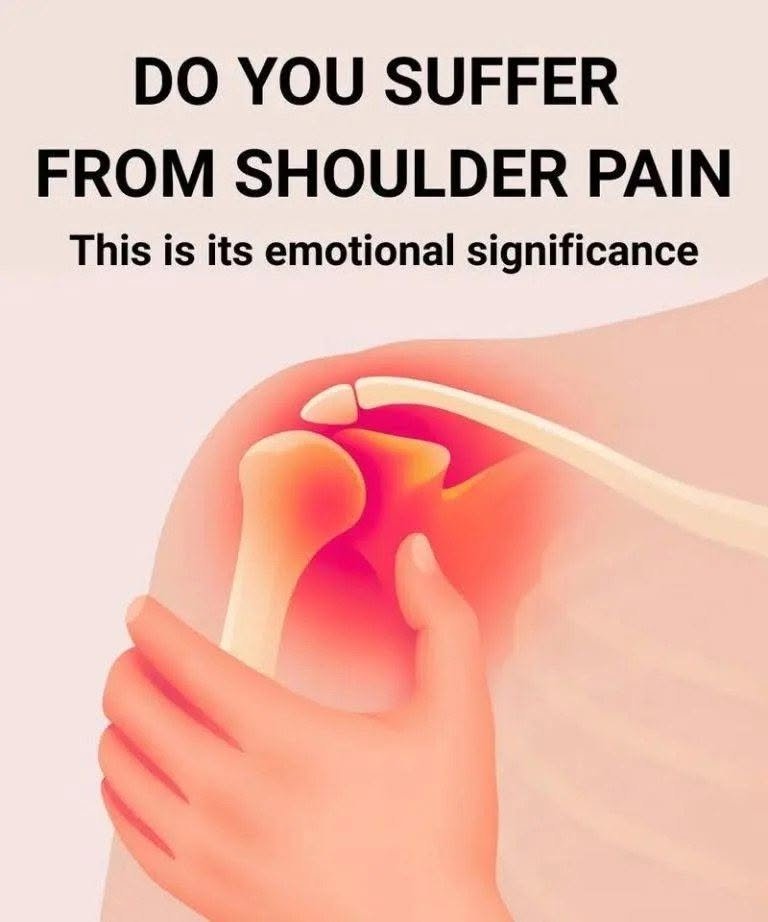
When wellness blogs, alternative health guides, or pop-psychology books claim to decode “the emotional meaning of shoulder pain”—often declaring that you are literally “carrying the weight of the world” or holding onto repressed emotional burdens—they are leaning into a metaphorical wellness trend.
While it is true that your emotional state profoundly influences your physical body, shoulder joints do not possess a hidden dictionary or a mystical emotional code. Pain in your shoulder is a physical, anatomical signal from complex musculoskeletal structures, not a direct translation of emotional baggage.
What “Emotional Meaning” Theories Get Wrong
-
Treating the Body Like a Symbol: Pop-psychology often assigns hyper-specific symbolic meanings to physical locations (e.g., claiming left shoulder pain means relational stress and right shoulder pain means professional pressure). Anatomically, nerves and joints do not divide workload based on life domains.
-
Overlooking Mechanical Reality: Attributing structural joint damage or nerve irritation entirely to emotional “negativity” or stress ignores the physical mechanics of wear, tear, inflammation, and injury.
The Clinical Reality: What Actually Causes Shoulder Pain
Orthopedic specialists, physical therapists, and physicians look at shoulder pain through the lens of biomechanics and anatomy. The shoulder is the most mobile joint in the human body, which also makes it structurally vulnerable. Common clinical drivers include:
-
Rotator Cuff Tendinopathy or Tears: Inflammation or structural splitting of the tendons that stabilize the shoulder joint, often caused by repetitive overhead use, athletic strain, or age-related degeneration.
-
Subacromial Bursitis: Inflammation of the fluid-filled sacs (bursae) that cushion the tendons from rubbing against the shoulder blade bone.
-
Shoulder Impingement Syndrome: Compression of the tendons and bursa when lifting the arm, leading to localized pinching and pain.
-
Adhesive Capsulitis (“Frozen Shoulder”): Thickening and contraction of the joint capsule, resulting in severe stiffness and restricted range of motion.
-
Cervical Radiculopathy (Referred Pain): Because of overlapping nerve pathways in the spine, a pinched nerve or disc issue in your neck can project pain straight down into your shoulder blade or upper arm.
Where Stress Does Intersect with Your Shoulders
While stress doesn’t create a literal “emotional meaning,” it does have a very real, measurable physical mechanism known as muscle guarding:
-
The Fight-or-Flight Tense-Up: When you experience acute stress, anxiety, or high pressure, your nervous system triggers an automatic reflex causing your muscles to tense up to protect you from perceived harm.
-
Chronic Muscular Guarding: Under prolonged or chronic stress, the muscles of your shoulder girdle and upper traps remain in a constant state of low-level contraction. This prolonged tension reduces local blood flow, causes muscle fatigue, and can trigger myofascial pain or tension headaches, making your shoulders feel stiff, achy, and heavy.
The Bottom Line
Your shoulders aren’t trying to send you a cryptic emotional message; they are reacting to physical load, posture, repetitive motion, age-related wear, or stress-induced muscle tension. If your shoulder pain is persistent, sharp, or limits your daily movement, skip the emotional decoder ring and consult a clinician or physical therapist to evaluate the actual mechanics of the joint.
