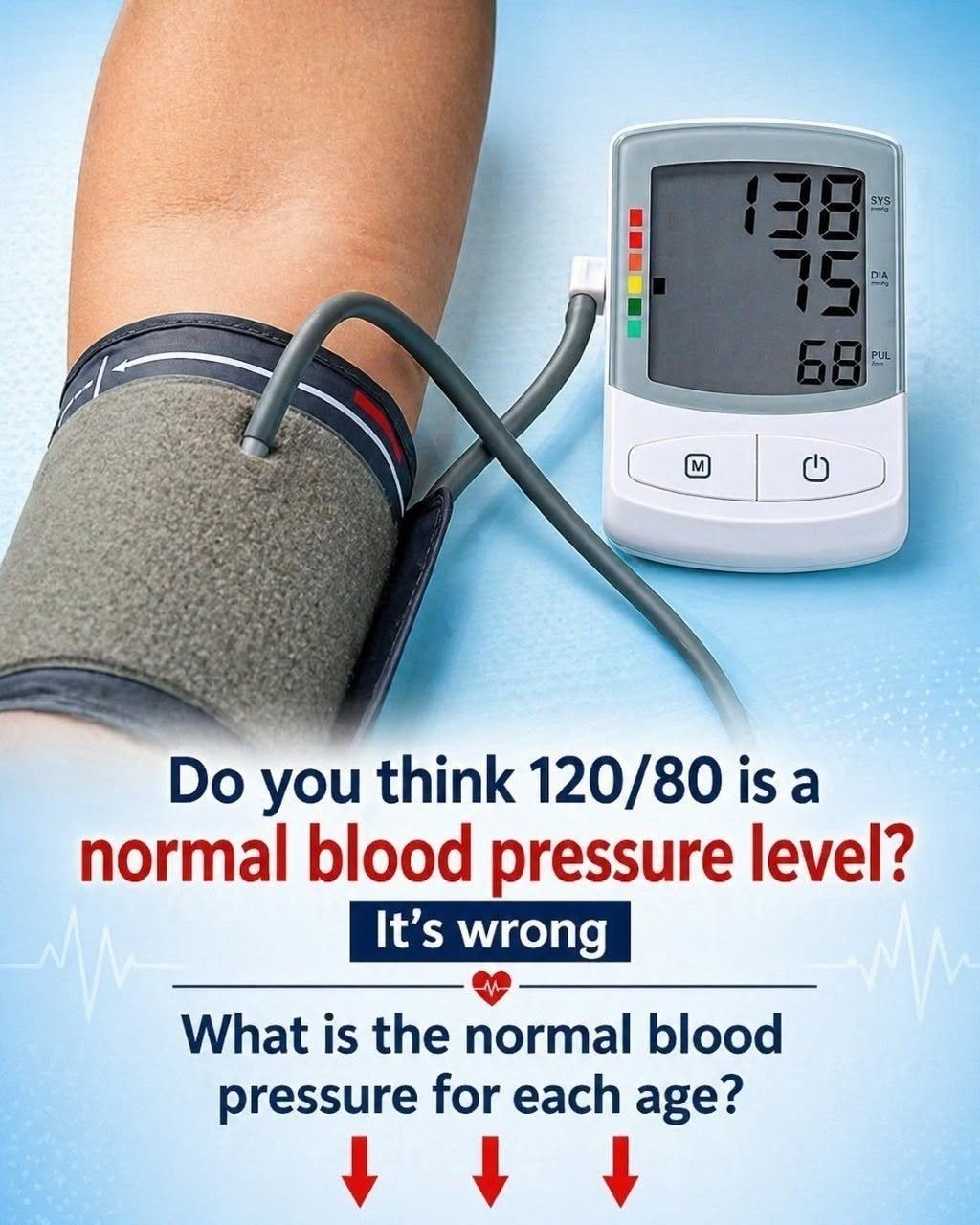
While medical guidelines from organizations like the American Heart Association (AHA) state that the ideal normal blood pressure for all adults is less than 120/80 mmHg, average population readings do tend to shift as people age due to the natural stiffening of arterial walls.
It is important to distinguish between what is typical or average for a given age group and what is clinically healthy.
Adult Blood Pressure Categories
For adults aged 18 and older, blood pressure classifications remain consistent regardless of age:
-
Normal: Less than 120 / less than 80 mmHg
-
Elevated: 120–129 / less than 80 mmHg
-
Stage 1 Hypertension: 130–139 / 80–89 mmHg
-
Stage 2 Hypertension: 140 or higher / 90 or higher mmHg
Typical Averages vs. Clinical Targets by Age Group
While many older adults naturally average higher readings, a reading in the hypertensive range is still considered high blood pressure, even if it is common for a specific age bracket.
1. Young Adults (Ages 18 to 39)
-
Typical Average Range: Roughly 110–120 / 70–78 mmHg
-
What to Know: Blood pressure is generally lowest during early adulthood. Consistent readings above 120/80 mmHg in this age group are an early prompt to evaluate lifestyle factors like sodium intake, stress, and physical activity.
2. Middle-Aged Adults (Ages 40 to 59)
-
Typical Average Range: Roughly 120–132 / 74–82 mmHg
-
What to Know: During these decades, the top number (systolic pressure) often begins a slow climb as large arteries lose some of their youthful elasticity. Catching creeping blood pressure in your 40s or 50s makes it much easier to manage long-term cardiovascular health.
3. Older Adults (Ages 60 and Older)
-
Typical Average Range: Roughly 130–140 / 70–80 mmHg
-
What to Know: Population averages for seniors frequently cross into the 130s or 140s for systolic pressure, while the bottom number (diastolic pressure) often stabilizes or drifts downward. While higher averages are common past 60, clinical guidelines still define 130/80 mmHg or higher as elevated or hypertensive. Physicians often individualize treatment targets for older adults based on overall health, frailty, and other concurrent medications.
Children and Adolescents
Blood pressure ranges in younger populations are evaluated differently than in adults, as normal targets depend heavily on age, height, and biological sex:
-
Newborns to Infants: Significantly lower (averaging around 60–90 / 20–60 mmHg) due to smaller blood vessels and lower systemic resistance.
-
Children and Teens: Gradually increase through childhood, reaching standard adult ranges by late adolescence. Pediatricians use specialized percentile charts based on a child’s height and age to screen for abnormalities.
