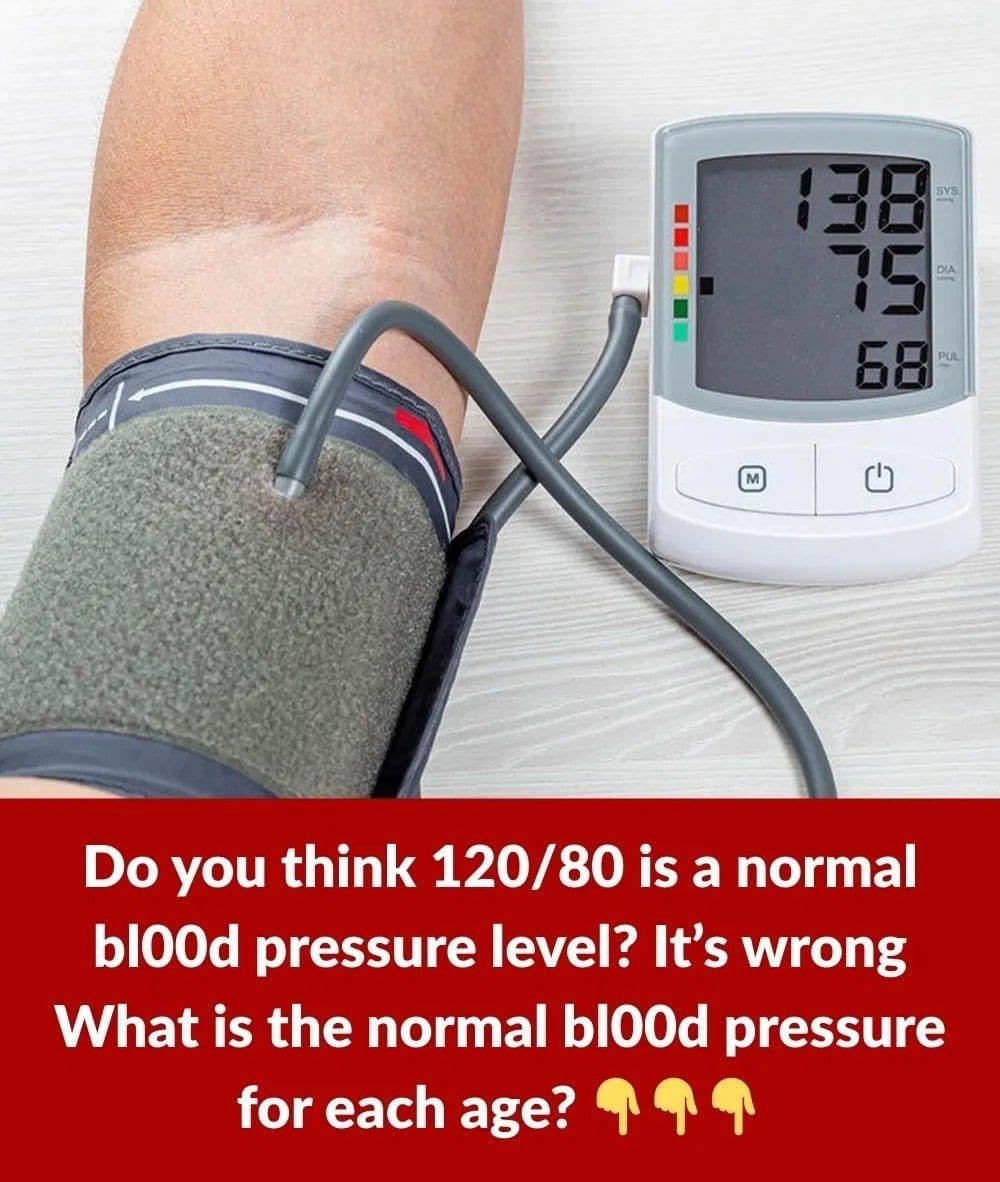
When looking at blood pressure, medical professionals make an important distinction between what is clinically ideal (the target goal) and what is commonly measured as an average across different age groups.
Under major clinical guidelines (such as those from the American Heart Association), the ideal target blood pressure for all adults is less than 120/80 mmHg, regardless of age.
However, because arteries naturally stiffen as people age, average blood pressure readings tend to drift upward over time.
Adult Blood Pressure Categories (AHA Guidelines)
Regardless of your age, adult blood pressure readings generally fall into these categories:
| Category | Systolic (Top Number) | Diastolic (Bottom Number) | What it Means | |
| Normal | Less than 120 | and | Less than 80 | Ideal range. Recheck next year. |
| Elevated | 120–129 | and | Less than 80 | Not high yet, but likely to worsen without lifestyle changes. |
| Hypertension Stage 1 | 130–139 | or | 80–89 | High blood pressure; requires lifestyle adjustments and tracking. |
| Hypertension Stage 2 | 140 or higher | or | 90 or higher | Definite high blood pressure; requires medical evaluation. |
| Hypertensive Crisis | Greater than 180 | and/or | Greater than 120 | Medical Emergency. Seek immediate care. |
Average Blood Pressure by Age Group
While below 120/80 mmHg remains the universal health target, population studies show how average readings typically shift over a lifetime due to arterial changes and vascular health:
1. Young Adults (Ages 18 to 39)
-
Average Range: Roughly 110/68 to 122/76 mmHg (women often average slightly lower than men in early adulthood).
-
Clinical Note: Readings consistently at or above 130/80 in young adults should not be dismissed as “normal for age”. Addressing lifestyle factors early significantly reduces lifetime cardiovascular risk.
2. Middle-Aged Adults (Ages 40 to 59)
-
Average Range: Roughly 122/74 to 131/82 mmHg.
-
Clinical Note: This is the phase when blood vessels naturally begin to lose some of their elasticity, and many people receive their first hypertension diagnosis. Annual screenings are critical.
3. Older Adults (Ages 60 and Beyond)
-
Average Range: Roughly 133/69 to 143/72 mmHg.
-
Clinical Note: While average population numbers climb past 130/80 in this bracket, hypertension is not a mandatory or healthy part of aging. Doctors often tailor targets for older adults (sometimes aiming below 130/80 or 140/90 depending on individual health status, frailty, or dizziness risks).
Children and Teenagers
For children and adolescents (ages 1 to 17), normal blood pressure is not a flat number. Instead, pediatricians evaluate blood pressure using percentile charts that factor in the child’s age, sex, and height. Once an adolescent reaches age 13, the standard adult threshold of less than 120/80 mmHg generally applies.
