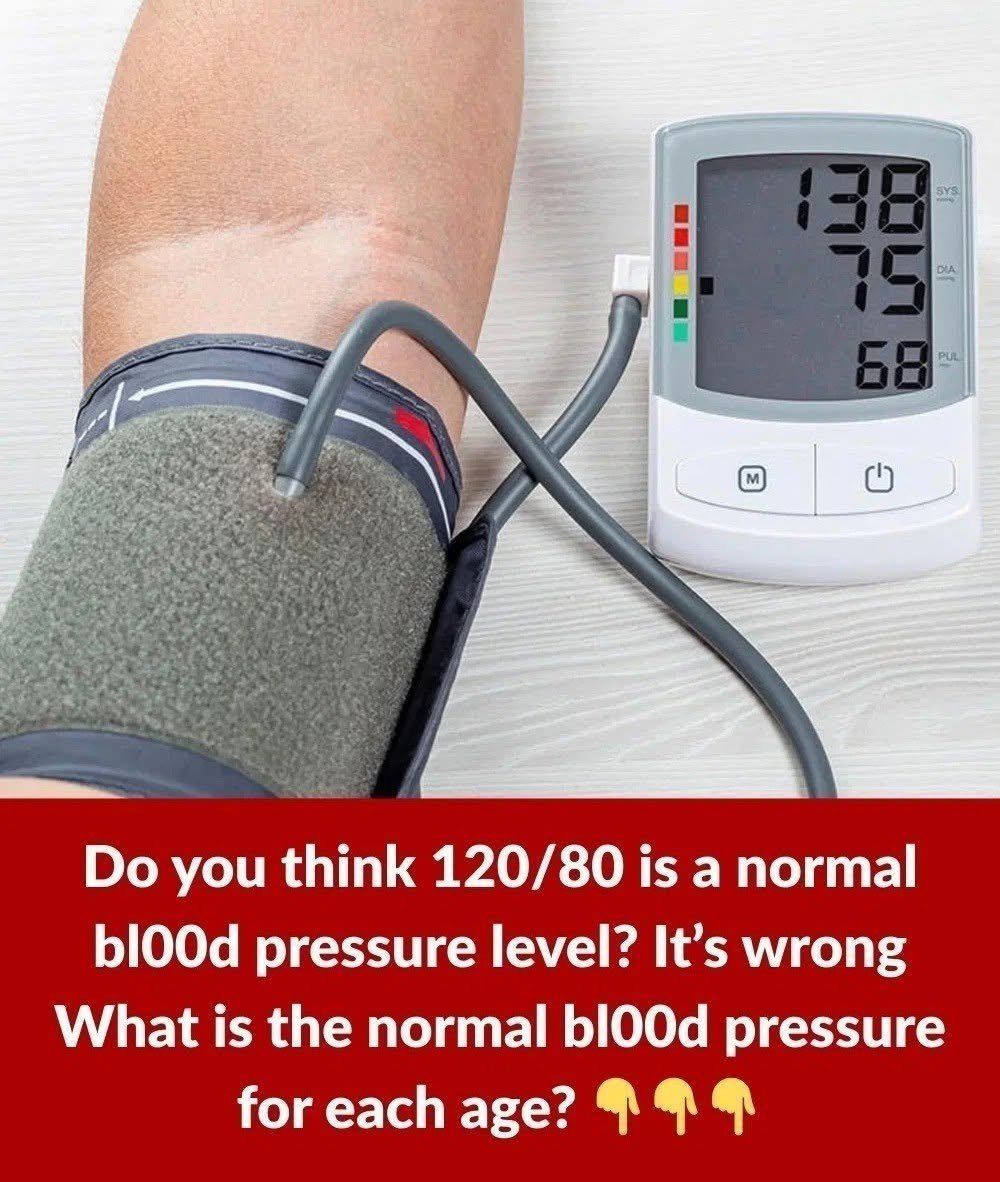
When health charts and wellness articles promise a precise, one-size-fits-all answer to “What is the normal blood pressure for each age?” they often oversimplify a complex physiological measurement into rigid, misleading brackets.
The underlying cardiovascular and clinical reality is more nuanced: while blood pressure naturally tends to increase as we age due to arterial stiffening, medical guidelines do not establish different “normal” blood pressure targets for every decade of life. Instead, clinical standards define optimal ranges for adults generally, while factoring in individual cardiovascular risk factors, medical history, and overall health.
An evidence-based look at blood pressure standards helps separate rigid age myths from smart cardiovascular management.
1. Understanding Blood Pressure Readings
Blood pressure is measured in millimeters of mercury (mmHg) and expressed as two numbers:
-
Systolic Pressure (Top Number): The pressure in your arteries when your heart beats and pumps blood.
-
Diastolic Pressure (Bottom Number): The pressure in your arteries when your heart rests between beats.
2. Standard Blood Pressure Categories for Adults
According to major cardiovascular guidelines (such as the American College of Cardiology and the American Heart Association), adult blood pressure is categorized as follows:
| Category | Systolic (Top) | Diastolic (Bottom) | |
| Normal | Less than 120 mmHg | and | Less than 80 mmHg |
| Elevated | 120–129 mmHg | and | Less than 80 mmHg |
| Stage 1 Hypertension | 130–139 mmHg | or | 80–89 mmHg |
| Stage 2 Hypertension | 140 mmHg or higher | or | 90 mmHg or higher |
3. Does “Normal” Change as We Age?
While it is statistically common for blood pressure to creep upward over time as arterial walls lose some of their natural elasticity (a process called arteriosclerosis), clinical guidelines do not consider high blood pressure “normal” or acceptable simply because a person is older.
However, treatment goals are often tailored for older adults:
-
Individualized Thresholds: For robust older adults, targeting a reading under 120/80 mmHg remains ideal. However, for frail older adults or those prone to dizziness and fainting (orthostatic hypotension), physicians may set slightly more flexible targets to prevent dangerous falls caused by blood pressure dropping too low when standing up.
The Takeaway
Ignore the myth that you can just add your age to a baseline number to find your “normal” blood pressure. Optimal blood pressure is under 120/80 mmHg across adulthood, though clinicians always evaluate readings in the context of your overall health, lifestyle, and individual risk factors. Regular monitoring with a validated home cuff and discussing trends with your doctor is the best way to keep your cardiovascular system healthy.
