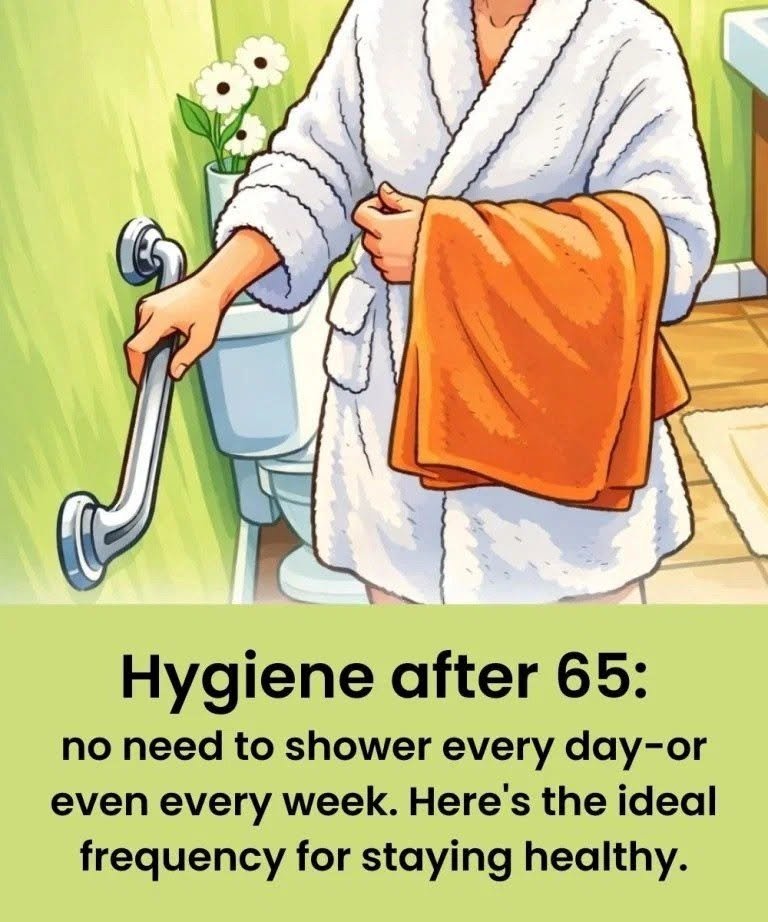
When wellness and lifestyle articles suggest that daily showers might do more harm than good for adults over 65, it often sounds counterintuitive—after all, daily bathing is a deeply ingrained hygiene standard.
However, from a dermatological and physiological standpoint, aging skin undergoes profound changes that make daily, hot soap-and-water showers unnecessarily harsh. Understanding these changes helps explain why shifting to a gentler bathing routine can protect skin health in later life.
Why Aging Skin Reacts Differently to Daily Showers
As we age, the skin naturally undergoes several structural and chemical transformations:
-
Thinning Epidermis and Reduced Sebum Production: Sebaceous (oil) glands produce significantly less natural sebum as we age. This lipid layer is what seals in moisture and protects the skin barrier. Without it, skin dries out much faster.
-
Weaker Skin Barrier (Stratum Corneum): The outermost layer of the skin becomes thinner and less efficient at retaining water. Frequent washing—especially with hot water and strong, fragrant soaps—strips away the remaining natural oils and disrupts the skin’s protective acid mantle.
-
Chronic Pruritus (Itchy Skin): “Asteatotic eczema” or winter itch is extremely common in older adults. Stripping the skin daily leads to severe dryness, micro-cracks, and intense itching, which can result in scratching, broken skin, and secondary bacterial infections.
Practical Adjustments for Healthy Skin in Later Life
Dermatologists and geriatricians generally recommend modifying bathing habits rather than abandoning hygiene altogether:
-
Reduce Frequency: For many older adults, showering completely every 2 to 3 days—while performing “sponge baths” on areas prone to odor or bacteria daily—is more than sufficient and preserves skin oils.
-
Lower the Temperature: Hot water feels luxurious, but it dissolves skin lipids much faster than lukewarm or warm water.
-
Switch to Gentle Cleansers: Ditch harsh, heavily fragranced bar soaps or antibacterial washes that strip the skin barrier. Instead, use mild, soap-free cleansers or hydrating body washes.
-
The “Soak and Seal” Method: Pat the skin dry gently with a towel leaving it slightly damp, and apply a rich, fragrance-free moisturizing cream or lotion within three minutes to lock in hydration.
The Takeaway: Adjusting your shower routine as you age isn’t about letting go of cleanliness—it’s about adapting to your skin’s changing biological needs to prevent chronic dryness, irritation, and discomfort.
