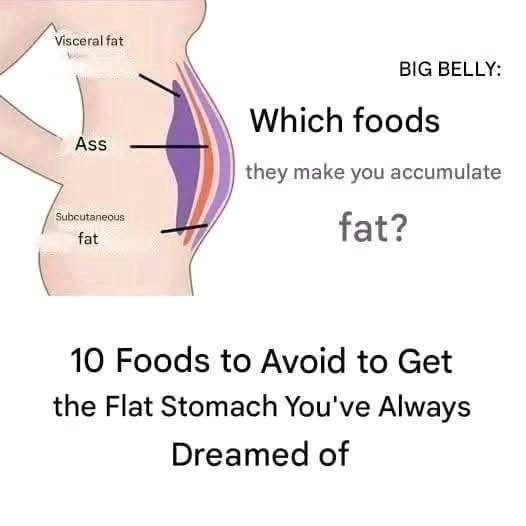
Headlines promising that avoiding a specific list of foods will instantly grant you a “flat stomach” rely on marketing myth rather than human physiology.
While certain foods can cause temporary bloating, gas, or water retention, no food directly targets or burns belly fat. Abdominal shape is dictated by your overall body fat percentage, genetics, posture, and core strength, not by eliminating a handful of everyday items.
However, if you struggle with chronic puffiness, distension, or discomfort around your midsection, certain foods are notorious for triggering digestive distress. Here are the foods most likely to cause bloating, along with the physiological reasons why:
1. Carbonated Beverages
-
Why it happens: Fizzy drinks (soda, sparkling water, seltzer) are packed with dissolved carbon dioxide gas. When you drink them, you swallow large amounts of gas that get trapped in your digestive tract, causing your stomach to balloon outward.
2. Beans and Legumes
-
Why it happens: Beans are nutritional powerhouses, but they contain complex sugars called oligosaccharides (specifically raffinose). Humans lack the specific enzyme needed to break these down in the small intestine. Instead, they pass into the large intestine, where gut bacteria ferment them, producing significant amounts of gas.
-
Tip: Soaking dried beans overnight, rinsing them thoroughly, or cooking them with digestive aids can drastically reduce their gassiness.
3. Cruciferous Vegetables (Broccoli, Cabbage, Cauliflower, Brussels Sprouts)
-
Why it happens: These vegetables are exceptionally healthy, rich in fiber and antioxidants. However, they also contain raffinose and sulfur compounds. While they won’t cause fat gain, they frequently produce gas and bloating during digestion.
-
Tip: Cooking them thoroughly (steaming or roasting) breaks down the complex fibers before you eat them, making them much easier on the stomach than eating them raw.
4. Dairy Products (If You Are Lactose Intolerant)
-
Why it happens: Lactose is the natural sugar found in milk. If your body produces insufficient amounts of lactase (the enzyme that digests lactose), unabsorbed milk sugars travel to the colon, where bacteria ferment them, causing sharp cramping, gas, and bloating.
-
Tip: If you aren’t lactose intolerant, plain dairy does not cause bloating; opt for lactose-free alternatives or aged cheeses (which have very low lactose content) if you are sensitive.
5. Artificial Sweeteners (Sorbitol, Mannitol, Xylitol)
-
Why it happens: Found in “diet” or “sugar-free” gums, candies, and drinks, sugar alcohols are poorly absorbed by the small intestine. When they reach the large intestine, bacteria feast on them, resulting in fermentation, gas, and osmotic fluid shifts that cause bloating and loose stools.
6. Salty and Ultra-Processed Foods
-
Why it happens: High-sodium processed foods (chips, canned soups, fast food, frozen meals) disrupt your body’s fluid balance. When you consume excess sodium, your kidneys hold onto extra water to maintain proper electrolyte concentrations, leading to generalized water retention and a puffy, swollen midsection.
7. Wheat and High-FODMAP Grains
-
Why it happens: For individuals with celiac disease, non-celiac gluten sensitivity, or irritable bowel syndrome (IBS), grains containing gluten or fructans can trigger significant intestinal inflammation, gas, and abdominal distension. For the general population, however, whole grains are well-tolerated and vital for digestive health.
8. Onions and Garlic
-
Why it happens: Onions and garlic are rich in fructans, a type of soluble fiber (FODMAP) that draws water into the gut and is rapidly fermented by gut bacteria, often triggering stubborn gas and bloating in sensitive individuals.
9. Apples and Pears
-
Why it happens: These fruits are healthy sources of vitamins and fiber, but they have a high ratio of fructose to glucose (and contain sorbitol), meaning many people struggle to absorb the fructose efficiently in the small intestine, leading to fermentation and gas.
10. Chewing Gum and Drinking Through a Straw
-
Why it happens: While not a food itself, chronic gum chewing or sipping through straws causes you to unconsciously swallow excess air (aerophagia). That trapped air accumulates in your digestive tract over the course of the day, leaving your stomach feeling distended by evening.
The Reality of Achieving a Flat Stomach
True abdominal flatness is a matter of managing overall body composition (through balanced nutrition and a modest caloric deficit if fat loss is the goal) combined with gut comfort. If certain foods consistently make you feel inflated like a balloon, cutting back on them can keep your midsection comfortable and unbloated—even if they aren’t the cause of stored body fat.
