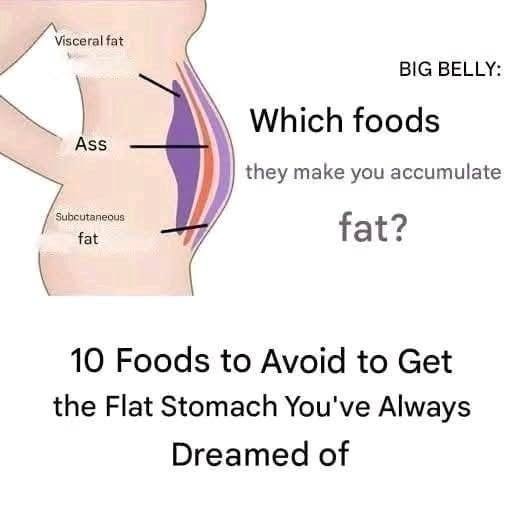
Achieving a flatter stomach is about much more than just counting calories; it is heavily tied to how your digestive system processes food, manages inflammation, and regulates water retention. Certain foods routinely trigger bloating, gas, sluggish digestion, and visceral fat storage around the midsection.
According to gastroenterologists and nutritionists, here are 10 foods to avoid if you want to beat the bloat and work toward a flatter stomach:
1. Carbonated Drinks (Sodas, Seltzers, and Sparkling Water)
-
Why It Harms Your Goals: Every time you sip a fizzy drink, you are swallowing large amounts of carbon dioxide gas. That gas gets trapped in your digestive tract, expanding your stomach like a balloon and causing uncomfortable, visible bloating that can linger for hours.
2. Highly Processed Refined Sugars (Candies, Pastries, and Sweetened Yogurts)
-
Why It Harms Your Goals: Refined sugars cause rapid spikes and crashes in blood insulin. Excess sugar that your body doesn’t immediately use for energy is readily stored as visceral fat—the deep belly fat that wraps around your abdominal organs and hinders a flat midsection.
3. Artificial Sweeteners (Sorbitol, Xylitol, and Maltitol)
-
Why It Harms Your Goals: Often found in “diet” or “sugar-free” products, sugar alcohols are notoriously difficult for the human digestive tract to fully break down. As they sit unabsorbed in your intestines, gut bacteria ferment them, producing heavy gas, cramping, and severe bloating.
4. Beans, Lentils, and Legumes (When Unprepared)
-
Why It Harms Your Goals: While highly nutritious, beans contain complex sugars called oligosaccharides. Because human enzymes cannot break them down entirely, gut bacteria feast on them and produce large amounts of gas. (Tip: Soaking dried beans overnight or using canned varieties and rinsing them thoroughly helps eliminate most of these gas-producing compounds).
5. Salty Fast Food and Processed Snacks (Chips, Canned Soups, and Frozen Meals)
-
Why It Harms Your Goals: Excess sodium throws off your body’s delicate fluid balance. When you consume too much salt, your body holds onto extra water to dilute it, leading to systemic puffiness, water retention, and a swollen lower belly.
6. Dairy Products (If You Have Lactose Sensitivity)
-
Why It Harms Your Goals: As we age, many people lose optimal production of lactase—the enzyme needed to break down lactose (milk sugar). Undigested lactose moves into the colon where it ferments, triggering gas, bloating, stomach distension, and discomfort.
7. Cruciferous Vegetables in Excess (Raw Broccoli, Cabbage, and Cauliflower)
-
Why It Harms Your Goals: Broccoli, Brussels sprouts, and cabbage are nutritional powerhouses, but they are also rich in raffinose—a complex sugar that produces gas during digestion. Eating them raw makes them harder to digest; steaming or roasting them breaks down these fibers and makes them much easier on a flat-stomach routine.
8. Wheat and Gluten-Heavy Foods (For Sensitive Individuals)
-
Why It Harms Your Goals: Even if you do not have celiac disease, many people experience a mild sensitivity to modern wheat gluten. It can cause micro-inflammation in the gut lining, slowing down digestion and causing the stomach to push outward (“gluten bloat”).
9. Fried and Greasy Foods (French Fries, Fried Chicken, and Heavy Fast Food)
-
Why It Harms Your Goals: High-fat meals take a significantly longer time to empty out of your stomach because fats slow down the digestive process. This lingering food sits in your upper GI tract longer, causing a heavy, sluggish, and distended feeling in your upper abdomen.
10. Excess Alcohol (Particularly Beer and Sugary Cocktails)
-
Why It Harms Your Goals: Alcohol is processed by the liver as a priority toxin, temporarily halting fat burning. Furthermore, beer contains fermentable grains and yeast that cause direct abdominal bloating, while sugary drink mixers trigger the same insulin spikes that promote visceral belly fat storage.
