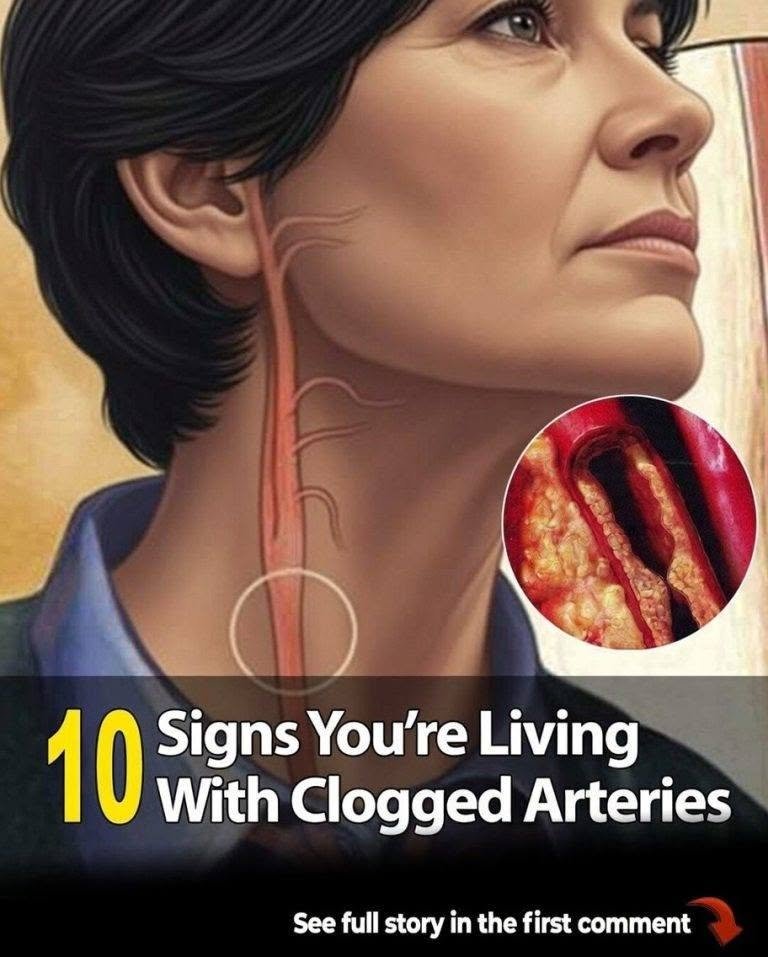
Arterial blockage occurs when fatty deposits—known as —narrow blood vessels and restrict oxygen-rich blood flow to vital organs. Because this process develops gradually, early warning signs often manifest in specific vascular zones throughout the body.
10 Critical Indicators of Restricted Blood Flow
1. Chest Pain or Pressure (Angina)
Biological Mechanism: Insufficient oxygen delivery to the heart muscle during physical effort or stress causes tissue ischemia.
Symptom Profile: Squeezing tightness, heaviness, or pressure in the chest that may radiate to the left arm, neck, jaw, or upper back.
2. Shortness of Breath (Exertional Dyspnea)
Biological Mechanism: When coronary arteries narrow, the heart cannot pump enough blood to meet the body’s metabolic demand, causing fluid backpressure in the lungs.
Symptom Profile: Feeling unusually winded during light activities like climbing stairs or walking short distances.
3. Lower Extremity Pain While Walking (Claudication)
Biological Mechanism: Plaque accumulation in peripheral leg arteries () limits blood flow to calf and thigh muscles during movement.
Symptom Profile: Cramping or aching pain in the calves or thighs that triggers during exertion and resolves with a few minutes of rest.
4. Coldness or Numbness in Feet and Hands
Biological Mechanism: Reduced arterial circulation fails to maintain baseline tissue temperature and nerve nourishment in outer extremities.
Symptom Profile: One foot or hand feeling noticeably colder to the touch than the other, often accompanied by tingling or pale skin.
Biological Mechanism: Temporary blockage of carotid arteries supplying the brain starves neural tissue of oxygen.
Symptom Profile: Sudden weakness on one side of the body, facial drooping, slurred speech, or temporary vision loss in one eye.
6. Chronic Erectile Dysfunction
Biological Mechanism: Penile arteries are significantly smaller ($1\text{–}2\text{ mm}$) than coronary arteries ($3\text{–}4\text{ mm}$), making vascular restriction apparent there first.
Symptom Profile: Persistent difficulty achieving or maintaining an erection due to impaired arterial dilation.
7. Slow-Healing Wounds on Legs or Feet
Biological Mechanism: Adequate tissue perfusion is essential for white blood cell transport and cellular repair at injury sites.
Symptom Profile: Cuts, sores, or blisters on the lower legs or toes that take weeks to heal or develop into ulcers.
8. Earlobe Crease (Frank’s Sign)
Biological Mechanism: Loss of elastic fibers and microvascular collapse in the earlobe skin fold reflects systemic vascular aging and coronary risk.
Symptom Profile: A deep diagonal crease running across the skin fold of the earlobe.
9. Lower Back Pain or Stiffness
Biological Mechanism: Lumbar arteries supplying the spinal discs and lower back muscles are among the first to accumulate plaque.
Symptom Profile: Persistent lower back ache caused by reduced blood flow to intervertebral discs, leading to premature disk degeneration.
10. Persistent Unexplained Fatigue
Biological Mechanism: When arterial narrowing lowers overall cardiac output, skeletal muscles receive less oxygen, forcing the body to work harder during everyday tasks.
Symptom Profile: A constant sense of physical exhaustion that does not improve with sleep.
Systemic Impact Across Vascular Zones
Affected Artery Zone
Primary Condition
Major Associated Risk
Coronary Arteries
Coronary Artery Disease (CAD)
Myocardial infarction (Heart Attack)
Carotid Arteries
Carotid Artery Disease
Ischemic Stroke
Peripheral Arteries
Peripheral Artery Disease (PAD)
Tissue necrosis, limb loss
Renal Arteries
Renal Artery Stenosis
Renovascular hypertension, kidney failure
Diagnostic Evaluation Protocol
1.Obtain Serum Lipid Panel and High-Sensitivity CRP:
Measures circulating LDL cholesterol, triglycerides, and inflammatory markers (hs-CRP) that promote plaque formation.
2.Perform Ankle-Brachial Index (ABI) Testing:
Compares blood pressure in the ankle to blood pressure in the arm to detect peripheral arterial blockage in the legs.
3.Schedule Non-Invasive Vascular Imaging:
Undergo a Carotid Duplex Ultrasound or Coronary Artery Calcium (CAC) scan to visualize structural plaque buildup directly.