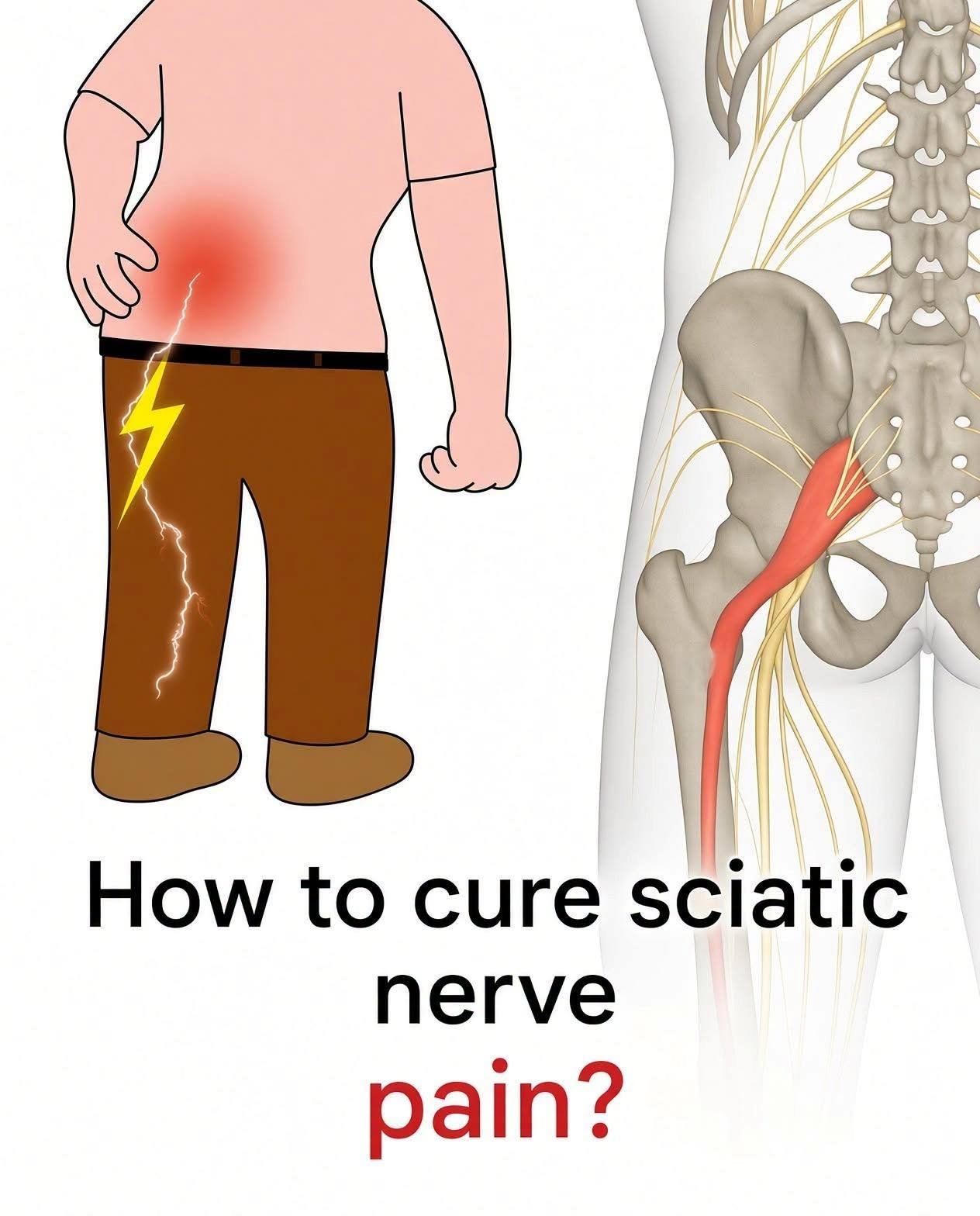
Sciatica—characterized by sharp, shooting pain, burning, or numbness that radiates from your lower back down through your glutes and into your leg—can make even simple daily movements feel excruciating. The pain typically occurs when the sciatic nerve is compressed or irritated, most often by a bulging disc or a tight muscle in the hip (such as the piriformis).
While severe or worsening neurological symptoms (like sudden loss of bowel/bladder control or progressive leg weakness) require immediate medical evaluation, mild to moderate sciatic discomfort can often be managed with gentle, targeted movement.
Here are 3 practical and effective exercises designed to relieve pressure on the sciatic nerve and ease leg pain at home.
1. The Seated Piriformis Stretch
-
Why it helps: The piriformis muscle sits deep in the glutes right over the sciatic nerve. When this muscle spasms or tightens, it pinches the nerve, mimicking classic sciatica. This gentle seated stretch releases tension without over-flexing the spine.
-
How to do it:
-
Sit upright on the edge of a sturdy chair with both feet flat on the floor.
-
Cross your right ankle over your left knee, creating a “figure-four” shape.
-
Keeping your spine straight and your chest proud, gently hinge forward at your hips until you feel a deep, comfortable stretch in your right buttock.
-
Hold this position for 20 to 30 seconds, breathing deeply and relaxing your shoulders.
-
Return to the starting position and switch sides. Repeat 2 to 3 times per side.
-
2. The Lying Knee-to-Opposite-Shoulder Stretch
-
Why it helps: This stretch gently mobilizes the hip joint and lengthens the gluteal and piriformis muscles, relieving pressure where the sciatic nerve exits the pelvis.
-
How to do it:
-
Lie flat on your back on a comfortable mat or firm surface with your legs extended.
-
Bend your right knee and clasp your hands around your shin or behind your thigh.
-
Gently pull your right knee up and across your body toward your left shoulder until you feel a gentle stretch in your hip and glute.
-
Hold for 15 to 30 seconds, keeping your lower back relaxed against the floor.
-
Lower your leg slowly and repeat on the opposite side. Complete 2 to 3 repetitions per leg.
-
3. The Gentle Prone Press-Up (Extension Exercise)
-
Why it helps: For many people, sciatica is caused by a disc bulge pressing backward against the nerve root. Gentle backward bending (spinal extension) can help nudge the disc material away from the nerve. (Note: If this exercise intensifies your leg pain or shoots the pain further down your leg, stop immediately).
-
How to do it:
-
Lie face down on your stomach with your legs straight and your elbows bent, resting your weight on your forearms.
-
Slowly press down into your hands to lift your upper chest and shoulders off the floor while keeping your hips and pelvis firmly anchored to the mat.
-
Gently arch your lower back only as far as is comfortable, keeping your neck relaxed.
-
Hold for 5 to 10 seconds, then slowly lower yourself back down.
-
Repeat 5 to 10 times, moving smoothly and listening to your body.
-
Important Safety Tips Before You Start
-
Never Push Through Sharp Pain: Stretching should feel like a deep, relieving tension—never sharp, electrical, or worsening shooting pain down the leg. If an exercise makes your leg symptoms worse, stop right away.
-
Consistency Beats Intensity: Doing these gentle stretches daily yields much better results than pushing aggressively through a single heavy session.
