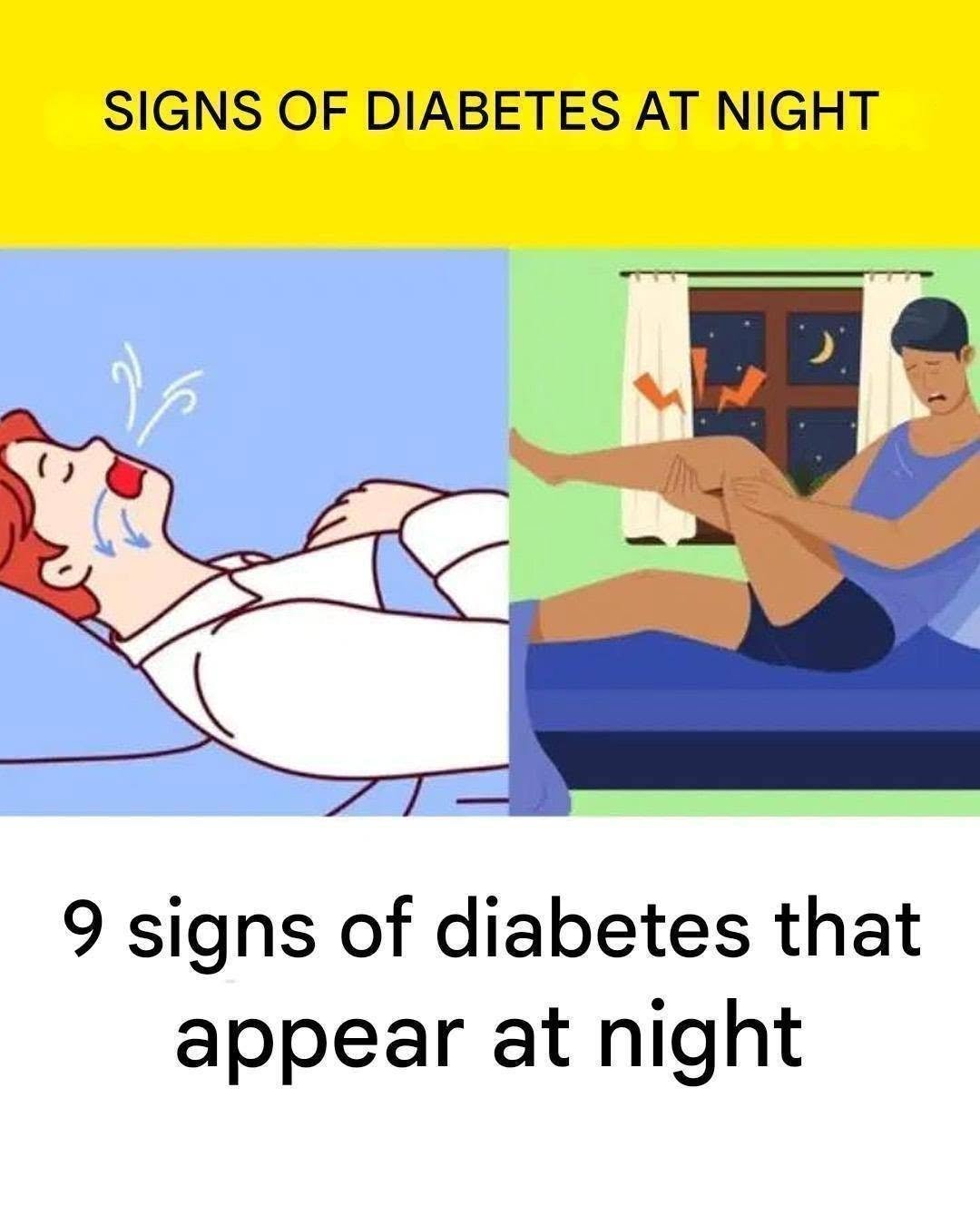
Nocturnal symptoms of diabetes often go unnoticed because they are attributed to poor sleep habits, ambient room temperature, or general stress.
However, elevated blood glucose levels overnight alter systemic fluid balance, autonomic nerve signaling, and cellular energy production, creating distinct physiological signals while you sleep.
The 9 Nighttime Signs of Diabetes
1. Frequent Nighttime Urination (Nocturia)
-
Mechanism: When blood glucose rises above the renal threshold ($\sim 180\text{ mg/dL}$), the kidneys filter excess sugar into the urine.
-
Impact: Glucose pulls water via osmotic diuresis, forcing the bladder to fill rapidly throughout the night and waking you up multiple times to urinate.
2. Extreme Nighttime Thirst (Polydipsia)
-
Mechanism: Constant osmotic fluid loss via nocturia drains intracellular water reserves.
-
Impact: You wake up with a parched mouth or dry throat, needing to drink water repeatedly during the night.
3. Severe Night Sweats
-
Mechanism: Nocturnal hypoglycemia (blood sugar dropping too low while sleeping) triggers a emergency release of epinephrine and cortisol from the adrenal glands.
-
Impact: The surge of stress hormones causes sudden vasoconstriction, rapid heart rate, and drenching cold sweats.
4. Restless Legs Syndrome (RLS) & Leg Cramps
-
Mechanism: Chronic hyperglycemia causes microvascular damage to small peripheral nerves and leads to magnesium and potassium loss via osmotic diuresis.
-
Impact: You experience an irresistible urge to move your legs, accompanied by deep, painful involuntary calf or foot spasms during sleep.
5. Peripheral Neuropathy (Tingling, Burning, or Pain in Feet)
-
Mechanism: High blood sugar degrades the protective myelin sheath of peripheral sensory nerves and reduces blood flow through small capillaries supplying the feet.
-
Impact: Without daytime movement and sensory distractions, burning sensations, sharp “pins and needles,” or severe sensitivity to bedsheets peak at night.
6. Chronic Insomnia & Frequent Midnight Awakenings
-
Mechanism: Fluctuations between nocturnal spikes (hyperglycemia) and dips (hypoglycemia) destabilize sleep architecture and disrupt sleep-wake cycles.
-
Impact: You experience fragmented sleep, waking up around 2:00 AM to 4:00 AM without a clear environmental trigger.
7. Obstructive Sleep Apnea (OSA) & Loud Snoring
-
Mechanism: Type 2 diabetes and insulin resistance are strongly linked to central adiposity, upper airway inflammation, and altered autonomic control of breathing muscles.
-
Impact: Repeated pauses in breathing overnight cause micro-arousals, loud gasping, and severe morning fatigue.
8. Extreme Morning Fatigue (Waking Up Exhausted)
-
Mechanism: Insufficient insulin or cellular insulin resistance prevents glucose from entering cells to produce adenosine triphosphate (ATP).
-
Impact: Even after 8 hours in bed, your tissues remain starved of cellular energy, causing deep exhaustion upon waking.
9. Morning Hyperglycemia (Dawn Phenomenon / Somogyi Effect)
-
Mechanism: Natural early-morning surges of growth hormone, cortisol, and glucagon prompt the liver to release stored glucose into the bloodstream.
-
Impact: If insulin response is impaired, waking blood sugar levels will be elevated regardless of evening food intake.
Nighttime Symptom & Mechanism Breakdown
| Symptom | Primary Biological Driver | Primary Target System |
| Nocturia | Osmotic diuresis via renal glucose spilling | Renal & Urinary tract |
| Night Sweats | Counter-regulatory epinephrine surge (Hypoglycemia) | Autonomic nervous system |
| Foot Burning/Tingling | Microvascular nerve damage (Diabetic Neuropathy) | Peripheral nervous system |
| Restless Legs / Cramps | Electrolyte wasting ($\text{Mg}^{2+}/\text{K}^+$) & ischemia | Neuromuscular tissue |
| Dawn Spike | Hepatic glucose output driven by circadian cortisol | Endocrine / Liver |
