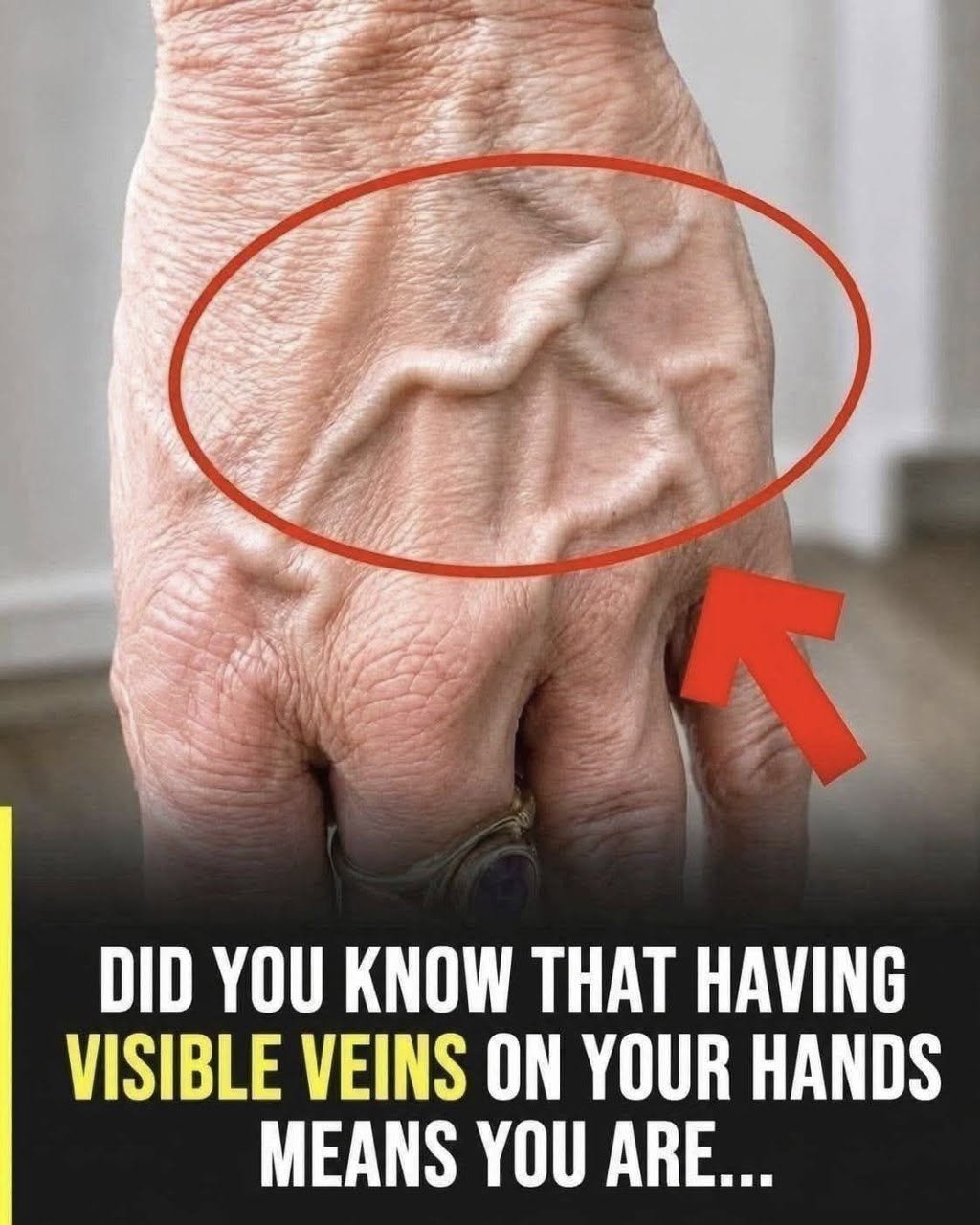
While clickbait headlines and viral videos often claim that having prominent or visible veins instantly means one specific thing, the medical reality is much broader. In most cases, visible veins are entirely normal and simply come down to your anatomy, lifestyle, or genetics.
Having visible veins can mean a variety of different things depending on your body and context:
1. You Have a Low Body Fat Percentage or Lean Muscle Mass
This is one of the most common reasons. Fat acts as a layer of insulation and cushioning beneath the skin. If you have a lower body fat percentage—or if you build muscle through regular exercise—your skin sits closer to your vascular system, making your veins naturally stand out more.
2. Genetics and Fair Skin
Your genetic blueprint dictates how prominent your veins are and how deep they sit. Additionally, people with lighter or fairer complexions naturally have skin that allows the blue-green tint of surface veins to show through much more vividly than those with darker skin tones.
3. Natural Aging
As we age, our skin naturally thins and loses collagen and elasticity, and the layer of subcutaneous fat beneath the surface diminishes. This loss of structural padding makes veins much more apparent, especially on the hands, arms, and legs.
4. Temporary Lifestyle Factors
-
Exercise: When you work out, your blood pressure rises and your blood vessels temporarily dilate (expand) to pump more oxygen-rich blood to your working muscles, making them pop out.
-
Heat: Warm weather causes blood vessels to dilate as your body attempts to cool itself down, bringing blood closer to the surface of the skin.
When Visible Veins Point to a Medical Concern
While the reasons above are completely harmless, sometimes prominent veins—particularly if they appear suddenly, twist, bulge, or turn into rope-like structures—can indicate an underlying issue with circulation:
-
Varicose Veins or Chronic Venous Insufficiency (CVI): Occurs when the tiny valves inside your leg veins weaken, causing blood to pool rather than flow smoothly back to the heart.
-
Symptoms to Watch For: If your visible veins are accompanied by aching, throbbing, leg heaviness, swelling, or skin discoloration, it’s worth having them evaluated by a doctor or a vascular specialist.
