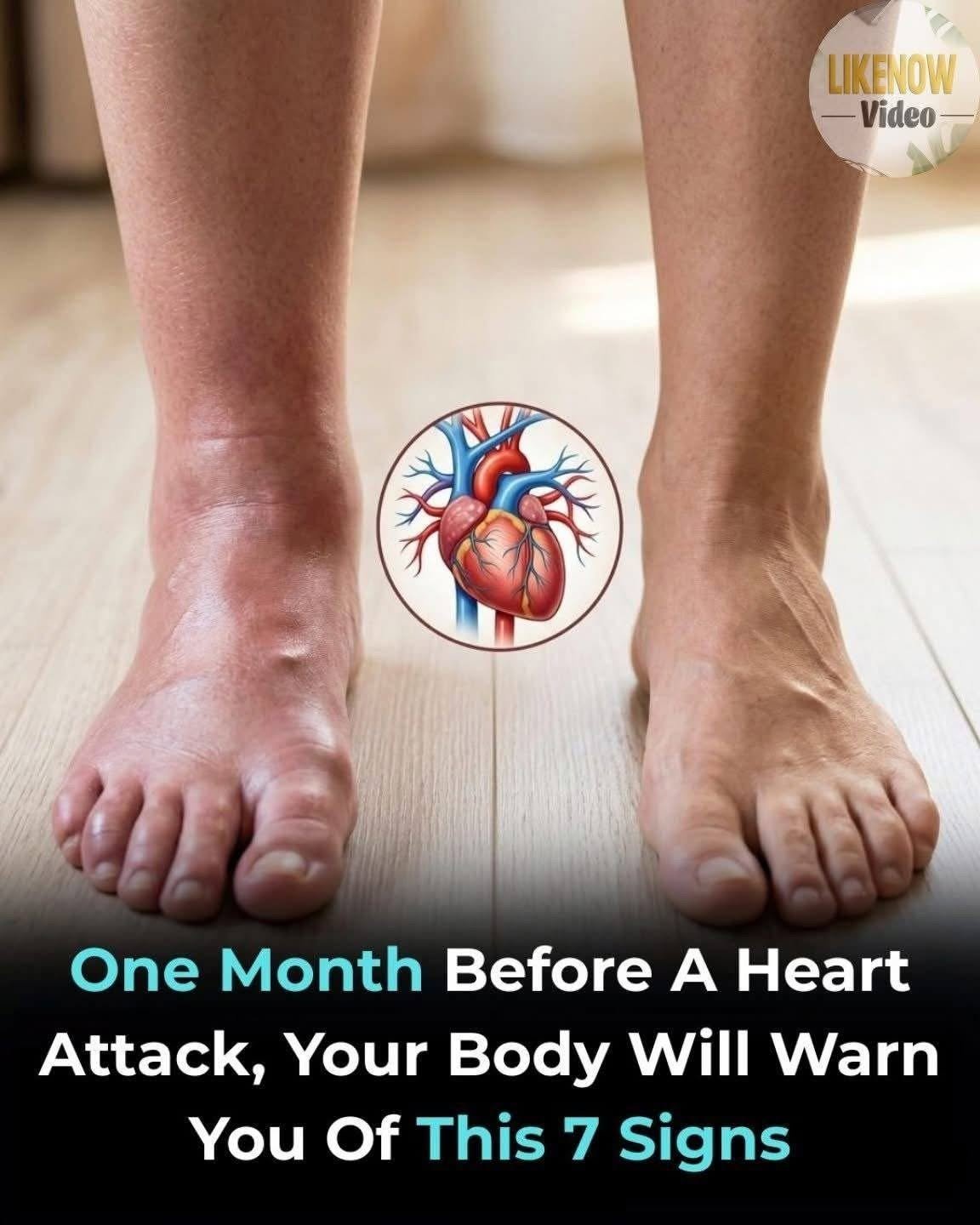
It is common to encounter viral health articles claiming that your feet can predict a heart attack precisely “one month in advance.” From a medical and cardiological perspective, your feet do not have a built-in countdown clock for a heart attack.
However, there is a grain of truth buried beneath the sensationalism: chronic cardiovascular disease, poor circulation, and heart failure can indeed manifest warning signs in your lower extremities. These signs are rarely timed neatly to exactly 30 days before an event, but they are crucial indicators that your circulatory or cardiac system is under severe strain.
Here are six foot- and leg-related signs that doctors look at when assessing cardiovascular health, and what they actually mean:
1. Significant, Unexplained Foot and Ankle Swelling (Edema)
-
What it means: When the heart muscle weakens and fails to pump blood efficiently (as seen in congestive heart failure), blood flow slows down as it returns from the lower extremities. This causes fluid to back up in the blood vessels and leak into surrounding tissues, leading to noticeable swelling (edema) in the feet, ankles, and lower legs, particularly by the end of the day.
2. Pain, Aching, or Cramping in the Calves While Walking (Claudication)
-
What it means: If plaque buildup narrows the arteries supplying blood to your legs—a condition known as Peripheral Artery Disease (PAD)—your muscles won’t receive enough oxygen-rich blood during exertion. This causes a predictable cramping, aching, or tired feeling in your calves or feet when you walk, which typically disappears shortly after you rest.
-
The Heart Connection: People diagnosed with PAD have a dramatically higher risk of blockages in their coronary arteries as well.
3. Cold Feet and Toes (Poor Peripheral Circulation)
-
What it means: If your feet constantly feel icy cold—even in a warm room—it can indicate that your peripheral blood vessels are constricted or blocked, preventing warm blood from efficiently reaching your extremities.
4. Slower Hair Growth and Brittle Toenails on the Feet
-
What it means: Chronic poor blood supply starves your skin, hair follicles, and nails of essential oxygen and nutrients. If you notice that hair on your toes and lower legs stops growing, or your toenails become abnormally thick, brittle, and slow-growing, it can be a sign of long-term vascular insufficiency.
5. Skin Discoloration (Pale, Blue, or Shiny Skin)
-
What it means: When circulation is severely compromised, the skin on your feet and lower legs may look unusually pale, bluish (cyanosis), or reddish-purple when dangling. The skin may also appear tight, taut, or remarkably shiny due to chronic oxygen deprivation.
6. Slow-Healing Sores or Ulcers on the Toes or Feet
-
What it means: Healthy blood flow is vital for tissue repair and fighting off infections. When circulation is severely impaired by vascular disease, minor scrapes, blisters, or cuts on the feet can take weeks or months to heal, or develop into painful, non-healing ulcers.
The Bottom Line: While these symptoms are rarely isolated to a precise “one-month countdown,” persistent swelling, coldness, pain with walking, or slow-healing sores on your feet are important warning signs. They warrant an evaluation by a physician to check both your peripheral vascular health and your overall cardiovascular function.
