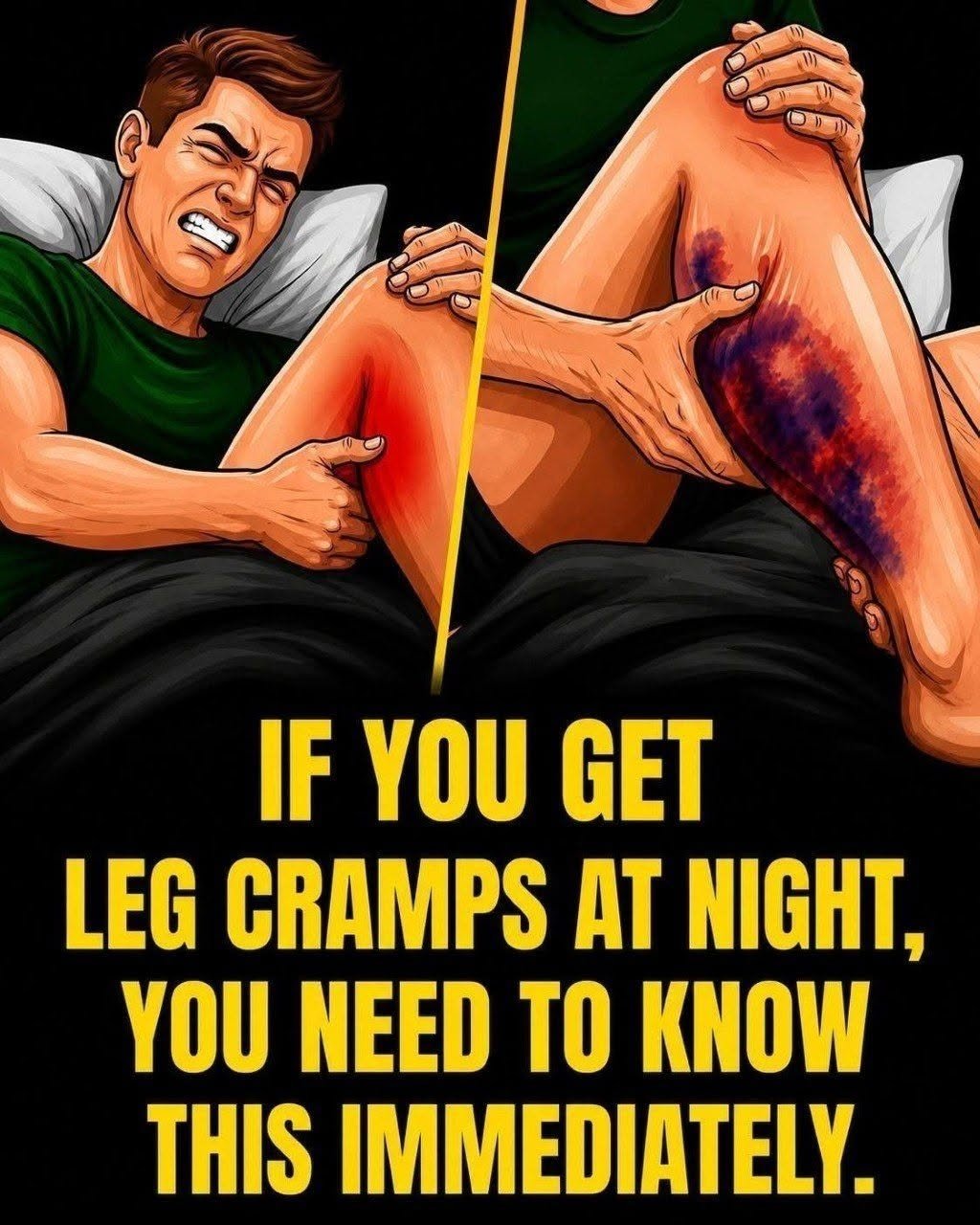
When clickbait health articles warn you never to ignore nighttime leg cramps, they often frame them as a terrifying sign of an imminent medical emergency or severe systemic disease designed to spark instant panic.
While persistent and painful leg cramps (often called nocturnal leg cramps) can definitely disrupt your sleep, the vast majority of nighttime cramping is harmless, highly common, and rooted in completely ordinary muscular or physiological causes rather than a silent crisis.
The Real Reasons Leg Cramps Happen at Night
Most nighttime leg cramps are sudden, involuntary contractions of the calf or foot muscles. While doctors don’t fully understand every single trigger, the most frequent culprits include:
-
Muscle Fatigue and Overexertion: Standing for long hours, unusual physical exertion, or heavy exercise during the day can leave calf muscles fatigued and prone to spasming when they finally relax at night.
-
Dehydration and Electrolyte Shifts: Low levels of magnesium, potassium, or calcium—or simple overall dehydration—can disrupt the delicate electrical signaling between your nerves and muscles, causing them to fire uncontrollably.
-
Prolonged Sitting or Inactivity: Sitting in one position for too long during the day or a lack of regular stretching can cause muscles to shorten and tighten, increasing susceptibility to cramps when you stretch out in bed.
-
Circulatory Factors: Reduced blood flow to the extremities can sometimes contribute, though simple nocturnal cramps differ from the steady, exercise-induced pain of peripheral artery disease (claudication).
When Leg Cramps Actually Warrant a Doctor’s Visit
While occasional night cramps are a normal part of life—especially as we age—you should mention them to a healthcare provider if they are severe, frequent, and accompanied by other warning signs:
-
Significant Swelling, Redness, or Warmth: If a cramp is paired with swelling or skin discoloration in one leg, it could indicate a blood clot (deep vein thrombosis or DVT), which does require immediate medical evaluation.
-
Progressive Muscle Weakness or Numbness: If cramping is accompanied by loss of sensation or declining strength, it may point toward a nerve compression issue or peripheral neuropathy.
Practical Ways to Ease and Prevent Night Cramps
Instead of stressing over viral warnings, simple, consistent habits can dramatically reduce how often nighttime cramps strike:
-
Gentle Evening Stretching: Taking 5 minutes before bed to stretch your calves and hamstrings helps lengthen muscle fibers and prevents overnight tightness.
-
Stay Hydrated: Drinking adequate fluids throughout the day helps maintain proper muscle and electrolyte function.
-
Magnesium-Rich Foods: Incorporating foods like leafy greens, nuts, seeds, and whole grains into your diet ensures your muscles have the fundamental minerals they need to contract and relax smoothly.
