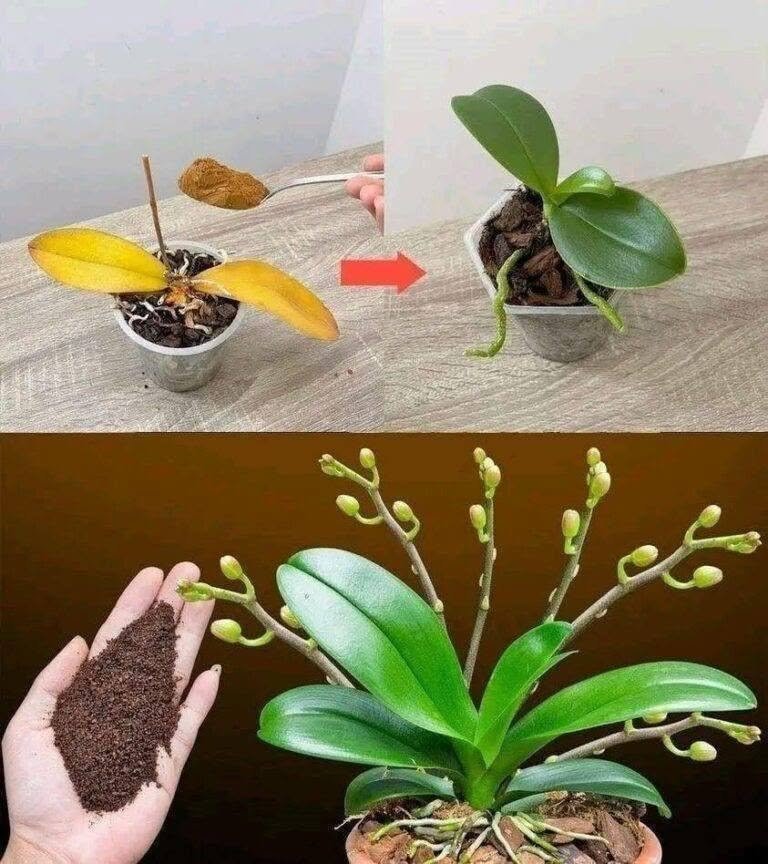
When viral gardening videos claim that “just a teaspoon” of a secret kitchen ingredient will make an orchid “miraculously bloom with lots of flowers overnight,” they are leaning into classic clickbait exaggeration.
Orchids—especially common indoor varieties like Phalaenopsis—do not respond to sudden botanical shortcuts or magic elixirs. Getting an orchid to bloom relies entirely on understanding its natural growth cycle and providing the right environmental cues.
The Myth vs. Reality of Orchid “Miracle Boosters”
Viral hacks often recommend dumping items like cinnamon, coffee grounds, rice water, or Epsom salts directly into the pot, claiming they trigger massive blooms. While some organic materials contain trace nutrients, misusing them can actually harm the plant:
-
Root Rot: Dumping liquid mixtures or organic debris into dense, poorly draining soil suffocates orchid roots, which naturally grow attached to trees in the wild and require high airflow.
-
Nutrient Burn: Orchids are light feeders. Over-fertilizing with high-concentration kitchen remedies can easily burn delicate root tips, causing them to shrivel and die rather than flower.
What Actually Triggers Orchid Blooms
Orchids bloom when they are healthy, mature, and receive the specific environmental signals that mimic their natural tropical habitat. If your orchid has plenty of green leaves but refuses to flower, it usually needs one of these three real adjustments:
-
A Nighttime Temperature Drop: For many indoor orchids, the trigger to initiate a flower spike is a slight, consistent drop in temperature at night (about 10 to 15 degrees cooler than daytime) over a few weeks, signaling the change of season.
-
Bright, Indirect Light: Insufficient light is the #1 reason orchids fail to rebloom. They need plenty of bright, filtered sunlight—such as an east- or bright-window with a sheer curtain. Dark corners will keep the plant alive, but it won’t have the energy to produce blooms.
-
Proper Watering Discipline: Orchids should never sit in standing water. The standard, reliable method is to water thoroughly only when the specialized bark medium is completely dry and the silvery-grey roots inside a clear pot indicate they are thirsty.
