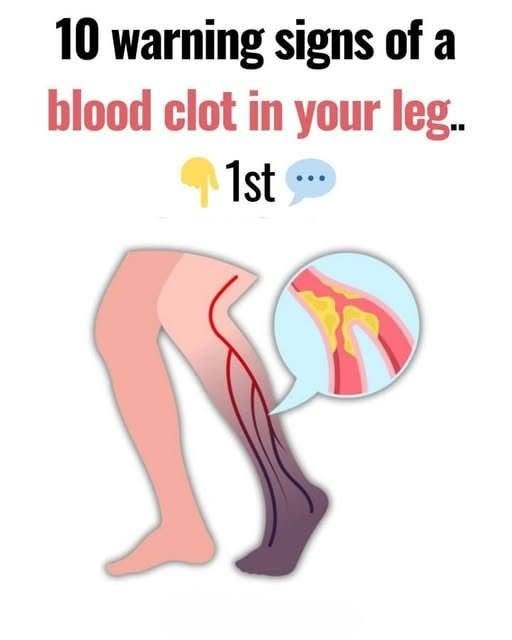
When clickbait health articles promise a list of 10 terrifying warning signs of a blood clot in the leg—often referred to medically as a deep vein thrombosis (DVT)—they usually rely on breathless fear-mongering to make every minor muscle ache or cramp feel like an impending medical emergency.
While a true DVT is a serious medical condition that requires prompt evaluation, real blood clots in the legs present with specific, distinct signs that are very different from normal everyday soreness.
The Real Signs of a Deep Vein Thrombosis (DVT)
Unlike harmless leg cramps or muscle fatigue, a blood clot typically blocks blood flow in a deep vein, leading to noticeable, localized changes in only one leg. The hallmark signs include:
-
Unilateral Swelling: Swelling that develops in just one leg or ankle (not both at the same time). If your left leg is significantly swollen while your right leg is completely normal, that is a classic red flag.
-
Localized Pain or Tenderness: A persistent cramp, ache, or tenderness in the calf or thigh that feels deep in the muscle and does not go away with stretching, massage, or rest.
-
Warmth to the Touch: The skin over the painful or swollen area often feels noticeably warmer than the surrounding tissue.
-
Red or Discolored Skin: The skin on the affected leg may appear reddish, bluish, or pale, depending on your skin tone and the severity of the blockage.
What DVT Is NOT (Debunking the Clutter)
Clickbait lists love to pad out their “10 warning signs” by including vague sensations that have nothing to do with clots:
-
Fleeting Tingling or “Pins and Needles”: This is usually just a compressed nerve or a limb “falling asleep,” not a clot.
-
General Achiness in Both Legs: If both legs ache after a long walk or a hard workout, it’s muscular fatigue, dehydration, or electrolyte imbalance—not a localized vascular blockage.
-
Mild Nighttime Leg Cramps: Sudden, sharp nocturnal cramps that resolve quickly with a stretch are common and benign, completely separate from DVTs.
When to Seek Immediate Medical Care
A DVT requires a proper medical diagnosis (usually via a venous ultrasound) because a clot can potentially break loose and travel to the lungs, causing a pulmonary embolism (PE).
Seek urgent medical evaluation if you notice sudden, unexplained swelling and pain in one leg—especially if it is accompanied by sudden shortness of breath, rapid heart rate, or unexplained chest pain, which are classic signs of a pulmonary complication.
