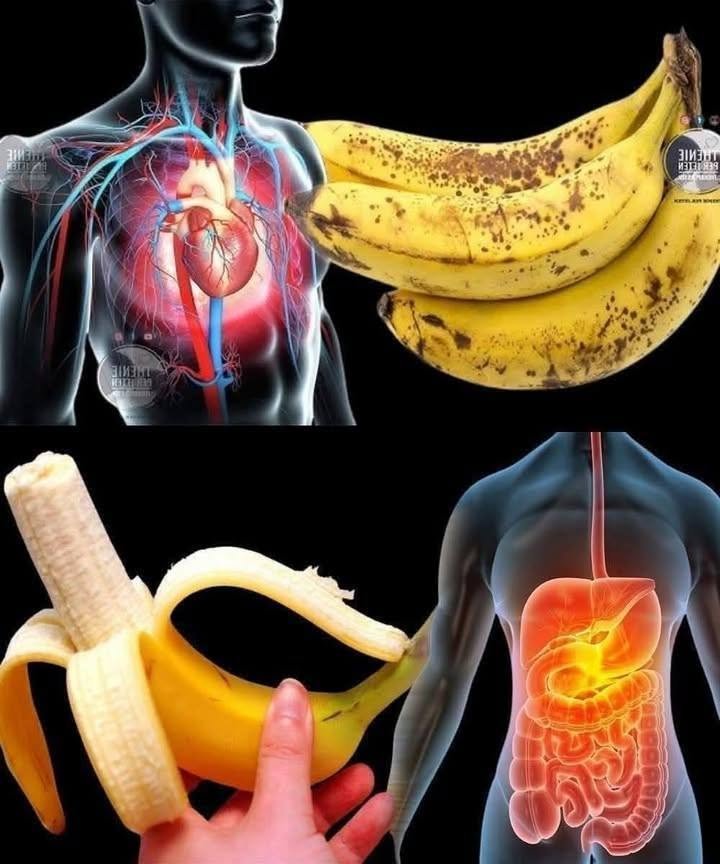
When sensationalized health headlines abruptly cut off with teasers like “eating bananas increases your [insert terrifying risk here],” they are leveraging the oldest trick in the digital clickbait playbook: manufacturing an artificial cliffhanger out of an entirely ordinary whole food.
Because people crave simple, definitive rules about what is “good” or “bad” for them, fear-based health writing weaponizes basic nutritional science. By chopping off a sentence mid-thought, these headlines manipulate your natural curiosity and anxiety, tricking you into clicking a link that inevitably resolves into a mundane, heavily distorted distortion of biological fact.
To understand why these cliffhangers are completely baseless, it helps to look at what happens when you actually eat a banana, separating real human physiology from internet panic.
The Real Metabolic Mechanics of Bananas
Bananas are nutrient-dense botanical berries composed primarily of water, complex and simple carbohydrates, dietary fiber, and essential micronutrients like potassium, magnesium, and vitamin B6. When you consume one, your body processes it through predictable, well-documented metabolic pathways:
-
Glycemic Response and Fiber: While bananas do contain natural sugars (fructose, glucose, and sucrose), they are encased in a matrix of soluble and insoluble dietary fiber (including resistant starch, particularly in slightly less ripe bananas). This fiber acts as a natural brake on digestion, slowing down the rate at which glucose enters your bloodstream and flattening the glycemic curve compared to refined, processed sweets.
-
Cellular Energy Production: The carbohydrates you ingest are broken down into glucose, which fuels cellular respiration across your entire body. Your brain, muscles, and organs rely on this steady stream of glucose to function. Eating a banana does not trigger a pathological metabolic collapse; it simply provides accessible, bioavailable fuel.
-
Electrolyte Regulation: Bananas are famously rich in potassium, an essential electrolyte and mineral that regulates fluid balance, nerve signals, and muscle contractions—including the rhythmic beating of your heart. Far from harming your cardiovascular system, the potassium in bananas actively helps counteract the blood-pressure-raising effects of dietary sodium.
Why Clickbait Exploits Whole Foods
It is remarkably easy to make any whole food sound terrifying if you isolate a single chemical component out of context and strip away the body’s homeostatic reality:
-
The “Sugar” Scare: Clickbait articles love to isolate the word sugar to imply that a banana is metabolically equivalent to a candy bar. They completely ignore the fact that the fiber, vitamins, and water content change how the body handles those natural sugars entirely.
-
The “Weight Gain” Myth: No single food item—least of all an unrefined fruit packed with fiber and water—possesses the magical ability to bypass the laws of thermodynamics. Weight fluctuations are driven by long-term, sustained caloric surplus, not by eating a potassium-rich snack.
You can safely finish that sentence however reality dictates: eating bananas increases your intake of vital micronutrients, supports healthy muscle function, and provides steady, wholesome energy. There is no hidden health disaster waiting in the fruit bowl.
