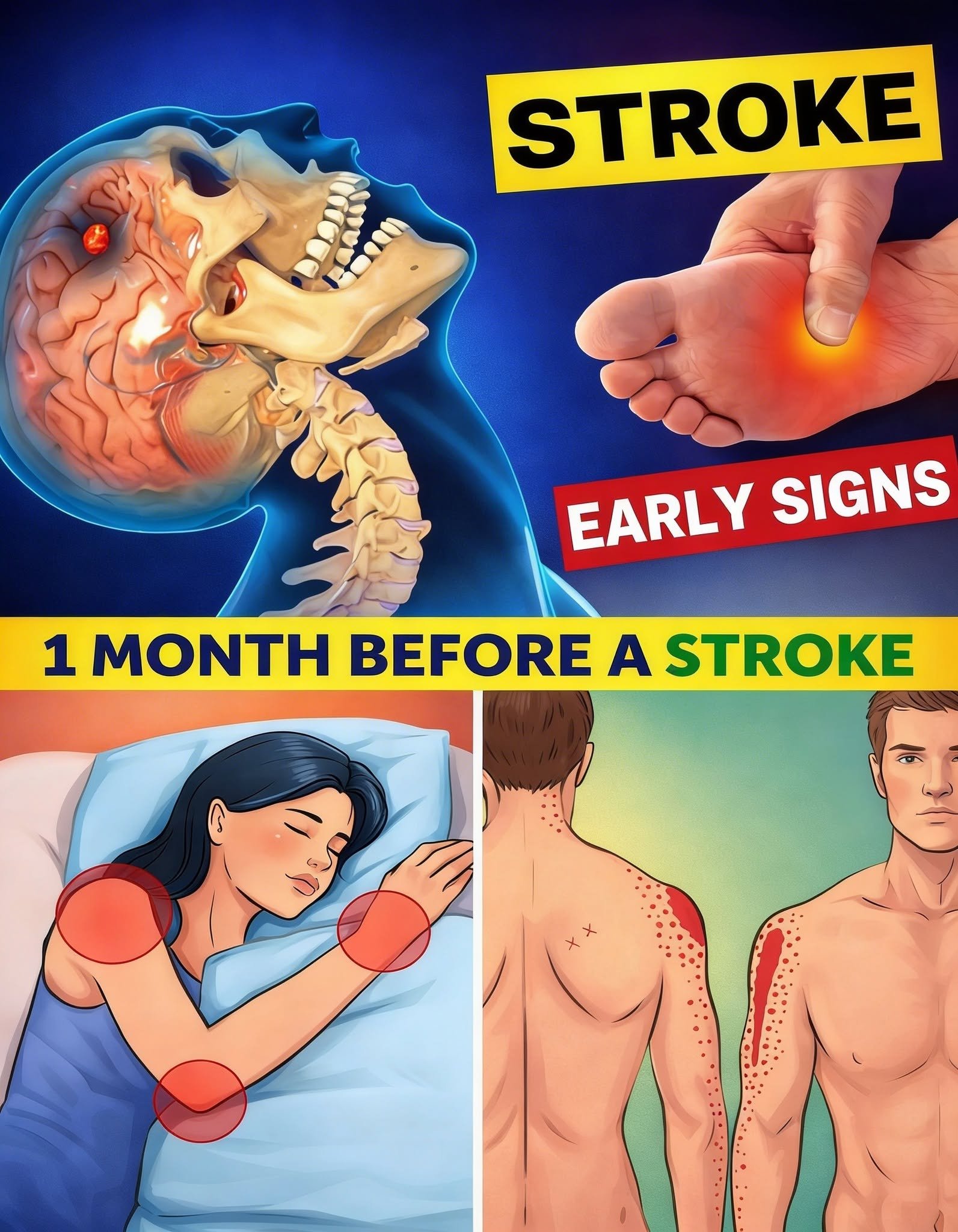
When lifestyle and health blogs publish dramatic lists promising “8 Warning Signs of Stroke That May Appear One Month Before and 9 Tips to Prevent It,” they often mix up genuine early vascular warning signs with sensationalized internet myths.
While a major stroke happens abruptly, the underlying vascular disease builds over years. Understanding what clinical medicine actually recognizes as early warning signs—and how to protect your cerebrovascular health—helps separate scare tactics from actionable facts.
The Reality of “Early Warning Signs” (TIAs)
The internet often speaks of symptoms appearing “one month before” a stroke, but clinically, doctors look for Transient Ischemic Attacks (TIAs), often called “mini-strokes”.
-
What a TIA Is: A TIA occurs when a blood clot temporarily blocks an artery supplying the brain. The symptoms mimic a full stroke—such as sudden weakness or slurred speech—but they typically resolve completely within minutes to an hour without leaving permanent brain damage.
-
Why It Matters: A TIA is a critical medical warning. Up to a third of people who experience a TIA will eventually have a full-blown stroke, with a significant portion occurring within days or weeks of the initial event.
What Clickbait “Warning Lists” Exaggerate
Sensationalized articles love to label everyday discomforts as stroke precursors:
-
The “Everything is a Stroke” Fallacy: Clickbait lists often point to general fatigue, mild muscle stiffness, or routine headaches as definitive signs of an impending stroke. In reality, these have dozens of common, harmless causes.
-
Ignoring the B.E.F.A.S.T. Rule: True acute warning signs are neurological deficits that happen suddenly.
True Clinical Warning Signs to Take Seriously
If you or someone nearby experiences any of these sudden neurological symptoms—even if they disappear quickly—it requires emergency medical evaluation:
-
Sudden Facial Droop: One side of the face droops or feels numb, uneven when trying to smile.
-
Sudden Arm or Leg Weakness: Unexplained numbness or inability to hold items, especially confined to one side of the body.
-
Sudden Speech Difficulties: Slurred words, garbled speech, or a sudden inability to understand what others are saying.
-
Sudden Vision Changes: Blurred vision, double vision, or sudden partial/total loss of sight in one or both eyes.
-
Sudden Dizziness and Loss of Balance: Severe vertigo, sudden unsteadiness, or unexplained falls.
-
Sudden Severe Headache: An intense, blinding headache with no known cause, often described as “the worst headache of my life”.
-
Sudden Confusion: Disorientation or sudden difficulty processing thoughts.
-
Sudden Coordination Loss: Clumsiness or an inability to control fine motor movements.
9 Evidence-Based Tips to Prevent a Stroke
Preventing a stroke isn’t about secret tricks; it relies on managing vascular health and lifestyle factors proven by clinical cardiology:
-
Control Blood Pressure: High blood pressure is the single most significant risk factor for stroke. Monitor it regularly and work with your physician to keep it within your target range.
-
Manage Cholesterol Levels: High low-density lipoprotein (LDL) cholesterol builds plaque in your arteries. Eat a heart-healthy diet and use prescribed medications (like statins) if lifestyle modifications aren’t enough.
-
Keep Blood Sugar in Check: Diabetes speeds up and worsens arterial plaque buildup. Managing glucose protects delicate blood vessels.
-
Treat Heart Conditions: Conditions like Atrial Fibrillation (Afib)—an irregular heart rhythm—can allow clots to form in the heart and travel to the brain. Proper medical management (including blood thinners when prescribed) is vital.
-
Quit Smoking: Cigarette smoking thickens blood, damages blood vessel linings, and sharply accelerates clot formation. Quitting dramatically lowers stroke risk.
-
Engage in Regular Physical Activity: Aim for regular moderate aerobic exercise (such as a brisk daily walk) to keep blood vessels elastic and lower blood pressure.
-
Adopt a Vascular-Protective Diet: Focus on whole foods, fiber, fresh fruits, and vegetables while minimizing excess sodium (salt), saturated fats, and ultra-processed foods.
-
Limit Alcohol Consumption: Excessive drinking spikes blood pressure and strains the cardiovascular system. Keep intake within moderate clinical guidelines.
-
Maintain Regular Medical Screenings: Routine check-ups catch silent risk factors like creeping hypertension or rising blood sugar before they cause vascular damage.
The Bottom Line
Stroke prevention is built on consistent, long-term habits and medical management of conditions like blood pressure and cholesterol. If you or someone around you ever experiences sudden neurological changes like face drooping or speech difficulty, do not wait—call emergency services immediately (
B.E. F.A.S.T.).