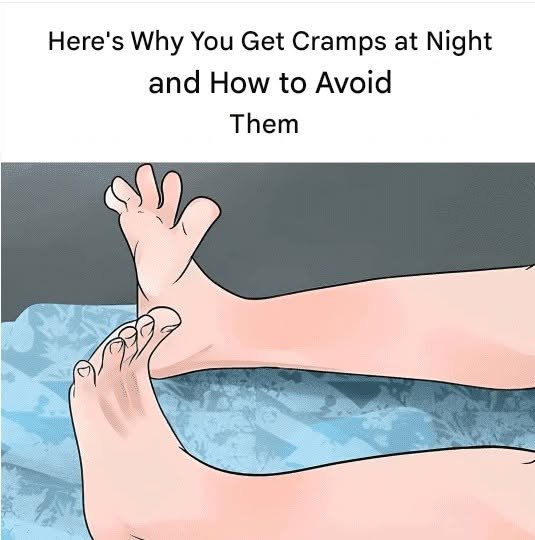
When health blogs, wellness reels, and sensationalized social media videos tease headlines like “This is why we get cramps at night,” they are capitalizing on one of the most universally frustrating nighttime experiences: suddenly jolting awake because a calf muscle has seized into a painful knot.
While viral posts love to pin nocturnal leg cramps on a single dramatic cause—like a severe electrolyte deficiency or a hidden toxicity—the clinical reality is far more nuanced, mechanical, and varied.
What Actually Happens During a Nighttime Cramp?
A nocturnal leg cramp is a sudden, involuntary, and often intensely painful contraction of a skeletal muscle (most commonly the calf muscle or the muscles in the foot).
-
The Neuromuscular Trigger: These cramps originate in the nervous system rather than just the muscle tissue itself. They occur when motor neurons—the nerves that signal your muscles to contract—fire abnormally high-frequency bursts of electrical impulses, causing the muscle fibers to lock up.
-
Why They Hit at Night: Nocturnal cramps frequently strike while you are resting or sleeping because of shifts in body position, prolonged muscle shortening, or changes in circulation and nerve excitability as your body winds down.
What Clickbait Health Myths Get Wrong
Sensationalized wellness articles love to oversimplify complex physiological phenomena into easy-to-market products or exaggerated fears:
-
The “Solely Dehydration or Potassium” Myth: While severe electrolyte imbalances can contribute to cramping, viral posts often claim that a single nighttime cramp means your potassium is dangerously low or you are catastrophically dehydrated. In reality, people with completely normal blood electrolyte panels still experience nocturnal cramps.
-
The “Miracle Supplement” Pitch: Many clickbait articles use nighttime cramps as a scare tactic to sell expensive proprietary mineral blends, magnesium sprays, or specialized tonics, promising an instant permanent cure.
Common Clinical Causes of Nocturnal Leg Cramps
Physicians and neurologists look at a wide range of factors when evaluating persistent nighttime cramping:
-
Normal Age-Related Changes: Nocturnal leg cramps become increasingly common as people age, often due to natural, gradual changes in nerve endings and muscle tendons.
-
Prolonged Muscle Shortening or Inactivity: Sitting or lying in positions that keep the calf muscles shortened for hours (such as pointing your toes under heavy bedsheets) can predispose the muscle to spasms.
-
Strenuous Exercise or Fatigue: Unaccustomed physical exertion, heavy athletic training, or prolonged standing during the day can leave muscles fatigued and prone to involuntary contractions at rest.
-
Underlying Medical Conditions and Medications: Less commonly, frequent cramping can be associated with peripheral neuropathy, circulatory issues, metabolic conditions (like thyroid disorders or diabetes), or certain prescription medications (such as certain diuretics).
Evidence-Based Ways to Manage and Prevent Nighttime Cramps
If you or someone you know deals with recurring nocturnal cramps, clinical strategies focus on supportive care and mechanical prevention:
-
Gentle Stretching: Performing regular calf and hamstring stretches before bedtime can significantly reduce the frequency and intensity of nighttime spasms.
-
Proper Hydration and Nutrition: Maintaining steady, balanced hydration and eating a nutrient-rich diet supports overall muscular and neurological health.
-
Immediate Relief: When a cramp hits, gently stretching the muscle in the opposite direction (such as pulling your toes upward toward your shin) and applying light massage or a warm compress helps relax the contracted fibers.
-
Consulting a Physician: If nighttime cramps are severe, frequent, and significantly disrupt your sleep, a doctor can review your medications and rule out underlying metabolic or neurological causes.
The Bottom Line
Nighttime leg cramps are an annoying and painful physiological quirk rather than a mysterious medical emergency or a sign that you need an expensive wellness tonic. Simple stretching and smart hydration usually offer the best relief.
