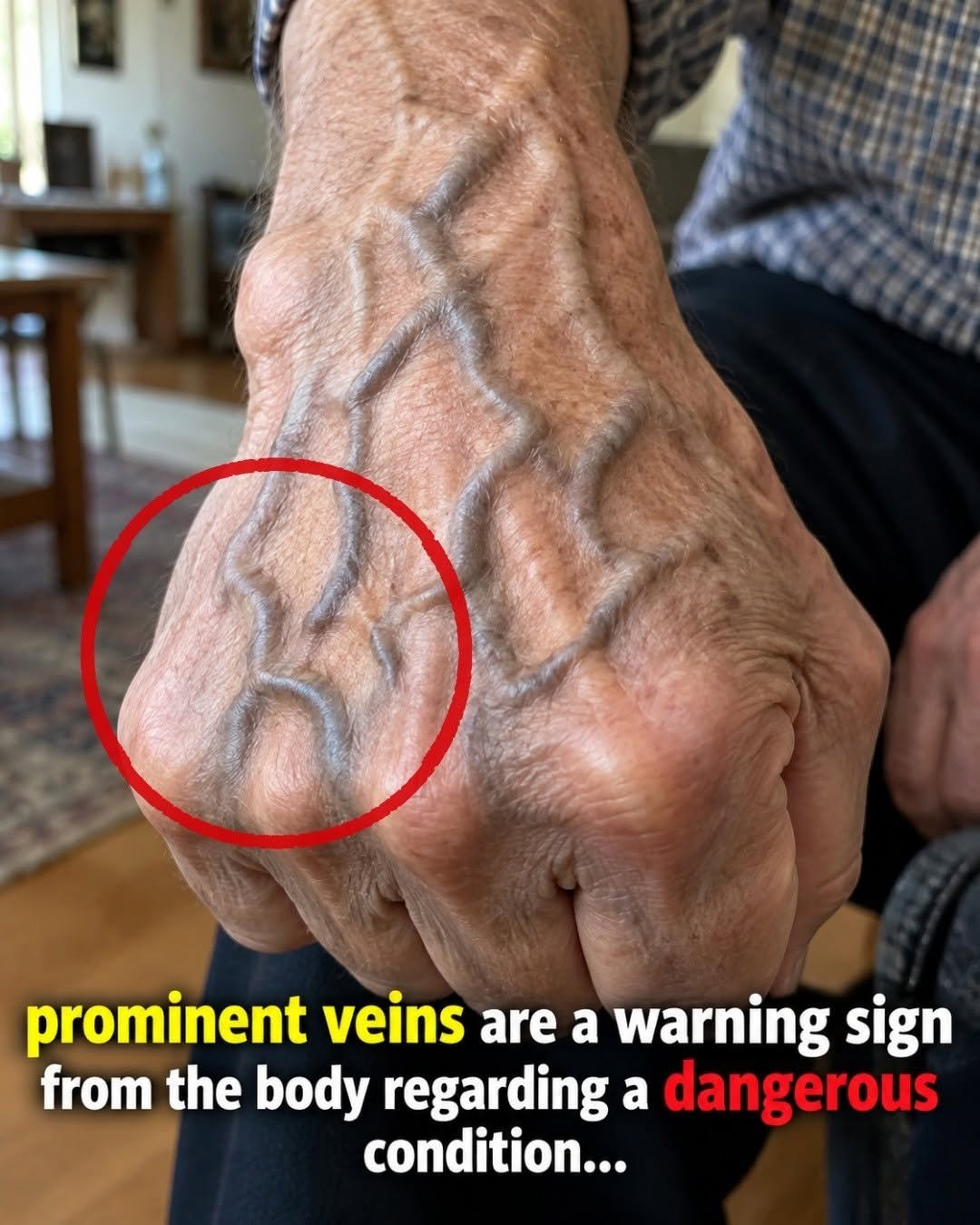
When sensationalized health blogs and viral social media videos publish alarming headlines like “Visible Blue Veins After 60: What Your Blood Flow Is Screaming,” they are using classic fear-based marketing to turn a completely normal part of aging into a medical crisis. They want you to look down at your hands, legs, or temples, panic over the color of your skin, and buy expensive topical creams or dubious “circulation cleanses.”
In clinical reality, visible blue veins in older adults are usually a natural anatomical consequence of aging, not a screaming distress signal from your circulatory system.
Why Veins Become More Visible with Age
To understand why veins stand out more as we get older, it helps to look at the normal structural changes in human skin and tissue:
-
Thinning Skin and Loss of Subcutaneous Fat: As people age, the skin naturally thins and loses its underlying layer of fat (subcutaneous adipose tissue), which normally acts as a soft, opaque padding. Because that protective cushion diminishes, blood vessels sitting just beneath the surface become much more prominent to the naked eye.
-
Decreased Skin Elasticity: Collagen and elastin fibers break down over decades, reducing skin firmness. Less firm skin drapes more closely over underlying structures, making veins easier to see.
-
The Physics of Light: Veins are not actually blue—oxygen-depleted blood is dark red, but skin tissue scatters light in a way that allows shorter blue wavelengths to reflect back to our eyes. When the skin overlaying the vein becomes thinner with age, the blue hue appears much sharper.
What Clickbait “Circulation” Articles Get Wrong
Sensationalized wellness articles love to exploit visible veins to push unproven products:
-
The “Toxic Blood” Fallacy: Clickbait often implies that visible veins mean your blood is “stagnant,” full of toxins, or blocked, requiring a special herbal tea or supplement to “cleanse” your vessels. Your liver and kidneys continuously filter your blood; topical products or teas have no effect on the depth or visibility of surface veins.
-
The Varicose Vein Confusion: While bulging, twisted varicose veins in the legs can indicate underlying venous insufficiency (where internal valves weaken and allow blood to pool), normal, flat, visible blue veins on the hands, arms, or temples are entirely benign and structural.
True Vascular Signs That Warrant Clinical Attention
While normal age-related vein visibility is harmless, physicians do evaluate specific vascular symptoms that indicate medical conditions:
-
Symptomatic Varicose Veins: If leg veins become significantly enlarged, bulging, twisted, and are accompanied by persistent aching, heaviness, throbbing pain, swelling in the lower legs, or skin discoloration, it may indicate chronic venous insufficiency.
-
Superficial Phlebitis: A vein that suddenly becomes hard, red, warm, and tender to the touch, often signaling localized inflammation or a mild clot in a surface vein.
-
Signs of Deep Vein Thrombosis (DVT): A sudden, painful swelling in one leg (usually accompanied by warmth and redness) that requires urgent medical evaluation to rule out a deep blood clot.
The Bottom Line
Visible blue veins after 60 are typically a natural, harmless reflection of thinning skin and normal aging—not a sign that your blood flow is “screaming.” If you have heavy, painful, or bulging varicose veins, a doctor or vein specialist can easily evaluate them; otherwise, those visible veins are just a natural map of a life well-lived.
