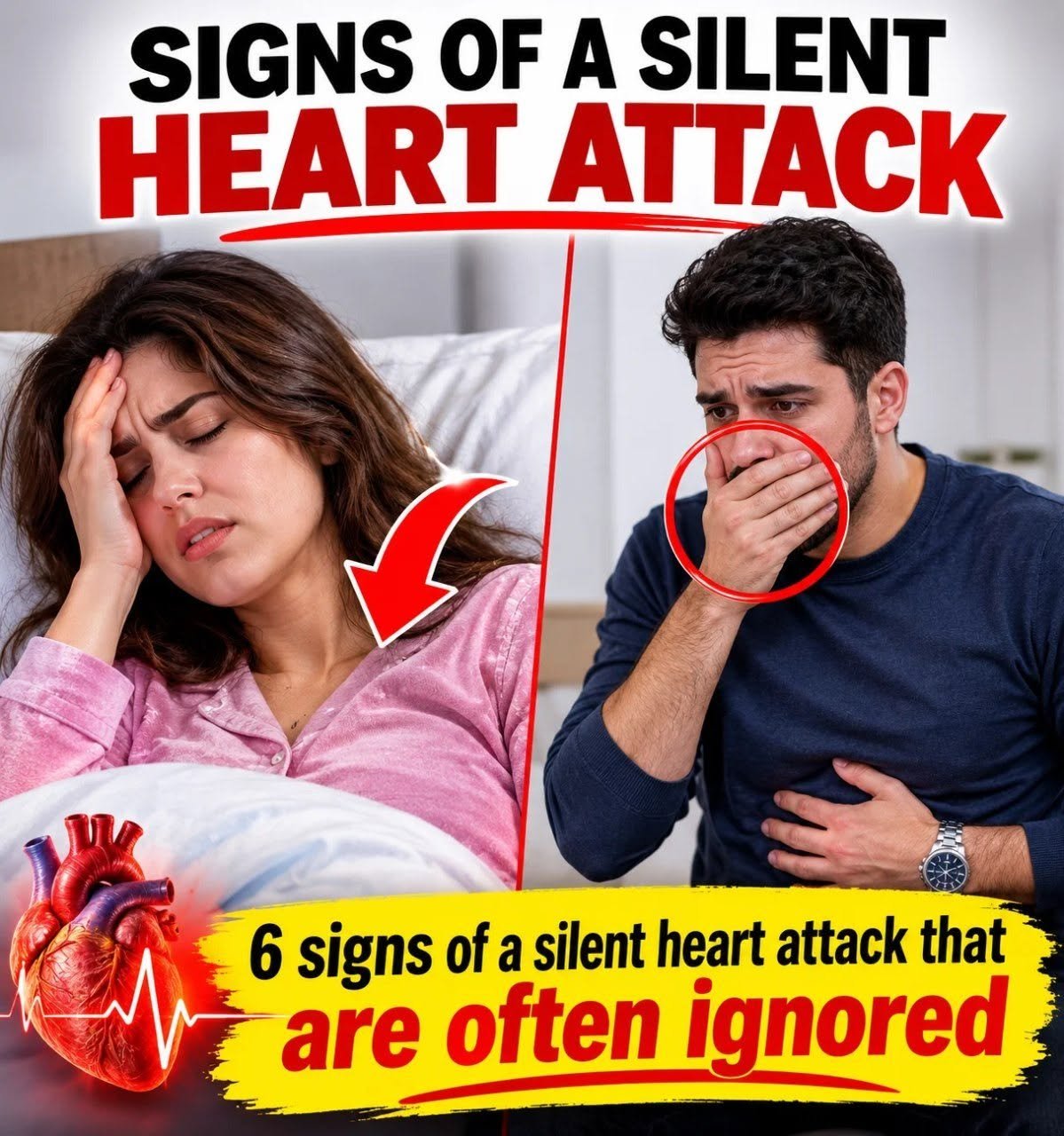
When health blogs and viral social media feeds publish dramatic headlines like “6 Still Overlooked Signs of a Silent Heart Attack,” they rely on a powerful mix of curiosity and fear. They take common, everyday sensations—like feeling tired after a long day or having a mild bout of indigestion—and frame them as terrifying, hidden indicators of a catastrophic cardiac event.
While the concept of a “silent heart attack” sounds like a medical mystery, it is a well-documented clinical reality. Understanding what these events actually are—and separating sensationalized myths from medical facts—can help you recognize genuine warning signs without falling into an anxiety spiral.
What Clickbait “Silent Heart Attack” Lists Get Wrong
-
The “Secret Trap” Narrative: Clickbait articles often imply that your body is dropping subtle, cryptic hints that only their exclusive list can decode. In reality, subtle symptoms are simply the non-classic ways the human body responds to restricted blood flow.
-
Pathologizing Everyday Aches: These lists love to conflate normal physical fatigue, stress, or mild muscle strain with a cardiac emergency, leaving readers second-guessing every minor bodily quirk.
The Clinical Reality: What is a Silent Heart Attack?
In medicine, a “silent heart attack” is formally known as a silent myocardial infarction (SMI). According to the American Heart Association, a significant portion of all heart attacks occur without the classic, dramatic Hollywood chest-clutching pain. Instead, the heart muscle is deprived of oxygen (ischemia), leading to cellular damage, but the symptoms are so mild, atypical, or completely absent that the individual doesn’t realize it happened.
They are often discovered weeks, months, or years later during a routine electrocardiogram (ECG) or echocardiogram performed for an entirely different reason. They occur more frequently in older adults, individuals with diabetes, and women.
When cardiologists look at subtle or non-classic presentations that people commonly overlook, they point to these six key indicators:
-
Unexplained, Profound Fatigue: A sudden or worsening exhaustion that doesn’t improve with a good night’s sleep. Patients often look back and realize they were too tired to carry out normal daily tasks, frequently blaming it on work stress or aging.
-
Vague Chest Pressure or Fullness: Rather than sharp, crushing pain, silent or atypical heart attacks often present as a mild tightness, squeezing, pressure, or a feeling of heaviness in the center of the chest that may come and go.
-
Shortness of Breath Without Exertion: Feeling winded, struggling to catch your breath, or gasping while doing light physical tasks (like folding laundry or walking across a room) that normally wouldn’t cause breathlessness.
-
Radiating Upper Body Discomfort: Because the heart shares nerve pathways with other parts of the upper body, cardiac distress can manifest as a dull ache, tightness, or discomfort in the jaw, neck, upper back, shoulders, or one or both arms.
-
Persistent Indigestion or Heartburn-like Sensations: A recurring sour stomach, nausea, or a burning sensation in the upper abdomen that occurs independently of what or when you ate, rather than standard acid reflux tied to spicy food.
-
Sudden Lightheadedness or Dizziness: A brief, unexplained bout of unsteadiness, wooziness, or feeling faint caused by a temporary drop in efficient cardiac output.
When to Seek Medical Evaluation
Everyone’s body responds differently to stress and illness. While a single episode of fatigue or indigestion is rarely a heart attack, persistent, recurring, or unusual combinations of these symptoms—especially if you have underlying cardiovascular risk factors like high blood pressure, diabetes, high cholesterol, or a family history of heart disease—should never be brushed aside.
If you or someone you know experiences sudden, severe chest pain, acute breathlessness, or fainting, call emergency services immediately. For chronic or unusual subtle changes, consult a primary care physician or cardiologist for proper diagnostic testing (such as an EKG or blood work).
The Bottom Line
Don’t let alarmist internet listicles turn every moment of everyday tiredness into a panic, but understand that subtle warning signs deserve respect. Listening to your body and managing your cardiovascular risk factors is the best defense against both classic and silent heart issues.
