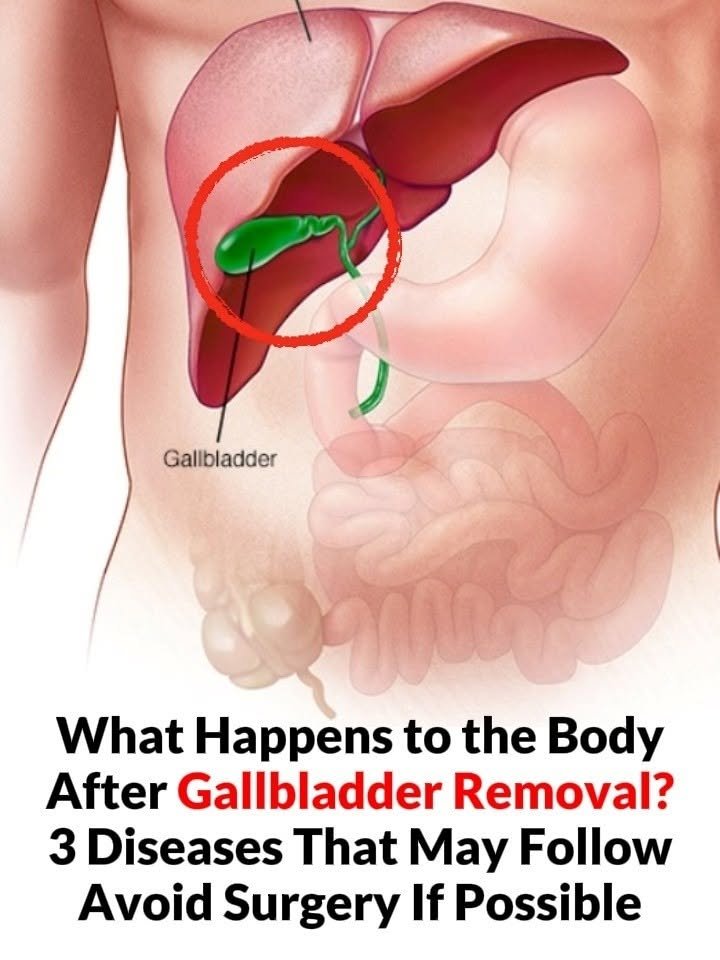
When health clickbait warns with headlines like “What Happens to the Body After Gallbladder Removal? 3 Diseases That May Follow – Avoid Surgery If Possible,” it preys on natural surgical anxiety. By framing a standard, highly routine operation as a trigger for catastrophic, mysterious diseases, these articles try to scare readers into avoiding necessary medical care.
In clinical and surgical reality, a cholecystectomy (gallbladder removal) is one of the most common and safely performed procedures worldwide. When an individual suffers from painful gallstones, chronic inflammation, or acute infection, removing the organ is often a definitive, life-improving solution that prevents dangerous complications like severe pancreatitis or gallbladder rupture.
What Clickbait “Gallbladder Removal” Myths Get Wrong
-
The “Organ Ruin” Fallacy: Sensationalized articles treat the gallbladder as if it performs vital metabolic work akin to the liver or kidneys, implying that its absence leaves the body permanently broken.
-
Inventing Doomsday “Diseases”: Clickbait lists exaggerate normal, temporary digestive adjustments—or conflate pre-existing gastrointestinal conditions—into terrifying, permanent diseases caused entirely by the surgery.
The Physiological Reality: How the Body Adapts Without a Gallbladder
To understand what actually happens post-surgery, it helps to look at how bile processing changes:
-
Storage vs. Production: The liver continuously manufactures bile (a fluid crucial for breaking down dietary fats), producing roughly half a liter to a liter a day. The gallbladder’s sole function is simply to store and concentrate that bile, releasing it in concentrated bursts whenever you eat a fatty meal.
-
The Continuous Trickle: Once the gallbladder is removed, the body no longer has that storage reservoir. Instead, bile flows directly and continuously from the liver straight into the small intestine. For the vast majority of people, the digestive tract adapts seamlessly to this continuous trickle within a few weeks.
Clarifying the “Post-Surgery Conditions” Often Exaggerated Online
When online articles claim that specific “diseases” inevitably follow gallbladder removal, they are usually distorting well-documented, manageable physiological responses or unrelated background conditions:
-
Bile Acid Diarrhea (Bile Acid Malabsorption): Because bile now drips continuously rather than releasing on demand, excess bile can occasionally spill over into the large intestine. This can irritate the colon lining and speed up bowel transit, leading to loose or urgent stools. While inconvenient, this is a functional digestive shift—not a progressive disease—and is easily managed through dietary modifications or targeted medications (like bile acid sequestrants).
-
Post-Cholecystectomy Syndrome (PCS): This is an umbrella medical term used when a patient continues to experience digestive symptoms—such as bloating, mild indigestion, or upper abdominal discomfort—after surgery. Clinical data shows that PCS is rarely a new “disease” created by the surgery; instead, it typically stems from pre-existing conditions (like Irritable Bowel Syndrome or acid reflux) or minor issues like transient sphincter of Oddi dysfunction or tiny retained micro-stones in the bile ducts.
-
Transient Dietary Sensitivities: For the first few weeks post-surgery, heavy or greasy meals can temporarily overwhelm the digestive system’s unbuffered bile supply. This temporary adjustment period is often exaggerated by clickbait as permanent food intolerance or organ failure.
Evidence-Based Guidance for Recovery
If you or someone you know is facing a recommended gallbladder removal, navigating the recovery with clinical clarity makes all the difference:
-
Trust Medical Indications: When gallstones cause recurrent pain, inflammation (cholecystitis), or blockages, surgery prevents life-threatening complications that far outweigh any temporary post-operative adjustments.
-
Transition Your Diet Gradually: In the immediate weeks following surgery, eating smaller, more frequent meals and temporarily moderating high-fat foods gives your digestive tract time to comfortably adapt to the continuous flow of bile.
-
Consult Your Surgeon or Gastroenterologist: If lingering digestive symptoms or discomfort persist past the initial recovery window, a targeted evaluation can easily identify and treat manageable causes like bile acid imbalances or functional gut sensitivities.
