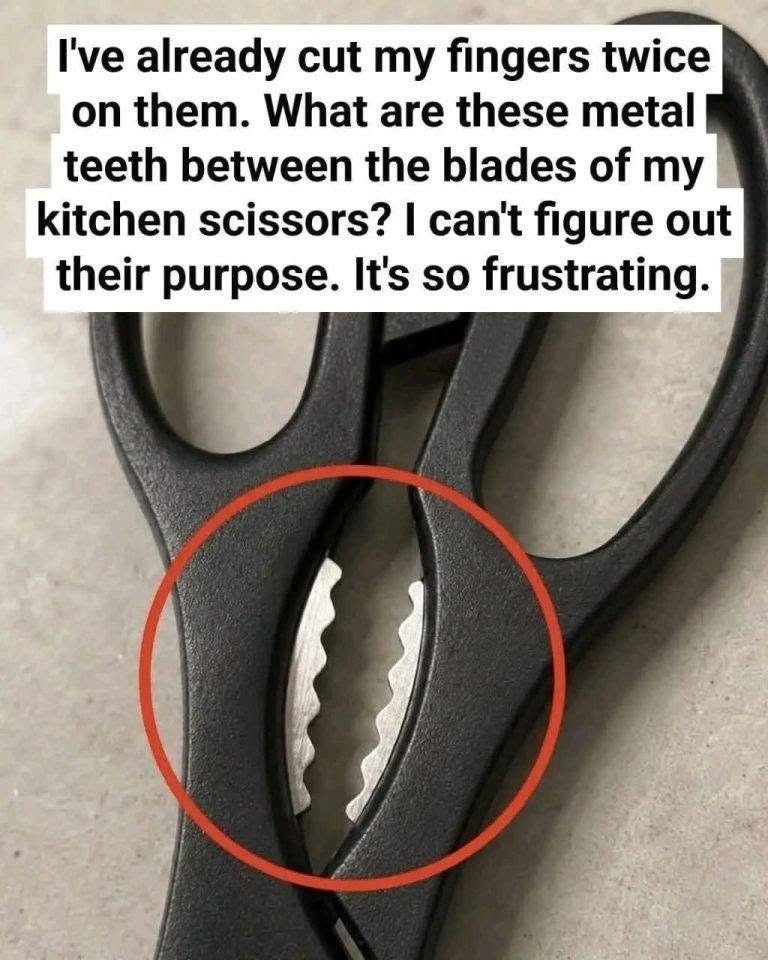
When viral lifestyle and cooking sites tease headlines like “What Is That Weird Toothed Part on Kitchen Scissors For? (And 4 Brilliant Hacks You’ve Been Missing),” they treat standard tool design like an ancient, hidden mystery.
In culinary utility and kitchen tool engineering, those ridged metal teeth nestled right inside the handles aren’t a secret code or a mysterious life hack—they are an intentional, multi-functional mechanical feature designed into heavy-duty kitchen shears.
What Clickbait “Scissor Hack” Myths Get Wrong
-
The “Secret Invention” Fallacy: Clickbait frames these built-in features as a clever workaround discovered by genius internet creators, ignoring the fact that manufacturers have engineered them into kitchen shears for decades.
-
Over-the-Top Miracle Claims: Sensationalized posts often promise that using this part will radically transform how you cook, when in reality it is simply a convenient built-in leverage tool to save you from grabbing a separate gadget.
The Functional Reality: What Those Teeth Are Actually For
Kitchen shears are designed to be multi-functional workhorses. The textured, toothed zone located just behind the hinge or inside the handle grip serves as a mechanical leverage zone:
-
The Built-In Nutcracker and Shellfish Cracker: The serrated grooves provide a stable, high-friction grip for crushing hard objects. By placing a walnut, pecan, or lobster claw into the teeth and gently squeezing, you use the handles’ leverage to crack shells cleanly without scattering shards everywhere.
-
The Cap and Lid Gripper: Smooth or tightly sealed twist-off caps on bottles, extracts, or narrow jars can be notoriously difficult to open bare-handed. Placing the cap inside the handle grip gives you extra traction and torque, acting like a mini pair of pliers to break the seal safely.
-
Mechanical Advantage and Grip: Because kitchen shears are built from forged steel or heavy-duty stainless alloys, integrating a grip zone close to the pivot maximizes force transmission, allowing you to exert more crushing pressure than you could with your bare hands alone.
4 Practical Ways to Maximize Your Kitchen Shears
Instead of treating these features as obscure internet secrets, you can incorporate them into standard kitchen prep tasks:
-
Crack Seafood Shells Instantly: Skip the clumsy seafood mallets when eating crab or lobster legs; place the shell segments into the handle teeth for a quick, controlled fracture.
-
Tackle Stubborn Extract Bottles: Use the grip zone to break the factory seal on tight plastic or metal caps on vanilla extract, hot sauce, or syrup bottles.
-
Handle Tough Nuts: Crack open holiday nuts or stubborn shells without searching your kitchen drawers for a standalone nutcracker.
-
Leverage the Bone Notch (Adjacent Feature): Many kitchen shears also feature a small semicircular “bone notch” right near the base of the blades. This is designed to capture small poultry bones or tough stems so they don’t slip out while you cut.
The Bottom Line
That weird toothed part on your kitchen scissors isn’t a secret life hack—it’s a built-in multi-tool designed to handle cracking and gripping tasks so you don’t have to clutter your drawers with single-purpose gadgets.
This video provides a closer look at the standard design features and built-in components found on modern kitchen shears.
