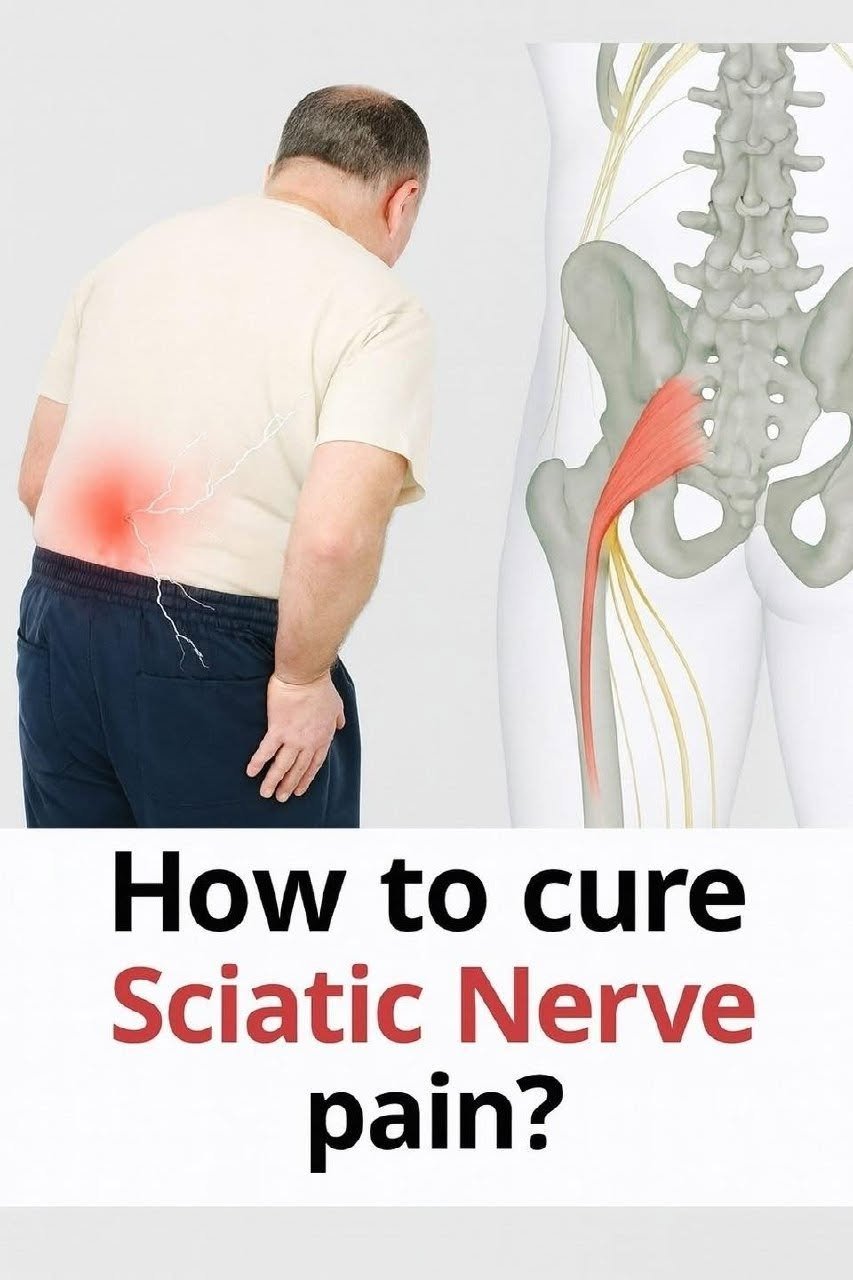
Lower back pain and sciatica can be intensely frustrating, often making simple daily movements feel like a challenge. When the sciatic nerve—the largest nerve in your body, running from your lower back down through your hips and legs—becomes compressed or irritated by tight surrounding muscles (such as the piriformis) or lumbar disc pressure, it triggers sharp, radiating pain, numbness, or tingling.
While severe or worsening nerve compression requires a medical evaluation, physical therapists and movement specialists frequently recommend a simple, gentle decompression movement that can be performed at home to help relieve pressure.
The Knee-to-Chest Decompression Stretch
This gentle movement helps lengthen the lower back muscles, open up the lumbar spine joints, and take tension off the sciatic nerve.
-
Get Positioned: Lie flat on your back on a firm, comfortable surface (like a yoga mat or carpet). Keep your legs extended and your shoulders relaxed.
-
Draw One Knee In: Slowly bend your right knee and pull it gently toward your chest using your hands. Keep your left leg straight and relaxed on the floor (or bend your left knee with your foot flat on the floor if keeping it straight strains your lower back).
-
Hold and Breathe: Hold the knee in place for 20 to 30 seconds while taking slow, deep, diaphragmatic breaths. Focus on letting your lower back release and sink into the floor.
-
Switch Sides: Lower your right leg gently back down and repeat the movement with your left leg. Perform 2 to 3 repetitions on each side.
Key Safety Tips for Lower Back and Sciatic Relief
-
Never Push Through Sharp Pain: A mild, relieving stretch is normal, but if any movement shoots sharp, electric pain down your leg, stop immediately.
-
Incorporate Gentle Walking: Unless acute pain makes movement impossible, short, gentle walks on flat ground can prevent stiffness and keep blood circulating through the lower back.
-
When to See a Doctor: Seek professional medical attention promptly if your back pain or sciatica is accompanied by sudden numbness in the groin area (“saddle anesthesia”), unexplained loss of bowel or bladder control, or progressive muscle weakness in your leg.
