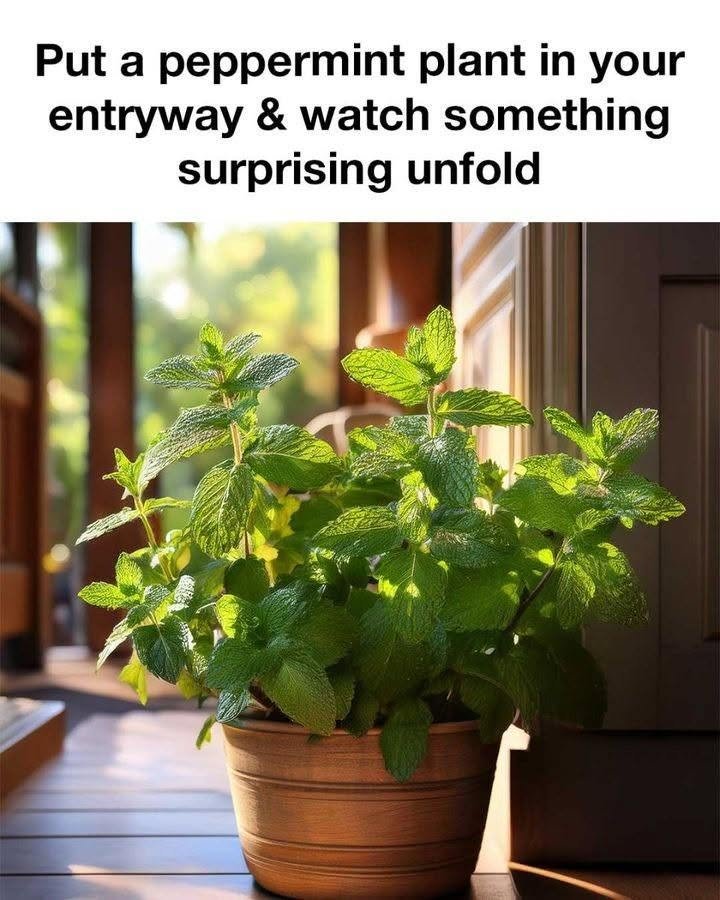
Placing a potted peppermint plant right by your front entrance or entryway is a popular household trick that triggers a few immediate, noticeable changes:
1. Natural Pest and Bug Deterrent
The most practical shift you will notice is a sharp drop in unwanted pests near your door. Pests like ants, spiders, mosquitoes, and even mice strongly dislike the pungent aroma of menthol. While a single living plant won’t clear an active infestation, its natural aromatic compounds act as a mild, chemical-free barrier that discourages bugs from crossing the threshold. (Tip: Gently rubbing or brushing past a leaf releases a burst of essential oils that magnifies this effect).
2. An Instant, Chemical-Free Air Freshener
Instead of artificial plug-ins or synthetic sprays, a fresh mint plant provides a crisp, clean scent the moment you open the door. It naturally neutralizes stuffy shoe-rack or umbrella odors, leaving the entryway smelling vibrant and inviting for anyone walking in.
3. A Quick Mental “Reset” (Aromatherapy)
Olfactory science shows that peppermint aroma stimulates the trigeminal nerve, which is linked to alertness, cognitive focus, and reduced mental fatigue. Walking past that burst of fresh mint right as you come home from a stressful day—or head out the door in the morning—provides a subtle, refreshing sensory pick-me-up.
4. Positive Energy Shift (Feng Shui)
In spatial design and Feng Shui traditions, the entryway is considered the mouth of chi (energy) for the home. Fragrant, fast-growing green plants like mint are viewed as “activating” elements that break up stagnant energy, symbolize renewal and clarity, and set an intentional, welcoming tone for the entire household.
A Quick Warning for Indoor Mint
While peppermint is remarkably hardy, traditional indoor entryways can sometimes lack adequate sunlight. To keep your entryway plant thriving:
-
Give it Light: Ensure it sits near a sidelight window or glass panel where it gets bright, indirect daylight.
-
Keep it Contained: Mint spreads rapidly via underground runners, so always keep it in its own potted container rather than planting it directly into garden beds near the foundation unless you want it to take over.
