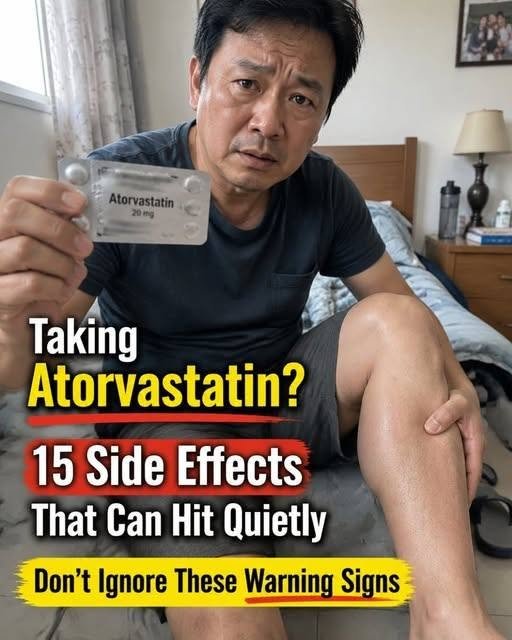
Atorvastatin (commonly prescribed under the brand name Lipitor) is one of the most widely used cholesterol-lowering medications in the world. It belongs to a class of drugs known as statins, which work by inhibiting an enzyme in the liver (HMG-CoA reductase) responsible for producing LDL (“bad”) cholesterol.
While atorvastatin is generally well tolerated and significantly reduces the risk of heart attack and stroke, many patients experience subtle, non-urgent side effects that they don’t immediately connect to their daily medication.
Here are 15 subtle side effects that could be affecting you:
1. Mild Muscle Aches and Heavy Limbs (Myalgia)
-
What it feels like: A dull, persistent ache, stiffness, or heavy sensation in your thighs, calves, shoulders, or lower back—similar to how your muscles feel a day or two after an intense workout.
-
The Connection: Statins can alter muscle cell membrane stability and mitochondrial energy production, leading to localized muscle sensitivity without severe tissue damage.
2. Unexplained Mental Fog or Minor Memory Shifts
-
What it feels like: Occasional difficulty retrieving common words, mild forgetfulness, or feeling mentally “cloudy” or sluggish during daily tasks.
-
The Connection: Cholesterol plays a crucial structural role in brain cell membranes and nerve myelin sheaths. Lowering circulating cholesterol levels can temporarily affect cognitive speed in sensitive individuals (a reversible side effect recognized by the FDA).
3. Persistent Daytime Fatigue or Low Energy
-
What it feels like: A general, low-grade sense of tiredness that persists despite getting adequate sleep, making afternoon tasks feel extra draining.
-
The Connection: Atorvastatin can reduce the body’s natural synthesis of Coenzyme Q10 (CoQ10)—a crucial antioxidant required by cellular mitochondria to generate energy (ATP).
4. Subtle Joint Stiffness or Aches
-
What it feels like: Stiffness or minor discomfort in small joints (like the fingers, wrists, or ankles) or larger joints (like the knees), especially when getting out of bed in the morning.
-
The Connection: Beyond muscles, statin-induced metabolic changes can occasionally trigger low-grade inflammatory sensitivity in connective tissues and joint capsules.
5. Mild Digestive Upsets (Nausea or Gas)
-
What it feels like: A slight, recurring wave of nausea after taking your dose, mild bloating, or increased flatulence throughout the day.
-
The Connection: The stomach and intestinal lining rely on smooth lipid metabolism for normal function; altering cholesterol absorption in the gut can alter routine digestion.
6. Changes in Bowel Habits (Constipation or Loose Stools)
-
What it feels like: Moving from regular daily bowel movements to mild constipation, or conversely, experiencing slightly loose or frequent stools.
-
The Connection: Shifts in liver bile composition and gastrointestinal motility are common adaptive responses when starting or adjusting statin dosages.
7. Sleep Disturbances or Vivid Dreams
-
What it feels like: Taking longer to fall asleep, waking up multiple times during the night, or experiencing unusually vivid or intense dreams.
-
The Connection: Although lipophilic statins cross the blood-brain barrier more easily, even moderately lipophilic statins like atorvastatin can occasionally influence sleep architecture and central nervous system rhythms in sensitive individuals.
8. Slight Increases in Blood Sugar Levels
-
What it feels like: Feeling slightly thirstier than usual, increased urinary frequency, or noticing a minor uptick in your fasting blood glucose readings during routine labs.
-
The Connection: Statins can slightly reduce insulin sensitivity in peripheral tissues and impair pancreatic beta-cell insulin secretion, which is why doctors routinely monitor HbA1c in long-term statin users.
9. Mild Skin Dryness or Itchiness (Pruritus)
-
What it feels like: Skin that feels slightly drier than usual, mild surface flaking, or a vague, ticklish itch without an obvious rash.
-
The Connection: Lipids form an essential part of the skin’s protective moisture barrier. Systemic reductions in cholesterol synthesis can temporarily impair skin barrier hydration.
10. Transient Headaches
-
What it feels like: A mild, dull tension headache that pops up periodically, particularly during the first few weeks of starting the medication or increasing the dose.
-
The Connection: Micro-vascular adjustments and mild systemic fluid shifts as the liver adjusts to the drug can manifest as tension-type headaches.
11. Minor Dizziness or Lightheadedness
-
What it feels like: A brief, fleeting lightheadedness when standing up quickly or changing positions in the morning.
-
The Connection: Subtle changes in vascular tone and systemic blood pressure regulation can occasionally lead to transient postural lightheadedness.
12. Decreased Exercise Tolerance
-
What it feels like: Feeling winded, fatigued, or physically exhausted much faster during routine cardiovascular exercise or walks than you normally would.
-
The Connection: Reduced intramuscular CoQ10 levels and subtle mitochondrial stress can impair peak muscle oxygen utilization during physical exertion.
13. Loss of Appetite or Altered Taste
-
What it feels like: A subtle decrease in your regular appetite or noticing that certain foods taste slightly bland or metallic.
-
The Connection: Minor shifts in salivary composition, taste receptor sensitivity, or mild liver enzyme adaptations can influence appetite pathways.
14. Tingling or “Pins and Needles” in Hands or Feet (Mild Paresthesia)
-
What it feels like: Occasional, fleeting sensations of prickling, numbness, or tingling in your fingertips or toes.
-
The Connection: Rarely, long-term statin use can affect peripheral nerve cell membranes, leading to minor nerve conduction irritability.
15. Mild Muscle Cramps at Night
-
What it feels like: Sudden, uncomfortable spasms or knotting in your calf muscles or arches of your feet while lying in bed at night.
-
The Connection: Changes in muscle cell electrolyte balance and localized neuromuscular irritability can predispose leg muscles to nocturnal cramping.
Red Flags: When to Contact Your Doctor Immediately
While the subtle effects above are often manageable, certain statin side effects require immediate medical attention:
-
Severe, Unexplained Muscle Pain or Weakness: Especially if accompanied by dark, tea-colored urine or fever. This can be a sign of rhabdomyolysis, a rare but dangerous breakdown of muscle tissue.
-
Signs of Liver Stress: Yellowing of the eyes/skin (jaundice), severe upper right abdominal pain, or dark urine.
-
Severe Allergic Reactions: Swelling of the face, lips, tongue, or throat, or a widespread unexplained skin rash.
What You Should Do
-
Never Stop Your Statin Abruptly: Atorvastatin provides critical cardiovascular protection against heart attack and stroke. Stopping it without medical guidance can cause your cholesterol levels to surge back up rapidly.
-
Talk to Your Physician: If you suspect atorvastatin is causing uncomfortable side effects, your doctor has several options: adjusting your dosage, switching you to a different statin (such as rosuvastatin or pravastatin), trying an alternate-day dosing schedule, or checking your vitamin D and CoQ10 levels.
