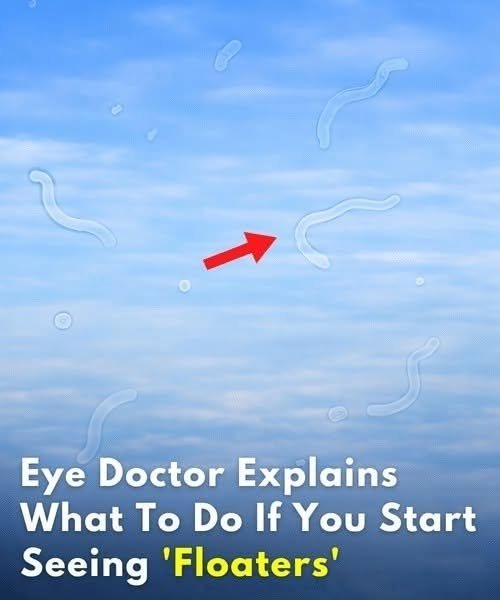
Noticeable specks, translucent threads, or tiny cobwebs drifting across your field of vision—especially when looking at a bright white wall or a clear blue sky—can be unsettling. When headlines or eye care articles address “eye floaters,” they are exploring a very common physiological phenomenon that most people experience at some point in their lives.
Ophthalmologists and optometrists emphasize that while most floaters are a normal, harmless part of aging, knowing when they signal an urgent medical issue is essential for protecting your vision.
What Are Eye Floaters and Why Do They Happen?
To understand floaters, it helps to look inside the eye. The main interior cavity of your eye is filled with a clear, gel-like substance called the vitreous humor.
-
The Aging Gel: As we age, the gel-like vitreous slowly liquefies and shrinks, causing tiny microscopic collagen fibers within it to clump together.
-
Casting Shadows: These tiny clumps cast shadows onto your retina (the light-sensitive tissue at the back of your eye), which you perceive as floating spots, squiggly lines, or cobwebs drifting across your sight.
-
Posterior Vitreous Detachment (PVD): Eventually, the shrinking vitreous gel can pull completely away from the back wall of the eye. This is called a PVD. It is a completely natural, age-related transition that often causes a sudden increase in floaters, but it usually settles down as the eye adjusts.
The Red Flags: When Are Floaters an Emergency?
While everyday floaters are benign and your brain eventually learns to ignore them, a sudden shift in your vision requires an immediate, dilated eye exam by an optometrist or ophthalmologist.
Seek urgent medical evaluation if you experience any of the following “red flag” symptoms:
-
A Sudden Shower of New Floaters: Waking up or noticing a sudden, dramatic burst of dozens of new spots or tiny specks all at once.
-
Flashes of Light: Seeing sudden, brief flashes of light (like camera lightning or strobe flashes) in your peripheral vision, which happens when the pulling vitreous tugs mechanically on the retina.
-
A Dark Curtain or Shadow: The appearance of a dark shadow, grey curtain, or blurry veil moving across any part of your side or central vision.
These symptoms can indicate a retinal tear or retinal detachment—a serious medical emergency where the delicate lining at the back of the eye begins to pull away. If caught early, it can be treated quickly with laser therapy or minor procedures to prevent permanent vision loss.
What to Do If You Notice Floaters
-
Don’t Panic, But Pay Attention: If you’ve had a few stable, transparent floaters for years that only show up when you look at a bright screen, it is generally just normal wear and tear.
-
Get a Dilated Exam: If floaters are completely new, sudden, or accompanied by flashes, call an eye doctor right away. They must dilate your pupils to physically look at your entire retina and ensure it is safe and intact.
-
Give It Time to Settle: For routine, benign floaters, your brain is remarkably good at “filtering” them out over weeks and months, making them much less noticeable in your day-to-day life.
Are you noticing new floaters or flashes yourself, or are you looking into general eye health changes as we age?
