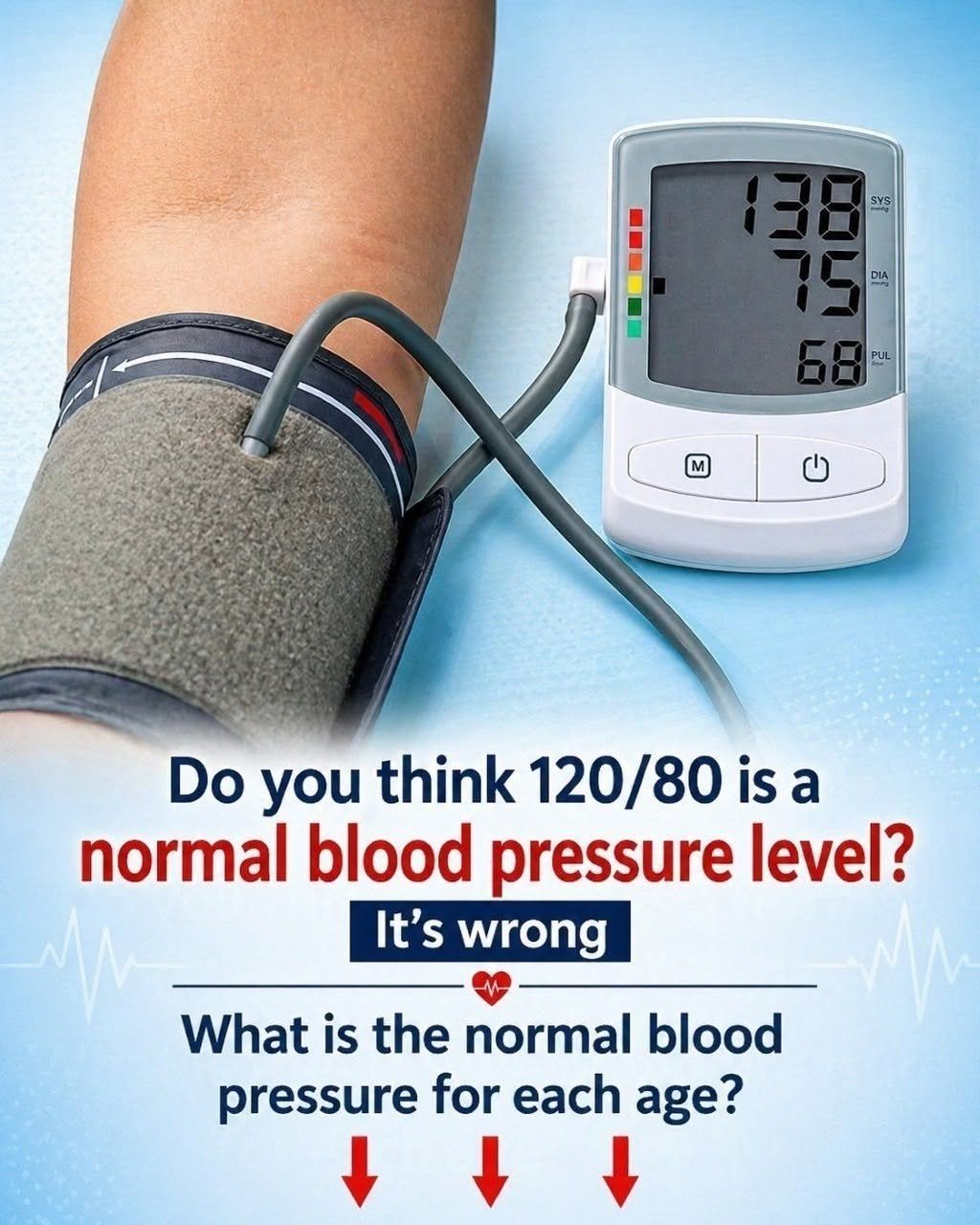
Unlike pediatric guidelines—which scale expectations precisely by a child’s age, height, and sex—standard adult blood pressure targets do not scale upward as you grow older. According to major guidelines from the American Heart Association (AHA) and American College of Cardiology, the optimal and normal blood pressure target for all adults (age 18 and older) is less than 120/80 mm Hg.
While average, typical blood pressure naturally tends to drift upward with each decade due to natural stiffening of the arteries, a higher reading is not considered healthy simply because of age.
Adult Blood Pressure Categories (Ages 18+)
Adult readings are broken down into distinct clinical categories based on the top (systolic) and bottom (diastolic) numbers:
| Category | Systolic (Top Number) | Diastolic (Bottom Number) | What It Means | |
| Normal | Less than 120 | and | Less than 80 | Optimal heart and artery health. |
| Elevated | 120 – 129 | and | Less than 80 | Tends to worsen over time unless lifestyle changes are made. |
| Stage 1 Hypertension | 130 – 139 | or | 80 – 89 | High blood pressure; doctors typically recommend lifestyle adjustments and assess overall cardiovascular risk. |
| Stage 2 Hypertension | 140 or higher | or | 90 or higher | Definite high blood pressure requiring medical management and usually medication. |
| Hypertensive Crisis | Higher than 180 | and/or | Higher than 120 | Emergency: Seek immediate medical care if accompanied by chest pain, shortness of breath, or neurological changes. |
Pediatric Blood Pressure Ranges (Children & Adolescents)
For infants, children, and teens, blood pressure is evaluated differently because normal values change drastically as a child grows. Normal ranges are determined by comparing the child’s age, height, and gender against standardized pediatric percentiles:
-
Newborns (up to 1 month): Average systolic ranges roughly from 60 to 90 mm Hg.
-
Infants & Toddlers (1 to 3 years): Roughly 95–105 / 53–66 mm Hg.
-
School-Age Children (6 to 11 years): Roughly 97–112 / 57–71 mm Hg.
-
Adolescents (12 to 18 years): Approaches adult ranges, typically averaging below 120/80 mm Hg. Persistent readings above 130/80 mm Hg in teens are generally flagged as elevated or hypertensive by pediatricians.
Important Clinical Context for Older Adults
While the universal goal remains below 120/80 mm Hg, physicians frequently individualize targets for older adults (e.g., those over 65 or 80) to prevent lightheadedness, dizziness, or fainting risks associated with over-medication. However, consistent readings above 130/80 or 140/90 mm Hg still signal an increased strain on the heart, kidneys, and brain, and should be evaluated regularly by a healthcare professional.
