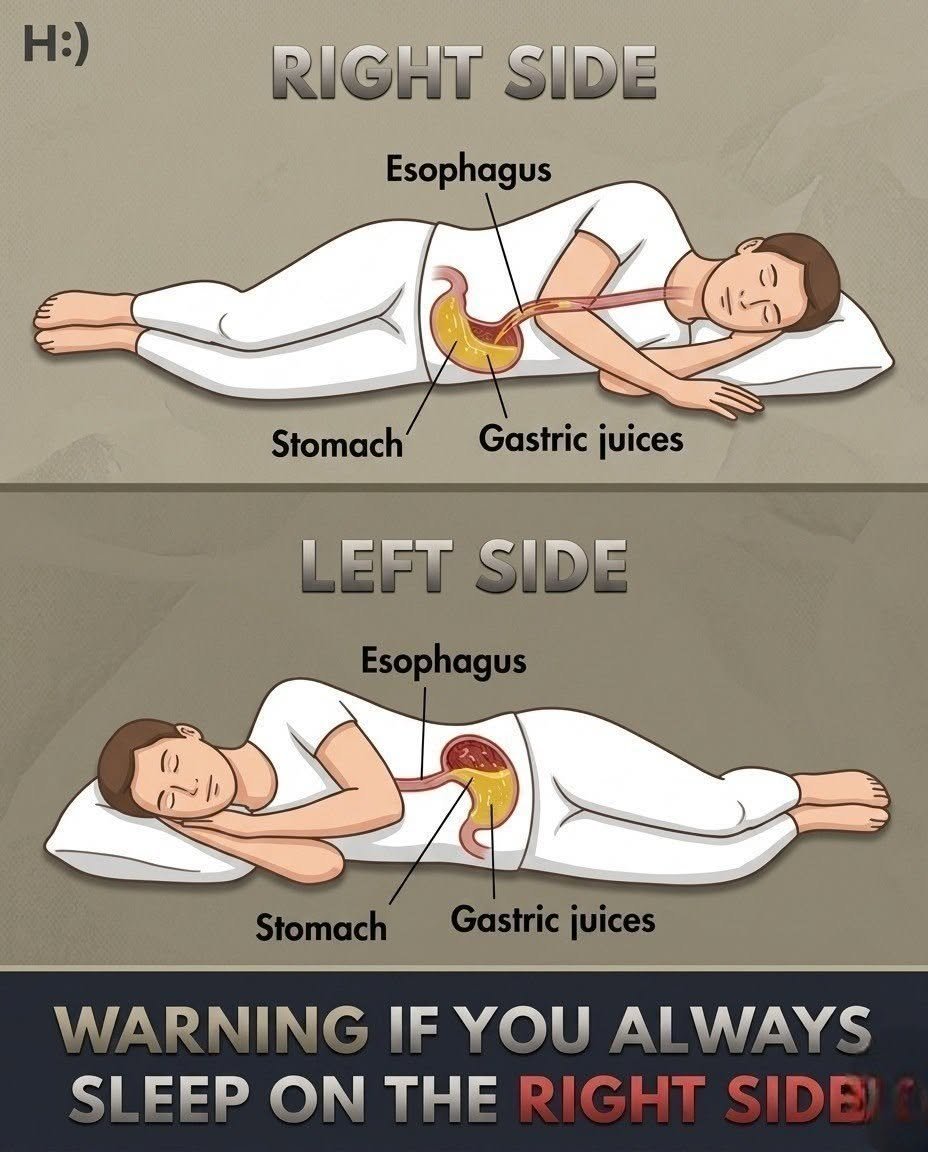
conscious awareness of how gravity and internal organ anatomy interact with your nightly posture. Because the stomach and its gastric juices sit in a position where right-lateral recumbency can occasionally compromise the lower esophageal sphincter, individuals who consistently sleep on their right side should be particularly mindful of their evening eating habits. Consuming large meals, acidic foods, or caffeine shortly before bed can significantly elevate the risk of nighttime acid reflux and heartburn, as this anatomical orientation makes it easier for stomach contents to pass upward into the esophagus. To counteract this, right-side sleepers benefit from allowing a full three-to-four-hour window between their last meal and bedtime, or utilizing a wedge pillow to elevate the upper body so that gravity works in favor of digestion.
From a musculoskeletal perspective, favoring one side night after night concentrates considerable mechanical pressure on a single shoulder and hip joint. Over time, this localized load can lead to chronic shoulder impingement, lateral hip bursitis, or spinal misalignment if your sleep environment lacks proper ergonomic support. To protect joint health and prevent morning stiffness, right-side sleepers should use a medium-firm mattress that allows the heavier shoulder and hip to sink just enough to maintain a neutral spine, paired with a high-loft pillow that fills the exact gap between the ear and the mattress to prevent lateral neck bending. Additionally, placing a supportive pillow between the knees helps keep the pelvis square and alleviates torsional stress on the lower back.
Finally, while right-side sleeping can offer a stable resting posture for the heart due to surrounding tissues keeping the organ centered, tuning into your body’s physical feedback is essential. If you frequently wake up with numbness in your right arm, tingling sensations, or shoulder discomfort, it is often a sign of restricted peripheral circulation or nerve compression from prolonged direct weight. Incorporating slight positional shifts or utilizing full-body support can ensure your preferred resting posture remains comfortable and restorative.
