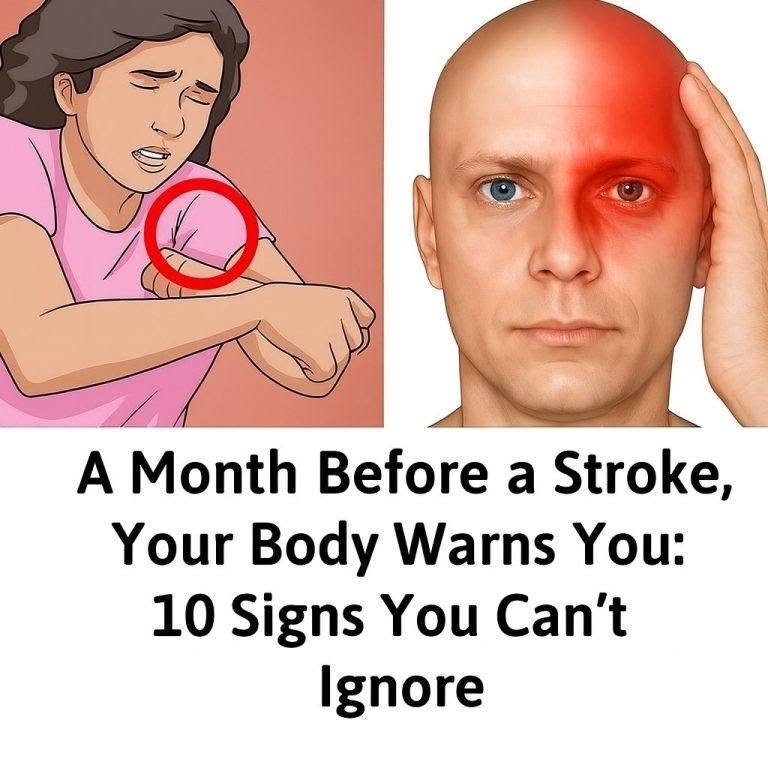
When sensationalized health articles warn that your body warns you a month before a stroke with 10 signs not to ignore, they often rely on dramatic timing to capture attention. In reality, a stroke is an acute medical emergency—an interruption of blood flow to the brain—that typically strikes suddenly rather than developing on a predictable monthly countdown.
However, the human body does frequently provide critical neurological warning signs in the days, weeks, or even months leading up to a major cerebrovascular event. Recognizing these subtle red flags is vital for preventing a catastrophic stroke.
Let’s cut through the hyperbole and examine what clinical neurology actually identifies as warning signs of impending cerebrovascular distress.
Transient Ischemic Attacks (TIAs): The Ultimate “Mini-Stroke” Warning
Many of the subtle neurological events that occur prior to a full stroke are Transient Ischemic Attacks (TIAs). A TIA happens when a blood clot temporarily blocks an artery in the brain, causing stroke-like symptoms that resolve completely within minutes to hours.
-
The Clinical Reality: A TIA causes permanent brain damage, but it is a major medical warning sign. Up to 15% of people who suffer a full stroke will experience a TIA beforehand—frequently within days or weeks of the major event.
The 10 Critical Warning Signs of Cerebrovascular Distress
1. Sudden Weakness or Numbness on One Side of the Body
-
The Clinical Sign: A sudden loss of strength or a heavy, numb feeling in the face, arm, or leg, typically affecting only one side of the body. You might find it difficult to lift both arms evenly or notice one side of your smile drooping.
2. Sudden Confusion or Difficulty Speaking (Aphasia)
-
The Clinical Sign: Struggling to find words, slurring speech, or finding yourself completely unable to understand what others are saying during a brief episode.
3. Sudden Visual Disturbances in One or Both Eyes
-
The Clinical Sign: Experiencing sudden blurred vision, double vision, or a temporary loss of vision in one eye (known as amaurosis fugax), often described as a dark shade pulling down over your field of vision.
4. Sudden, Severe Unexplained Headache
-
The Clinical Sign: A sudden, exceptionally intense headache often described as a “thunderclap” headache, occurring with no prior history of migraines. This can indicate bleeding in the brain or a significant vascular spasm.
5. Sudden Loss of Balance, Coordination, or Dizziness
-
The Clinical Sign: Experiencing sudden vertigo, unsteadiness, or a complete inability to coordinate your steps, often accompanied by stumbling or falling.
6. Difficulty Walking or Sudden Clumsiness
-
The Clinical Sign: A sudden, inexplicable feeling of imbalance or tripping while walking normally, signaling that brain centers controlling motor coordination are briefly lacking oxygen.
7. Unexplained Brief Episodes of Memory Loss or Confusion
-
The Clinical Sign: Momentary disorientation regarding where you are, what time it is, or forgetting familiar names and routines for a short duration.
8. Sudden Facial Asymmetry (Drooping)
-
The Clinical Sign: Looking in the mirror and noticing one side of your face sagging, or losing control of your lip and eye movements on one side.
9. Sudden Difficulty Swallowing (Dysphagia)
-
The Clinical Sign: A sudden, brief choking sensation or trouble swallowing saliva, liquids, or food, indicating disruption in the brainstem pathways that control throat muscles.
10. Recurrent “Mini” Episodes of Cognitive Fog or Weakness
-
The Clinical Sign: Experiencing repeated, short-lived episodes (lasting just 5 to 15 minutes) where you feel weak, dizzy, or unable to articulate your thoughts clearly. These recurring micro-events are classic indicators of underlying carotid artery narrowing or recurrent TIAs.
The FAST Acronym: What to Do in an Emergency
If you or someone around you experiences any of these symptoms suddenly, remember the FAST test:
-
F – Face Drooping: Does one side of the face droop, or is it numb?
-
A – Arm Weakness: Is one arm weak or numb? If the person tries to raise both arms, does one drift downward?
-
S – Speech Difficulty: Is speech slurred, are they unable to speak, or are they hard to understand?
-
T – Time to Call 911: If you observe any of these signs—even if they go away—call emergency services immediately. Time is brain tissue; rapid medical intervention can reverse acute strokes.
