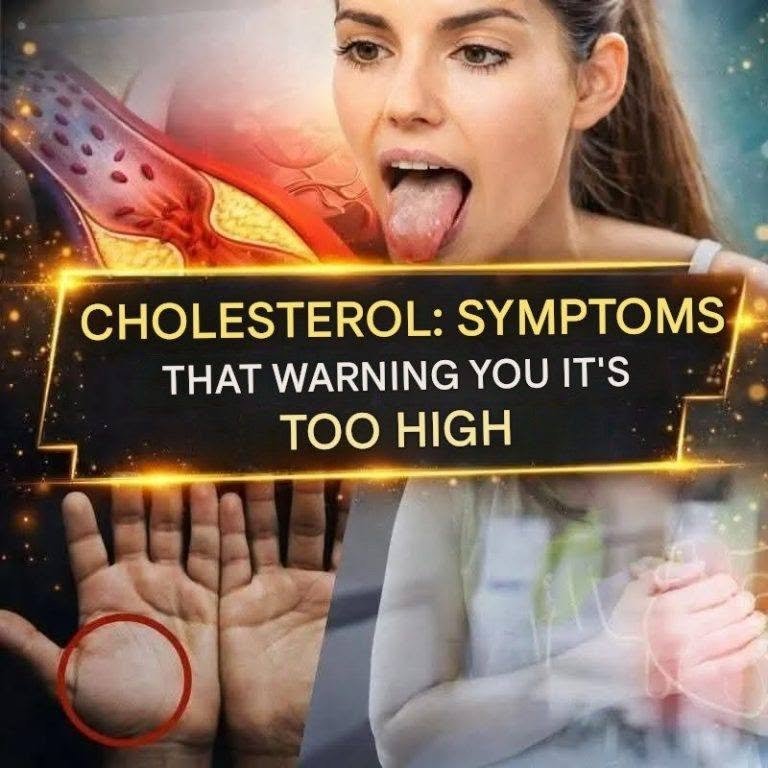
Viral health headlines frequently promise a list of clear symptoms to warn you when your cholesterol is dangerously high. However, from a medical standpoint, high cholesterol (hypercholesterolemia) is famously known as a silent condition. For the vast majority of people, soaring cholesterol levels produce no internal physical symptoms at all—you cannot feel it, which is why routine blood work (a lipid panel) is essential.
When articles or medical discussions point to “symptoms” or external signs of high cholesterol, they are usually referring to either visible physical markers of lipid deposits or secondary warning signs of advanced atherosclerosis (narrowed arteries).
Here are 5 key indicators and visible signs that can warn of dangerously high or genetically driven cholesterol levels:
1. Xanthelasma (Yellowish Deposits Around the Eyelids)
-
What it looks like: Soft, yellowish, flat or slightly raised patches or bumps that appear on or around the eyelids, particularly near the inner corner of the eye.
-
What it means: These are deposits of cholesterol-laden white blood cells underneath the skin. While they are harmless on their own, roughly half of the people who develop xanthelasma have underlying lipid disorders, such as high LDL cholesterol or elevated triglycerides.
2. Corneal Arcus (A White or Gray Ring Around the Iris)
-
What it looks like: A distinct white, gray, or bluish opaque ring or arc forming around the outer edge of the cornea (the clear front surface of the eye), sometimes separated from the colored iris by a clear space.
-
What it means: This ring is caused by a deposit of cholesterol and lipids in the eye tissue. While common and often benign in older adults (due to normal aging), if it appears in people under the age of 50, it can be a strong visual indicator of familial hypercholesterolemia or dangerously high blood lipids.
3. Tendon Xanthomas (Firm Lumps on Tendons)
-
What it looks like: Firm, smooth, sometimes tender bumps or swelling under the skin, most frequently found on the Achilles tendons at the back of the ankle or the tendons on the knuckles of the hands.
-
What it means: These rare lumps are literal pockets of cholesterol accumulation within connective tissue. They are almost exclusively linked to severe, inherited genetic conditions (like familial hypercholesterolemia) that cause extreme, lifelong elevations in blood cholesterol.
4. Intermittent Claudication (Leg Cramping During Walking)
-
What it feels like: A consistent aching, cramping, tightness, or fatigue in the calves, thighs, or buttocks that occurs reliably when walking a certain distance and disappears after a few minutes of rest.
-
What it means: This is a classic symptom of Peripheral Artery Disease (PAD). Over years, high cholesterol contributes to plaque buildup that narrows the arteries supplying blood to your lower limbs, starving the muscles of oxygen during exertion.
5. Angina or Chest Tightness (Cardiovascular Warning)
-
What it feels like: A squeezing, pressure, fullness, or aching sensation in the center of the chest, usually triggered by physical exertion or emotional stress and relieved by rest.
-
What it means: This indicates that cholesterol plaque has significantly narrowed the coronary arteries supplying the heart muscle itself. It is a critical red flag that systemic atherosclerosis is advanced and requires immediate medical evaluation.
The Takeaway
Because high cholesterol hides silently behind the scenes for years before causing visible signs or cardiac events, waiting for “symptoms” is a dangerous gamble. The only definitive way to know your numbers is through a simple routine blood test ordered by your physician.
