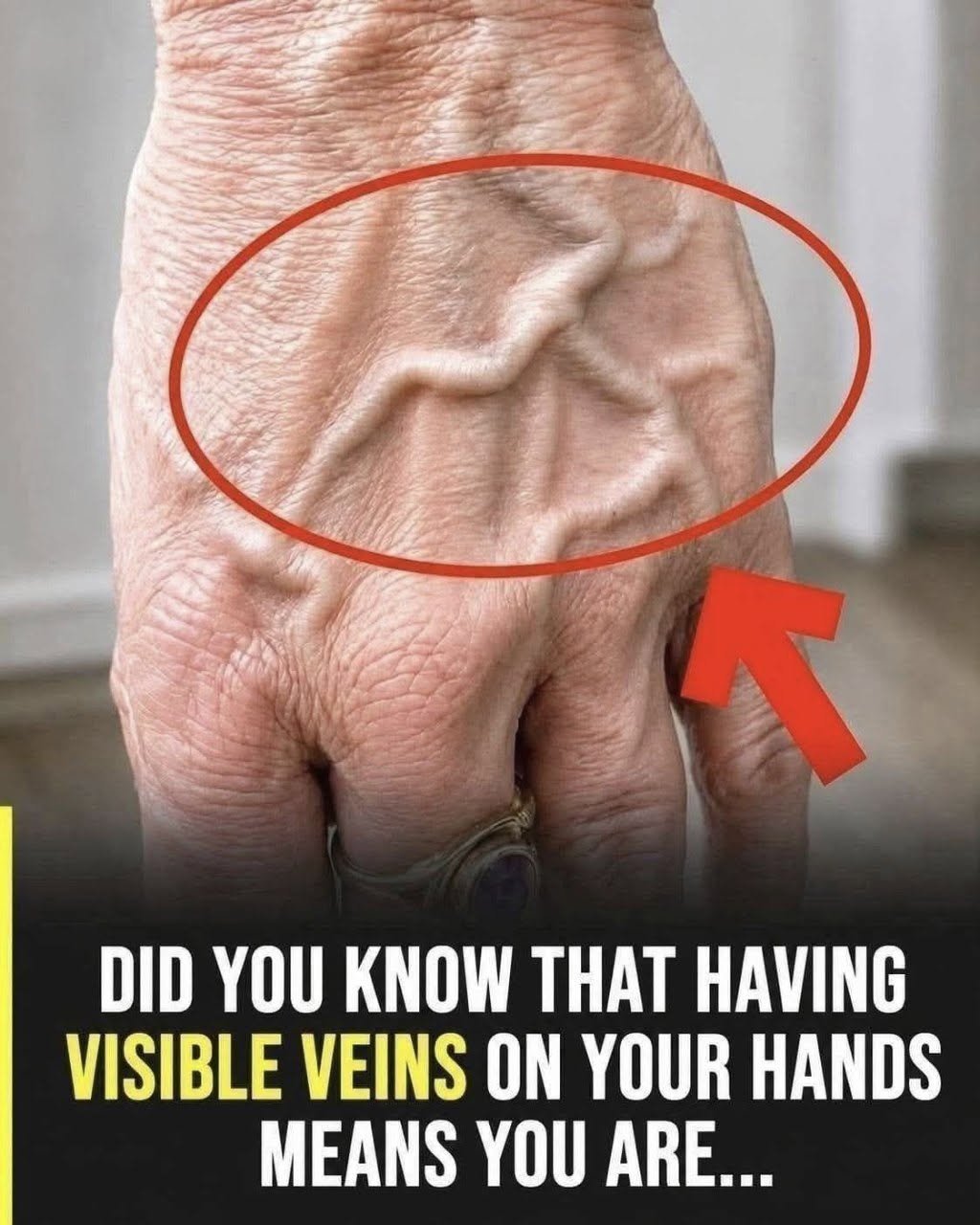
When sensationalized health clickbait flashes headlines like “Did you know that having visible veins means you are…”, they love to use an unfinished sentence as a psychological hook. They want you to panic, suspecting that prominent veins on your hands, arms, or legs are a cryptic sign of aging, poor circulation, or some hidden medical emergency.
From a clinical vascular and dermatology perspective, visible veins are extremely common and entirely normal. What your visible veins actually mean depends almost entirely on your anatomy, lifestyle, and genetics—not a mysterious diagnosis.
The Reality Behind Visible Veins
Why do veins show prominently on the skin’s surface, and what causes them?
-
Low Subcutaneous Body Fat: Veins sit just beneath the skin. If you have lower levels of body fat or thinner skin (which naturally occurs with normal aging as collagen and elasticity decrease), your veins naturally become more visible to the naked eye.
-
Genetics and Skin Tone: Fair skin tones make underlying blood vessels naturally easier to see. Furthermore, many people simply inherit thin skin or superficial vein patterns from their parents.
-
Hydration, Heat, and Blood Pressure: When you exercise, drink plenty of water, or step into warm weather, your body pushes blood closer to the skin’s surface to help cool you down (vasodilation), causing veins to temporarily swell and stand out.
When Visible Veins Are Normal vs. When to Pay Attention
While ordinary visible veins (like bulging hand veins or mild surface networks) are harmless, clinicians distinguish them from medical vascular conditions:
-
Varicose Veins: These are enlarged, twisted, and swollen veins—usually appearing in the legs—caused by weakened tiny valves inside the veins that allow blood to pool backward. They can cause aching, heaviness, or swelling, and benefit from evaluation by a vein specialist.
-
Spider Veins (Telangiectasias): These are tiny, damaged capillaries visible just beneath the surface of the skin, resembling thin red or purple webs. They are usually cosmetic and related to sun exposure, genetics, or hormonal shifts.
Evidence-Based Ways to Support Vascular Health
If you want to keep your circulatory system strong and resilient as you age, clinical guidelines focus on practical lifestyle habits:
-
Stay Regularly Active: Walking, cycling, and calf-strengthening exercises use your muscles as a natural pump to push blood back up from your legs toward your heart.
-
Elevate Your Legs: If you spend long hours standing or sitting, taking time to elevate your legs above your heart helps reduce venous pressure and fluid pooling.
-
Maintain Healthy Hydration: Drinking water consistently keeps your blood volume balanced and supports optimal circulation throughout your entire vascular network.
