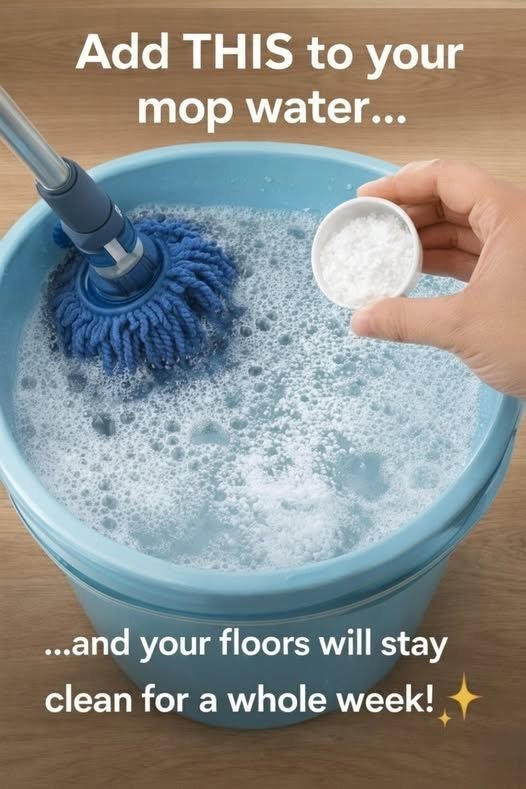
When sensationalized internet headlines promise a “miracle floor trick” that will change your cleaning routine forever, they are usually referring to one of a few clever, low-cost DIY floor-cleaning hacks.
Instead of relying on harsh chemical strippers or expensive specialized cleaners, these viral tricks typically harness basic kitchen chemistry to cut through grease, lift embedded grime, and leave floors sparkling.
The 3 Most Popular “Viral Floor Tricks” (And the Science Behind Them)
1. The Dish Soap, Vinegar, and Hot Water Slurry (For Sticky Tile & LVP)
-
The Trick: Mixing a gallon of very hot water with a few drops of blue dish soap, half a cup of white vinegar, and sometimes a splash of rubbing alcohol.
-
The Cleaning Reality:
-
Dish soap acts as a surfactant, breaking down stubborn cooking oils and kitchen grease that plain water slides right past.
-
Vinegar cuts through mineral deposits and soap scum left behind by commercial all-purpose cleaners.
-
The Catch: While incredible for ceramic tile, vinyl, and linoleum, never use vinegar on natural stone (like marble, granite, or limestone), as its acidity will permanently etch and dull the polished surface.
-
2. The Fabric Softener Sheet Hack (For Baseboards and Hair)
-
The Trick: Rubbing used or unused dryer sheets along baseboards or floors to repel dust and pick up pet hair.
-
The Cleaning Reality: Dryer sheets contain anti-static compounds. When rubbed over hard surfaces, they leave behind a microscopic antistatic film that genuinely repels dust and pet hair for a few days. However, overuse can leave a tacky residue that actually attracts dirt over time, so it’s best reserved strictly for baseboards rather than main walking areas.
3. The Steam Mop or Microfiber Flat Mop Revolution
-
The Trick: Swapping out heavy traditional string mops for flat microfiber pads paired with plain water or minimal cleaner.
-
The Cleaning Reality: This is the one “trick” that genuinely lives up to the hype. Microfiber pads use microscopic split fibers that mechanically trap dirt and bacteria rather than just pushing dirty water around a room.
A Better, Evidence-Based Floor Cleaning Routine
If you want a truly spotless floor without falling for clickbait gimmicks, sticking to these foundational rules works every time:
-
Dry Sweep First: Never skip thorough vacuuming or sweeping. Pushing grit around with a wet mop creates an abrasive slurry that dulls floor finishes.
-
Match the Cleaner to the Floor: Hardwood requires pH-neutral cleaners (avoid soaking or vinegar); tile and vinyl can handle mild soap-and-vinegar solutions.
-
Change Your Water: If your mop bucket turns murky gray, stop and change the water. Mopping with dirty water just reapplies grime back onto the floor.
