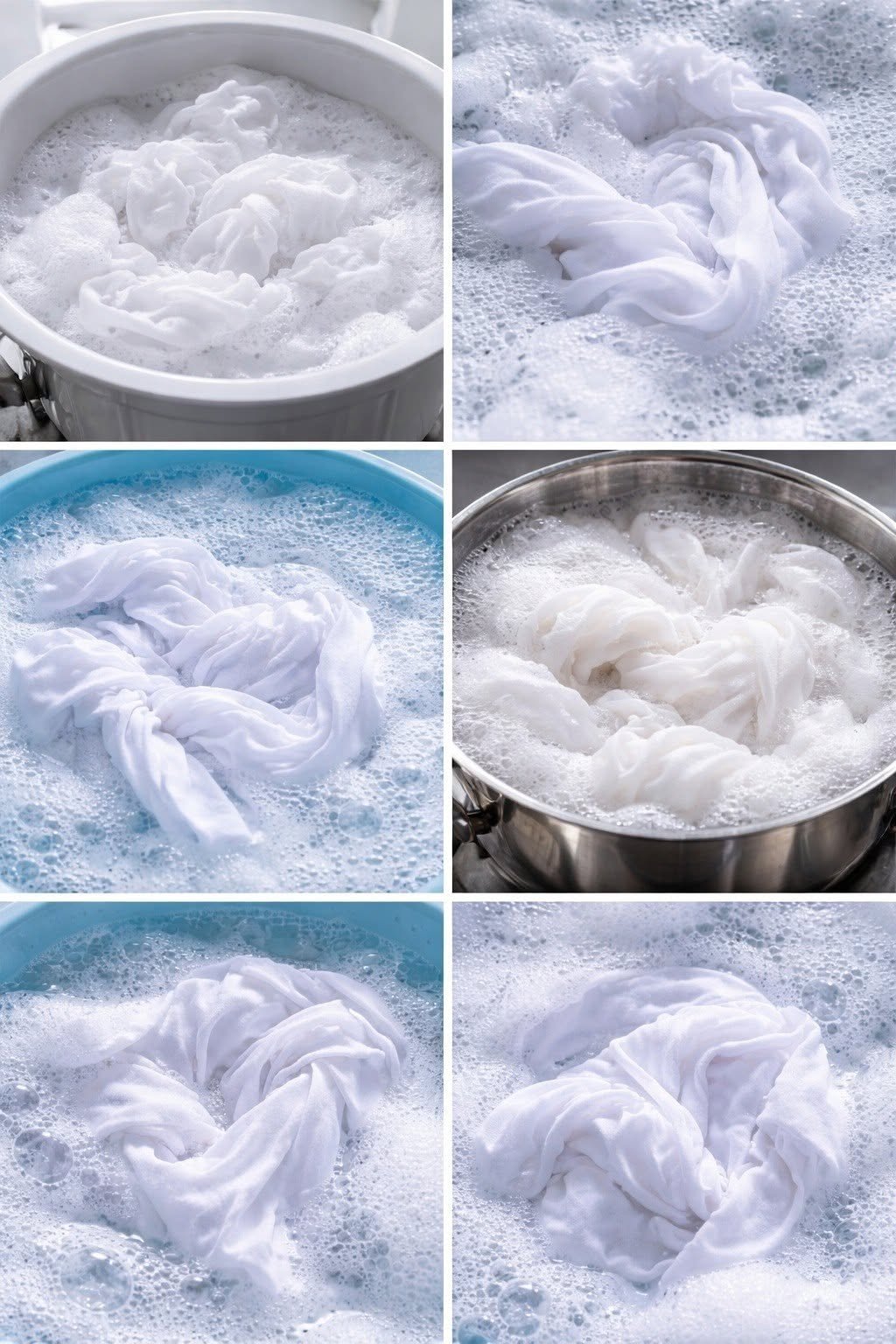
When cleaning videos and household blogs tease headlines like “Laundry as white and pure as milk: you only need this ingredient,” they lean into the satisfying allure of a magic bullet—implying that a single pantry item can instantly reverse months of dingy graying and yellow sweat stains without any effort.
In reality, achieving truly bright whites isn’t about a hidden single ingredient; it comes down to understanding why fabrics lose their brightness in the first place and using basic textile chemistry to fix it.
What Clickbait “Laundry Hacks” Get Wrong
-
The “One-Magic-Bullet” Fallacy: Viral videos often treat a single item (like lemon juice, aspirin, or dish soap) as a universal fix for all types of discoloration, ignoring the distinct chemical causes of dingy clothes.
-
Ignoring Residue Buildup: Many hacks fail to mention that the primary reason white clothes turn gray or yellow isn’t just “dirt”—it is a cumulative buildup of trapped body oils, hard water minerals, and residual laundry detergent films that regular washing cycles fail to strip away.
The Chemical Reality: Why Whites Turn Dingy
Textile scientists and laundry experts point to three main culprits behind losing bright whites:
-
Detergent and Fabric Softener Residue: Using too much liquid detergent or fabric softener creates a sticky microscopic film on fibers that acts like a magnet, trapping dust, skin oils, and dirt over time.
-
Hard Water Minerals: Minerals like calcium and magnesium dissolved in tap water bond with fabric fibers during the wash cycle, leaving behind a dull, yellowish mineral crust.
-
Body Oils and Sebum: Natural skin oils oxidize over time when exposed to air and heat (especially in the dryer), turning white collars and armpits a stubborn yellow.
Evidence-Based Methods to Restore White Laundry
Depending on what is actually causing your whites to look dull, clinical and textile-care guidelines point to a few reliable approaches:
-
Strip Away Residue: If your whites look gray because of trapped detergent and mineral buildup, a hot-water soak using washing soda, borax, and a small amount of powdered detergent (commonly known as “laundry stripping”) effectively pulls out years of trapped gunk.
-
Leverage Mild Oxidation: Instead of harsh chlorine bleach—which can weaken cotton fibers and turn protein stains (like sweat) permanently yellow—use hydrogen peroxide (3%) as a safe oxygen-based booster in the wash. It breaks apart organic discoloration through oxidation without destroying the fabric.
-
Harness Optical Bluing: If you want an immediate visual boost, traditional laundry bluing agents add trace amounts of blue pigment to neutralize yellow undertones, tricking the human eye into perceiving the fabric as crisper and whiter.
-
Sunlight Bleaching: Hanging wet whites in direct sunlight triggers a natural photochemical bleaching process via UV rays, brightening fabrics and sanitizing them naturally.
The Bottom Line
There is no single secret ingredient that keeps laundry magically pristine without proper care. Maintaining bright whites requires managing detergent amounts, stripping away mineral buildup, and using gentle oxygen boosters or sunlight rather than falling for internet miracle tricks.
This video provides a helpful visual demonstration of how deep residue buildup affects fabrics and how a proper soaking process lifts hidden dirt from linens.
